Despite the overall decline, the group indicated improving momentum in the second half of 2025, with revenue contraction narrowing significantly compared to the first half. This trend reflects early progress in ongoing transformation initiatives, including operational restructuring, cost discipline and retail network optimization.
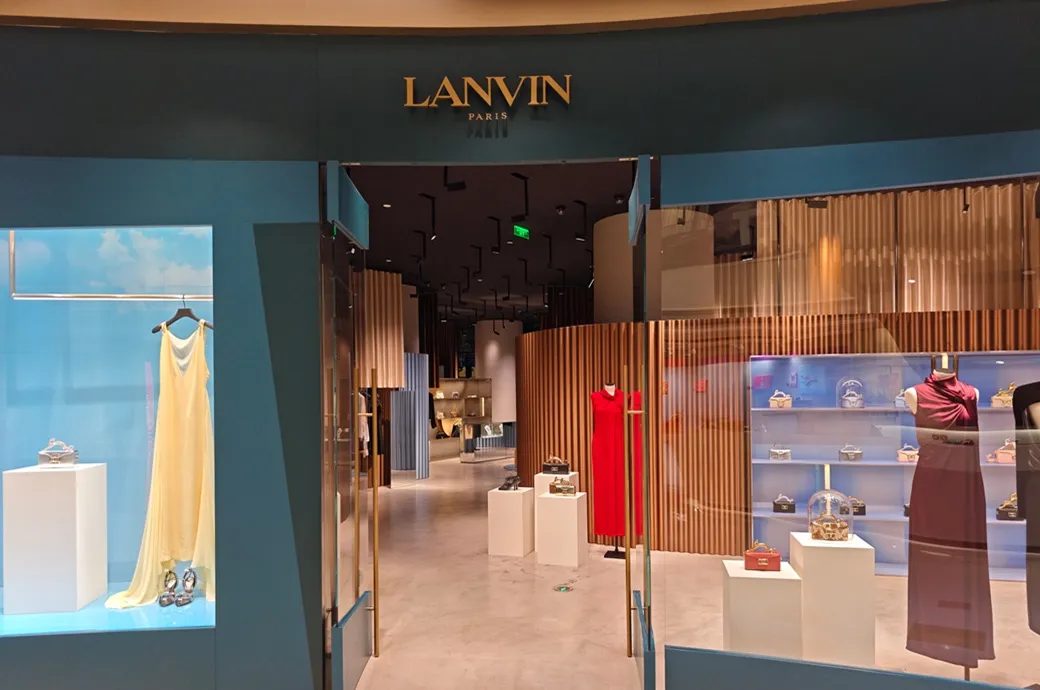
Lanvin Group has reported revenue of €240.5 million (~$276.58 million) in FY25, a 17.6 percent year-on-year decline, amid global luxury headwinds. While Lanvin and Sergio Rossi fell sharply, St John remained resilient. North America remained stable, but China weakened significantly. The group continues its restructuring, leadership changes and retail optimization, aiming to achieve further growth and profitability by 2026.
At the brand level, performance remained mixed. Lanvin and Sergio Rossi recorded sharp drops of 30 percent, while Wolford fell 14 percent. St John showed resilience, with revenue falling just 1 per cent, supported by an 8 per cent rise in North America in local currency terms. Wolford's performance stabilized over the year, helped by improved supply conditions and increased traction in e-commerce and wholesale channels. Meanwhile, Lanvin moved forward with its creative repositioning under the direction of artistic director Peter Copping, Lanvin said in a press release.
Regionally, North America has become the most stable market, with revenue falling by a modest 6 percent to €116 million. In contrast, Europe, Middle East and Africa (EMEA) revenue fell 21 percent, while Greater China saw a sharp decline of 42 percent, reflecting weaker demand and cautious wholesale activity. Other markets fell 26 percent, underscoring broader global volatility in luxury consumption.
Across all channels, direct-to-consumer (DTC) and e-commerce revenue decreased 18 percent to €164 million, while wholesale revenue fell 15 percent. The Group continued to rationalize its retail presence, including selective store closures and organizational adjustments, as part of its broader efficiency drive.
Leadership changes also supported the transformation, with Marco Pozzo appointed CEO of Wolford, Barbara Werschine as deputy CEO of Lanvin and Mandy West as CEO of St John. These appointments are aimed at strengthening brand execution and accelerating strategic priorities, the statement added.
Looking ahead, the Lanvin Group expects to largely complete its transformation program in 2026. The company plans to deepen its presence in core markets, expand asset-light business models and pursue strategic partnerships, while continuing creative renewal across its portfolio. These efforts aim to bolster long-term growth and improve profitability amid an evolving global luxury landscape.
Fiber2Fashion News Desk (SG)