The team that went undefeated in the regular season and racked up more wins than anyone except Duke and Arizona and fewer losses than any other team is anything but a run-of-the-mill basketball giant.
In fact, Miami (Ohio), despite that 31-1 record and perhaps because of a little resentment placed on its shoulder, is one of those plucky underdogs that makes the NCAA tournament what it is.
Welcome to March Madness with a different twist.
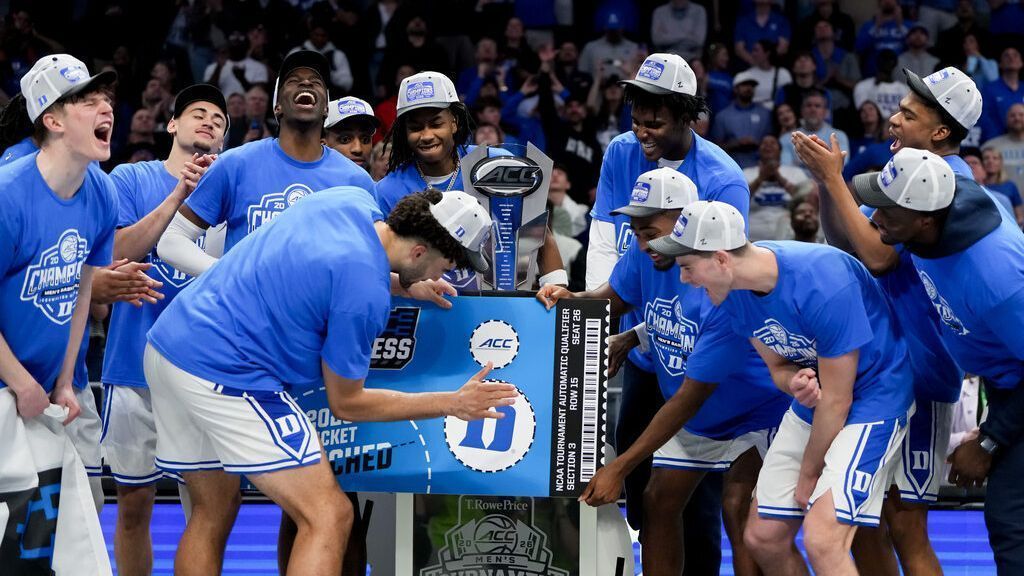
While Duke (32-2) earned the first overall seed in Selection Sunday, with Arizona (32-2), Michigan (31-3) and defending champion Florida (26-7) also on the top line, the RedHawks barely made their way into the bracket.
They are ranked 11th and have to play a First Four game against SMU on Wednesday. But after all the debate and moaning that came with their lone loss last week, which immediately turned them from a safe team into a bubble team, they now enjoy the same privilege as the other 67 teams in the field.
They will have the opportunity to win and advance, without any selection committee, bracketologists or former coaches turned television experts deciding their fate.
“He was very confident,” Miami forward Eian Elmer said. “I think it's hard to leave out a team that's 31-0 in a regular season. It just wouldn't be right for the sport to slow down something like that, which is rarely done.”
Following the First Four, the full schedule of games begins Thursday and Friday, and the national champion will be crowned in Indianapolis on April 6.
Selection committee chairman Keith Gill tried to explain how Miami, of the underrated Mid-American Conference, ended up where it did. The RedHawks, he said, were not the last of the 37 at-large teams placed in the field.
But, he said, they were ranked last of those 37 teams because once they got in, when they were compared to other teams close to them and things like their 339th-ranked schedule and zero wins (actually, zero games) against the higher caliber, or Quadrant 1, opponents worked against them.
Other factors worked for them, including having the second-highest scoring offense in the country, along with a top-30 “record strength” and top-40 “wins above the bubble” (each of those stats would require a small pamphlet to explain).
“They have some really strong resume metrics that show their accomplishments,” Gill said.
For what it's worth, Miami is an 8½-point underdog against SMU and a 1,500-1 long shot to win it all, according to DraftKings Sportsbook.
It's unlikely, to be sure, but it's still better than the much-cited 9.2 quintillion to 1 odds a person has of completing a perfect group.
The favorite to win the national championship, according to DraftKings, is Duke, which was listed at +300 odds Sunday night, just ahead of Michigan at +360.
The Wolverines took a small hit in the seeding, dropping one notch to No. 3 overall after an eight-point loss to Purdue in the Big Ten title game. The Boilermakers move to 2nd instead of 3rd with the win and head to St. Louis to play in the Queens tournament for the first time.
The conference title didn't do much good for St. John's, which remained where it had been predicted most of the season (as No. 5) even after a 20-point win over UConn for the Big East title.
“Their non-conference results didn't have the same depth and quality as some of those ahead of them,” Gill said of the Red Storm's less-than-stellar non-conference performance this season.
Last year, St. John's became the sixth team coach Rick Pitino took to the tournament. This year, the Johnnies return, but must travel to San Diego to face Northern Iowa in the first round.
“I told him, 'Don't take it as a negative,'” Pitino said. “I've had teams get to a Final Four that first had to go to Portland and then to Arizona from Louisville.”
Among those left out of the field of 68 were San Diego State, Indiana, Oklahoma and Auburn.
The Tigers had 16 losses but the third best schedule in the country. The snub drew the predictable reaction from Bruce Pearl, their former coach and father of their current coach, who worked for CBS, saying, “They played the toughest schedule in the country and I don't know if they were rewarded for it.”
Even with Oklahoma and Auburn excluded, the SEC led the way by putting 10 teams in the field, four fewer than its record from last year.
The Big Ten followed with nine, the ACC and the Big 12 with eight each, an unsurprising result in an era of massive conference expansion and NIL compensation that draws the best players to the biggest spenders.
The Gators are the defending champions and are trying to repeat their back-to-back titles from 2006-07. Last season, Florida was part of a No. 1 Final Four — the first time that had happened in 17 seasons.
A championship game rematch between the Gators and second-seeded Houston could be looming in the South; The Cougars would host the regional final in their hometown if they make it.
“If we have to run into that problem, there are worse problems in the world,” Gators coach Todd Golden said earlier this week. “[But] I would like to enjoy someone else in Houston. [rather] than Houston.”
Giving teams home games in regionals is something the NCAA tries to avoid. Gill said that wasn't possible in this case, noting that last year, Houston was the No. 1 seed that beat Purdue in Indianapolis, which is about an hour from the Boilermakers' campus.
“What I would say is it's the NCAA tournament,” Gill said. “You're going to have to win road games against really tough opponents, and that's why this is the best postseason in sports.”
The Associated Press contributed to this report.