to the editor: Contributing writer Joel Kotkin's op-ed is clear and informative until the last paragraph (“Don't blame boomers for millennials' struggles” February 26). Instead of a conclusion based on his previous ideas, he introduces baseless notions that disprove another agenda. He suddenly cites regulations that need to be reduced as the reason housing affordability has declined.
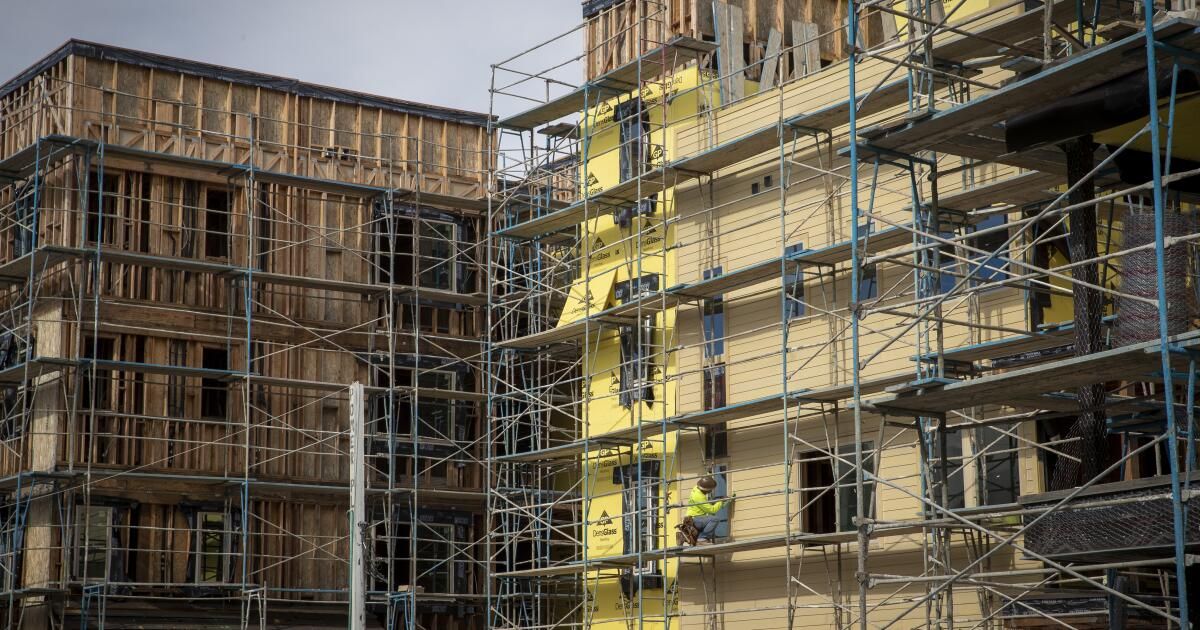
As a recently retired architect, I found that building new and remodeled homes became problematic during the COVID pandemic. Many construction workers changed jobs or fled the state, causing the cost of construction to skyrocket. Disruptions to supply chains also caused the cost of construction materials to rise dramatically. What was $100 per square foot before the pandemic suddenly became $300 per square foot.
While permitting certainly became more cumbersome with closed government offices using previously untested “paperless” permit submissions, the real cost of that was not the dramatic expense that conservatives always pointed out. The regulations that many of them hated supported environmental protection, workplace safety, and occupant safety. Meanwhile, market manipulations by hedge funds buying residential real estate are ignored as a problem.
Lastly, such manipulation of housing supply is exacerbated by the massive transfer of wealth to the richest 10% from the 90% (the rest of us) that has occurred over the last 40 years. When you ignore that corporate mismanagement of the economy is the primary influence on housing prices, the entire op-ed falls apart.
David Gene Echt, Torrance
..
to the editor: I agree with everything Kotkin wrote about the disparities in the distribution of wealth by generation. A favorable trend is that a greater proportion of young people are moving towards specialized trade. But stubbornly high housing prices in metropolitan coastal cities remain a huge problem.
However, there is reason to be hopeful for young people: Boomers will die in large numbers over the next 20 years, and guess who will inherit all those assets?
Mike Sovich, Glendale
..
to the editor: All articles on this topic leave out a very important fact: generally speaking, millennials are the children of boomers. Not all boomers are wealthy or able to push their children toward their ideal lifestyle, and those who are tend to be more frugal and instill their values in their children. They did not instill an expectation of prosperity, but instead emphasized the importance of betterment through education, training, and work, something they in turn inherited from their parents (those who grew up during the Great Depression and fought in World War II).
Martin Usher, Thousand Oaks