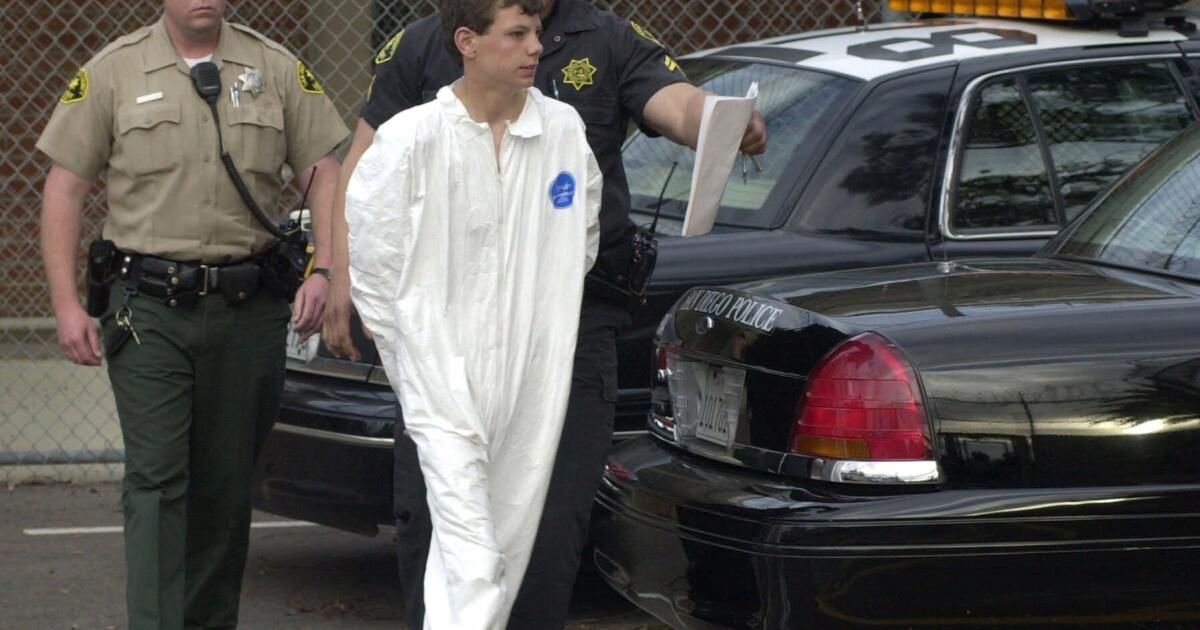
to the editor: Charles “Andy” Williams, then 15 years old, was sentenced in 2001 as an adult for two murders (“Shooter who killed 2 and wounded 13 in notorious rampage at Southern California school could now walk free” January 7). This was despite the fact that California has had a juvenile justice system. since 1903.
The definition of a minor has largely been anyone under the age of 18. the theory of the juvenile system is that a juvenile's mind is still developing and rehabilitation makes more sense than incarceration. However, a movement developed in the 1980s and 1990s treating juvenile offenders guilty of serious crimes as adults, even if they are not.
It's not that a 15-year-old murderer is more mature than a 15-year-old thief. The thing is that society wanted to punish adolescent lawbreakers more severely in the belief that this would discourage juvenile delinquency. The concept of youth. “super predators” it became fashionable.
Then, Williams was among the many young criminals who took up guns to shoot up a school. The laws have not discouraged these crimes. School shootings continue unabated. As with Williams, the perpetrators are mostly young people with problems with access to weapons. Treating a teenager like an adult doesn't seem to have done much to protect the public.
Erica Hahn, Monrovia