When the government grows to dominate larger and larger portions of the economy and when politicians refuse to be accountable for what they spend, there is a predictable next step: insisting that the problem is that “the rich” don't pay enough. It doesn't matter that people with high incomes already shoulder a disproportionate share of the tax burden. Never mind that relying on a small, mobile group of people for most of your income makes public finances more volatile, not more stable.
No, once spending is considered untouchable and moderation is politically impossible, it is only a matter of time before politics demands more, more, more. More taxes and more distortion. This helps explain why extravagant new forms of estate taxes are appearing.
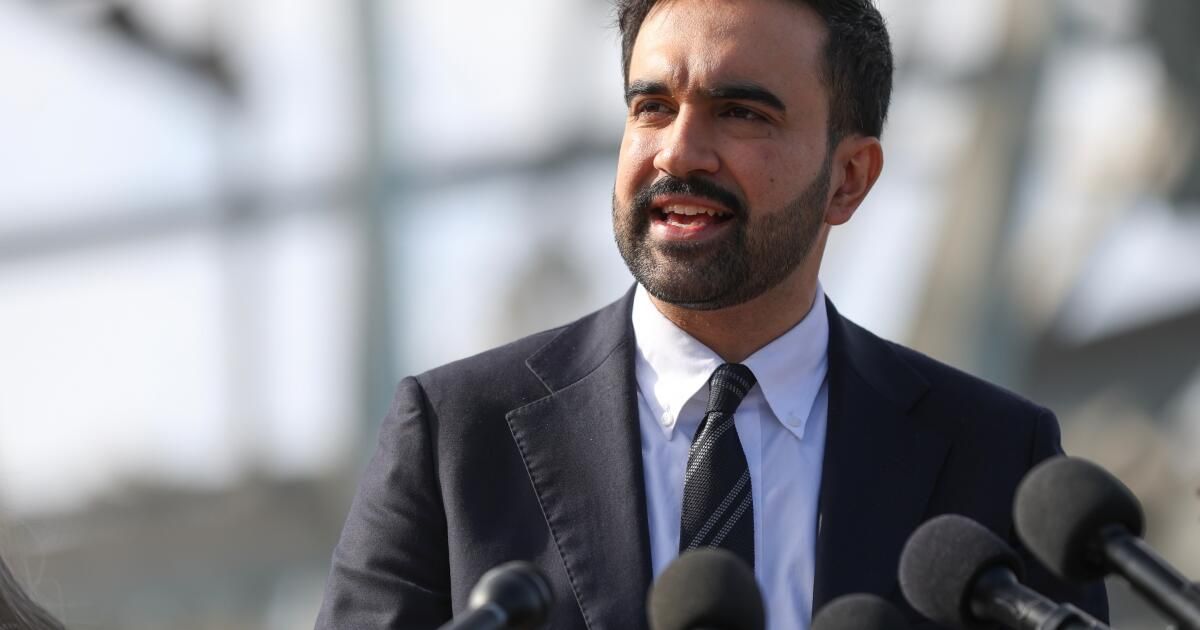
California voters are heading into a November election fight over a so-called 5% “one-time” tax on billionaires' net worth, tied to residency on a date that is it's already happened. Illinois lawmakers recently flirted with a tax on unrealized gains (think unsold stocks at fluctuating prices that only exist on paper) before backing down. New York City Mayor Zohran Mamdani wants a wealth tax to help close the city's roughly $12 billion budget gap. And prominent progressive Democrats have explicitly supported national wealth taxes (e.g., proposals by Senator Elizabeth Warren).
Different places, same impulse: avoid harsh fiscal decisions by putting more pressure on a small group.
A wealth tax is not like the income or consumption taxes we are used to. In theory, it is a portion of a person's entire stock of assets (minus their liabilities). In its classic form, a wealth tax is assessed annually. More recent examples in the United States appear as one-time levies or use a “mark-to-market” system to tax unrealized gains, treating the appreciation as income. Regardless of how it is packaged, the economic logic is the same.
Wealth taxes are also an exceptionally blunt and damaging instrument. In advanced economies, they have been repeatedly reduced or even repealed after generating disappointing revenues, tax evasion, capital flight and costly administrative battles. The international record is decidedly negative, no matter what convoluted arguments his supporters in the United States want to use.
Start with the statement that “the rich have the money to pay for it.” Most great fortunes are not accumulated in piles of idle cash. These are interests in operating companies and other productive investments that are already taxed through income, capital gains, and corporate taxes. Wealth taxes accumulate in additional levies that, among other things, function as highly confiscatory effective tax rates on normal investment returns. This is especially true in low-growth environments and when added to already high federal, state, and local taxes.
Therefore, claims that wealth taxes “only affect billionaires” also don't hold water. That's not how the economy works. Reducing returns on savings and investment means that, over time, the rich invest less, and we need them to invest. The damage, including slower productivity and wage growth, can spread in countless ways throughout the economy. But it's real.
In other words, a policy that makes it more expensive to start, expand and maintain businesses in a jurisdiction is not limited to the people who write the checks. The rich and their money are mobile. Workers are not, and ultimately pay a high price through fewer opportunities and lower wages.
Then there are claims that taxes like the one proposed in California are a “one-time” thing. This misleading framing solves nothing.
A tax that depends on residency at a particular time creates a coordination problem for the state by encouraging the rich to leave – perhaps permanently – and business decisions are made based on tax strategy rather than consumer needs. In a system that already relies on a small number of taxpayers, losing even a handful can wipe out projected revenue.
The effect is magnified because billionaires' wealth is often illiquid. Paying the tax typically requires selling assets or borrowing against them, leading to capital gains taxes, leverage risks and further distortions. It helps explain why some high-net-worth individuals have already left states like California, while others are openly considering leaving if these proposals pass.
What comes next is predictable. When wealth tax revenue falls short (and it will), policymakers will raise taxes rather than cut spending. A “single” tax applied to billionaires or millionaires reaches much lower net worth. Rates go up. What begins as a limited, one-off measure becomes more permanent for more people, justified at every turn by the same fiscal desperation that produced a proven policy failure in the first place.
Only then will the tax collector relent. from europe wealth taxes They proved to be long-term failures and only a few remain. Californians, consider yourself warned.
Wealth taxes are not a solution to a failed tax culture; They are a symptom that considers spending growth as inevitable and responsibility as optional. Policymakers who demand more durable finances and true upward mobility can irresponsibly blame the rich or do the real hard work: reining in spending growth, broadening tax bases, and fostering stable, investment-friendly environments.
Rugy Veronica He is a senior fellow at the Mercatus Center at George Mason University. This article was produced in collaboration with Creators Syndicate.