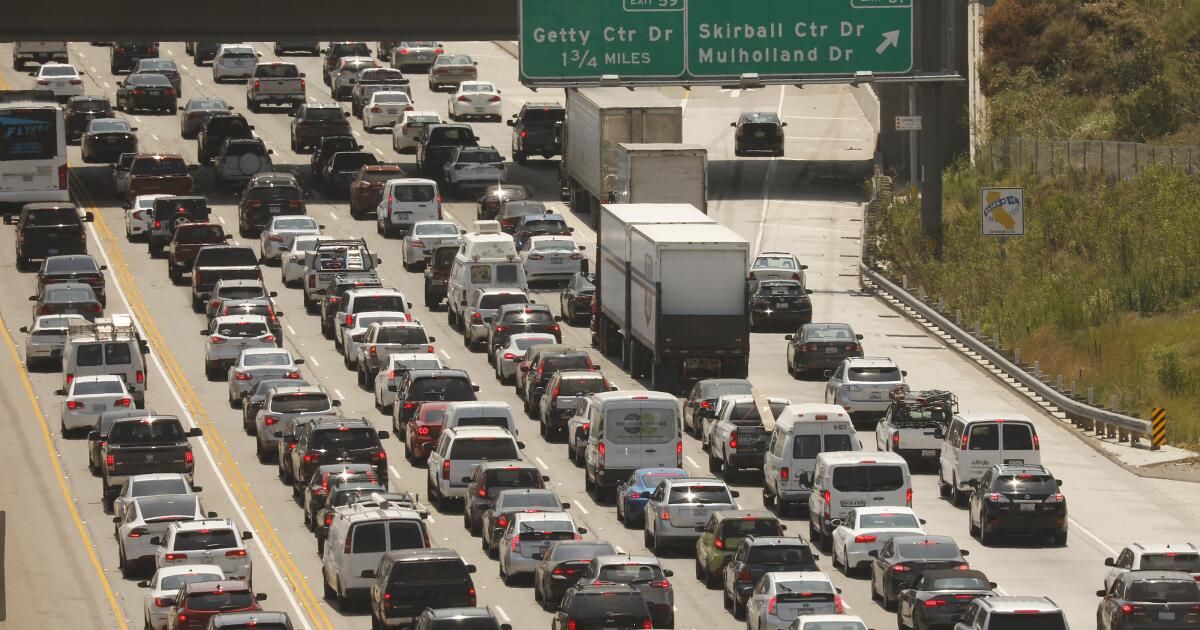
Highway 405 through Sepulveda Pass is an infamous stretch of road known around the world for all the wrong reasons. It's a mountainous chokepoint that can stop traffic between the Valley and the West Side at any time of the day. Drivers attempting to connect to the 405 often become stranded, and major thoroughfares in surrounding communities are often severely impacted by overflowing traffic.
The traffic nightmare we find ourselves in is the reason Los Angeles County voters approved Measure M in 2016, which included provisions to partially fund a transit line through Sepulveda Pass.
On Thursday, the Metro Board has the opportunity to approve a route and transit mode for the Sepulveda Transit Corridor that has faced much debate. The proposed solution would add a critical regional connection to the transportation network, linking the San Fernando Valley to the West Side and providing a fast, safe and reliable alternative to the congested 405 Freeway. End-to-end travel times through the corridor are estimated at approximately 18 minutes or less, compared to about 40 to 90 minutes by car.
In addition to conducting a technical evaluation of five options, we sought input from residents, commuters, and community leaders and ultimately received more than 8,000 comments on the draft environmental report. The result of all that work is a recommendation from Metro staff to approve a heavy rail transit option that would run underground between the Van Nuys Metrolink station and the Expo/Sepulveda E Line station, including a stop on the UCLA campus. Additionally, this option would connect to the G Line and the future San Fernando Valley Eastern Light Rail at the G Line's Van Nuys Boulevard Station.
The proposal includes the use of automated vehicles in a single-pass tunnel, a terminal at the E Line Expo/Sepúlveda station and trains running every 2.5 minutes during peak travel hours. It avoids the need to build a vent in the Santa Monica Mountains, which would have been necessary for some of the options considered, and allows for shorter station construction sites while offering an option that supports high ridership and frequent trains. Finally, it provides connectivity along Van Nuys Boulevard instead of Sepulveda Boulevard, which reduces the overall length of the project and is expected to reduce project costs.
The projected reductions in vehicle miles traveled are astronomical: 775,100 miles each day. For comparison, the moon is 238,900 miles away. Those are miles per day No driven and, consequently, daily miles not spent, eliminating pollution and decreasing air quality throughout the city.
Of course, none of this is free or without controversy. Over the decades, Los Angeles has developed much faster than the county's transportation network, so Metro is now laying tracks, digging tunnels and building elevated tracks in densely built urban areas.
The preliminary capital cost for the original 2023 proposal is $24.2 billion. Beyond the $2.54 billion included in Measure M, Metro anticipates the need for additional funding for the project, including from federal, state and local sources, as well as private investment through a potential public-private partnership. These are certainly astonishing numbers, making the Sepulveda Transit Corridor LA Metro's largest project to date.
But the investment is justified. Public transportation is vital public infrastructure that provides the mobility necessary for thousands of Southern Californians to earn a living, advance their education, and access health care. We would all benefit if we had the option to avoid, whether by choice or necessity, the exhausting, time-wasting task of sitting in Los Angeles traffic. Great cities deserve great transit, and great transit helps make a city great.
This is a generational project that will take years to build and will generate benefits for generations to come.
It's important to get it right, for the many Angelenos who regularly travel this corridor and for the many who would travel this corridor regularly if it were not so congested. The conversation about building a better, stronger transportation connection between the Valley and the Westside has been going on for decades. We are now at a point where we have solid data and can set decisions on specific transit modes and routes.
Anyone who drives on the 405 and surrounding congested roads knows that we are already in the worst-case scenario for many days. Let's trade Sepulveda Pass's reputation as a global joke for a model of the civic ingenuity and ambition that has long characterized Southern California.
Ray Sosa is director of planning for Metro.
Perspectives
Perspectives from the LA Times offers AI-generated analysis of Voices content to provide all points of view. Insights does not appear in any news articles.
point of view
Perspectives
The following AI-generated content is powered by Perplexity. Content is not created or edited by the Los Angeles Times editorial staff.
Ideas expressed in the piece.
-
Highway 405 through Sepulveda Pass represents a critical infrastructure issue requiring urgent action, as traffic can stop movement between the Valley and the West Side at any time of day while creating severe congestion in surrounding communities.
-
A heavy rail transportation solution running underground between the Van Nuys Metrolink station and the E Line Expo/Sepulveda station provides a needed regional connection that would transform Los Angeles transportation by offering end-to-end travel times of approximately 18 minutes or less compared to 40 to 90 minutes by car.
-
The proposed automated heavy rail option with maximum frequencies of 2.5 minutes and single-hole tunnel design avoids environmental impacts such as the Santa Monica Mountains vents, while allowing for shorter station construction sites and more robust passenger projections.
-
The project would generate significant environmental and quality of life benefits, with anticipated daily reductions of 775,100 vehicle miles traveled, which would directly reduce pollution and improve air quality throughout the city.
-
The $24.2 billion investment represents justified public spending on vital infrastructure because public transportation provides essential mobility for Southern Californians to work, obtain education, and access health care, ultimately benefiting the entire region.
Different points of view on the subject.
-
The procedural handling of Modified Alternative 5 represents a “bait and switch” that bypasses environmental laws designed to protect public input, as the modified Van Nuys Boulevard alignment and phasing plan was never presented to the public during the environmental review period, violating the California Environmental Quality Act's requirements for meaningful community participation.[3].
-
The selection timeline reflects internal mismanagement and self-imposed delays rather than genuine need, with project decisions originally scheduled for early 2025 pushed back to June 2025 and then January 2026, raising questions about whether rushing the vote prioritizes funding deadlines over proper public process.[3].
-
Alternative approaches such as congestion pricing and tolling on the 405 may be more effective in reducing traffic by directly incentivizing behavior change and transit use without massive capital spending, as expanded freeways historically encourage additional driving rather than solving congestion through a phenomenon known as induced demand.[1].
-
The substantial additional funding requirements beyond Measure M's $2.54 billion (requiring federal, state, local sources, and private investment) raise questions about fiscal responsibility and whether such enormous expenditures can be justified given competing public needs.[2].