As we head into another New Year, clutching our calendars like emotional support dogs, it may be helpful to consider what we learned about politics in 2025.
This task is not easy considering that President Trump generates approximately one million outrages per week, most of them before lunch. It's hard to know which developments matter.
What follows is my list of the five big trends that shaped the year in politics:
Donald Trump's political decline
Trump's first few months of 2025 were terrifyingly efficient. Watching him tear down institutions like the mainstream media and Ivy League universities fostered a sense that Trump could amass so much power that resistance would become illegal or, at the very least, highly inadvisable.
But success, like eggnog, tends to make people careless. By summer, Trump ran into opposition from his own party on issues ranging from the bombing of Iran to the Epstein files.
Among the most surprising and notable detractors this year was Rep. Marjorie Taylor Greene, a populist MAGA loyalist who, until then, had supported Trump.
Meanwhile, millions of average Americans were disgruntled by DOGE cuts, tough immigration measures, National Guard deployments to American cities, and (let's not forget this classic spring slam) “reciprocal” tariffs that raised prices on everything from bourbon to coffee.
Nothing undermines political fervor more than a costly hangover. Which brings us to the second big trend.
Affordability remained the dominant policy issue
Rising costs and rising unemployment squeezed out many Americans this year. And Trump's insistence that the affordability crisis was entirely imaginary only made things worse. Voters tend to trust grocery receipts more than the president's pronouncements on social media.
Democrats, now keenly aware that the economy – not the “preservation of liberal democracy” – is what drives voters, have discovered that affordability is likely their trump card.
Which fits perfectly with Trend No. 3.
Democrats got their mojo back
They are not very loved by any means. Let's not go crazy. But after spending most of the past two years looking like political test dummies, Democrats regained their stride during the fall government shutdown, which was apparently intended to highlight the expiration of Affordable Care Act subsidies and the looming rise in health insurance costs for millions of Americans.
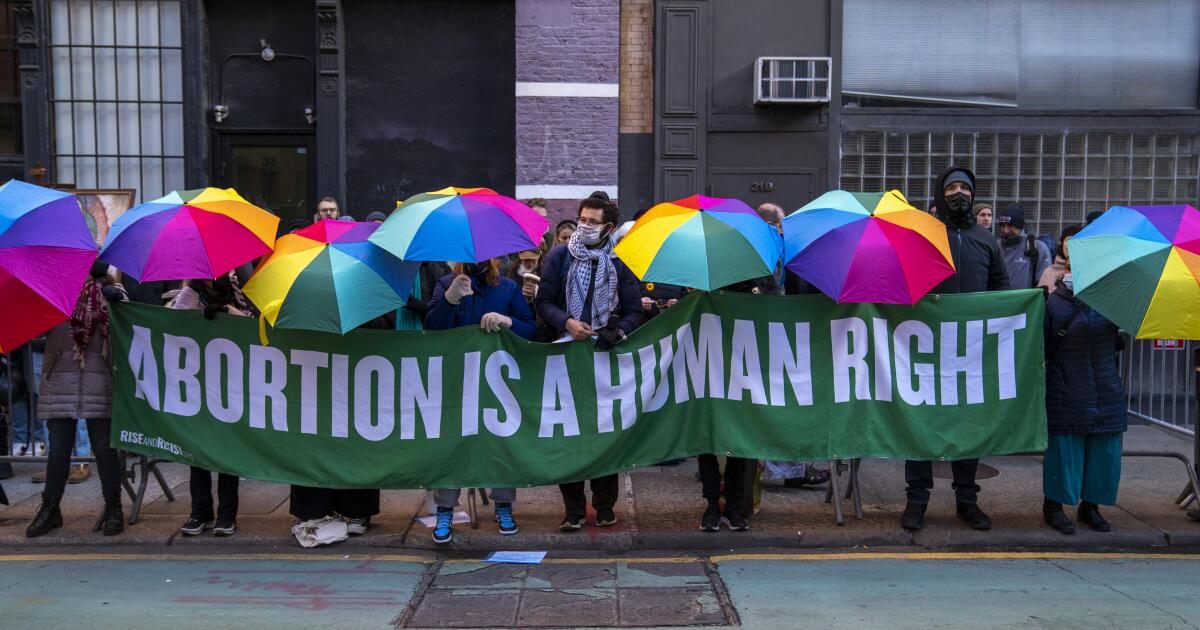
That problem, combined more broadly with rising costs, gave Democrats a strong showing in November's off-year elections. And those results, along with events like Trump's failure to cancel Jimmy Kimmel's TV show and the “No Kings” protests, conspired to generate momentum and a growing sense that Trump was not unstoppable.
Still, dear reader, if your goal is to survive the Trump presidency, the fact that Democrats got stronger was just the beginning.
The other healthy development was the growing realization by Republicans that Trump is an outgoing duck and (crucially) will not win a third term. Which brings us to trend number four.
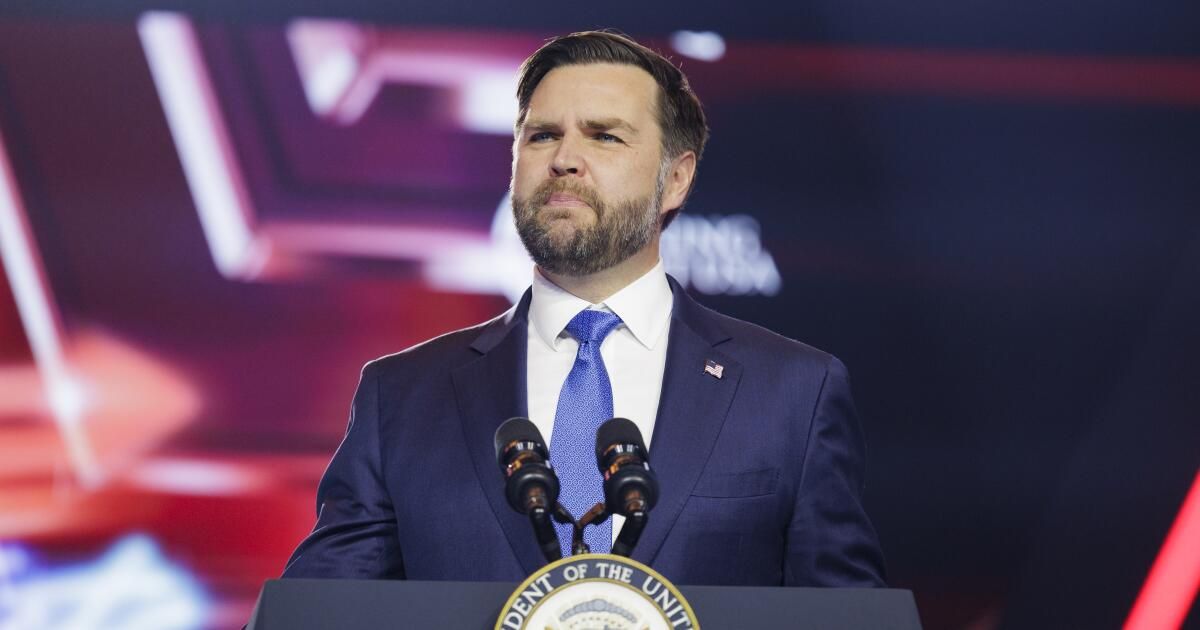
JD Vance ends 2025 as favorite for Republican nomination
By the end of the year, Republicans began to look beyond Trump and Vance had become the favorite for the Republican nomination. This was confirmed by that infamous Vanity Fair interview with Trump's chief of staff Susie Wiles, in which Marco Rubio politely announced that he would not run for president in 2028 if Vance does.
Then came news from Turning Point USA's AmericaFest that Charlie Kirk's widow, Erika Kirk, had declared: “We are going to get my husband's friend, JD Vance, elected to the 48th in the most forceful way possible.”
Vance's leadership status does not guarantee an easy path. In fact, trend number five may turn out to be your biggest headache.
The rise of the conspiracy fringe
Speaking of Kirk, his assassination in September left a leadership vacuum on the influential right, and nature abhors a vacuum, especially when it can be filled by a more racist faction.
In the days since, this conspiracy wing (which makes up some of the most popular podcasters and influencers) has become louder, angrier, and more openly anti-Semitic. One of its strongest (and growing) voices, white nationalist Nick Fuentes openly disdains Vance for various reasons, the main one being his marriage to an American Indian woman.
To survive these attacks and fully inherit Trump's mantle, Vance will likely have to burnish his right-wing credentials and continue attacking immigrants, despite being married to the daughters of immigrants.
It is a delicate dance, although not impossible. After all, Trump is also married to an immigrant and has a daughter who converted to Judaism.
But of course, Vance is no Trump, and we probably have three years to see how this part of the story ends.
That is, 2025 was not a year of triumph, but rather a year of transition. A year in which Trump's dominance began to fade, successors began to circle and voters quietly reminded politicians that food still costs money, no matter how many times affordability is declared a hoax.
Before anyone pops the champagne, though, a note of humility: In their columns in the late 2000s, very few experts predicted that Islamist terrorism would dominate the headlines in 2001. It's entirely possible that something in 2026 will make all of this look like an argument over parking spaces.
We see through a glass, darkly. We hope the New Year will be easier on the nerves and cheaper in the checkout line.
Matt K. Lewis is the author of “Filthy rich politicians” and “Too dumb to fail.”