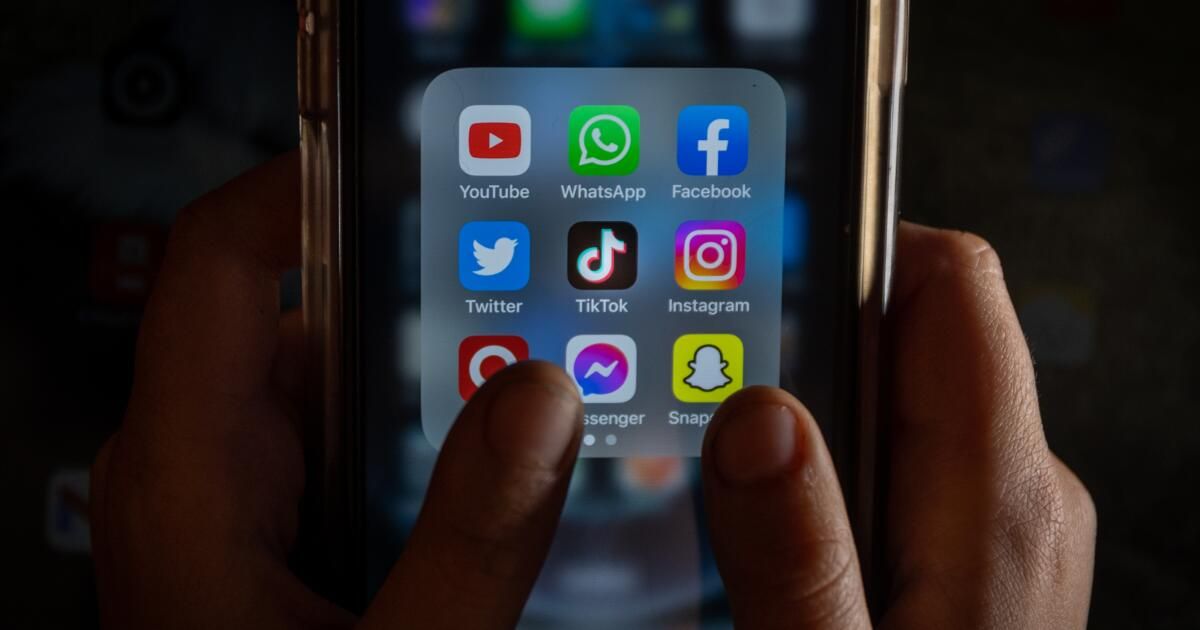
A Los Angeles jury may have done for social media what the first lawsuits did for Big Tobacco. Outside the courtroom, families who said they have lost children to the effects of these platforms gathered wearing T-shirts that read “We Are KGM,” expressing solidarity with the 20-year-old plaintiff. Inside the courtroom on Wednesday morning, the jury in the landmark KGM case against Meta and Google found the owners of Instagram and YouTube negligent for conduct that raises a question the country is only beginning to grapple with: What if app designs don't simply involve potential dangers, but are deliberately created to be harmful?
Contrary to common comparison, social media is not addictive in the same way that cigarettes are. On the one hand, platforms like TikTok, Instagram, and YouTube are designed to exploit what Judson Brewer, a neuroscientist, psychiatrist, and addictions researcher at Brown University, calls the “strongest type of reinforcement learning known”: intermittent reinforcement. Cigarettes provide predictable satisfaction to a craving, but when our brain recognizes the uncertainty about whether we will receive a reward, like a like or a comment, the mind says, “Hey, pay attention, because we need to figure out if that's dangerous or if that's nutritious.”
Plus, unlike cigarettes, social media is constantly redesigned to better capture and hold our attention. Documents from 2024 Lawsuit Filed by Kentucky Attorney General vs. TikTok illustrate how these addictive design features work in practice. Based on these records, TikTok carefully tracked engagement metrics to inform design features like continuous autoplay and algorithmically personalized content.
TikTok even used language consistent with how therapists talk about addiction. For example, TikTok tracked users' “moments of habit,” the point at which engagement shifts from casual, intentional behavior to more automatic, habitual behavior.
In my practice as a clinical psychologist, I periodically assess a person's technology habits as part of the intake process. I often find that technology overuse is closely linked to mental health issues, both as a symptom of underlying struggles and as a primary driver of psychological distress. I also find that people are often ashamed of their relationship with technology and have typically had little to no success in managing it without professional help.
Willpower alone, without scientifically backed reinforcement, is unlikely to be enough to break habitual social media use that has been designed and reinforced. The idea that “we can quit smoking at any time” is mostly a comforting (and dangerous) myth. How many of us have tried simple behavioral measures, like hiding the phone in another room or using screen time blockers, only to reverse the process within days?
And modern parents are generally not well positioned to save teenagers from technological habits. Adults should address their own compulsive phone use so they can better make the case to their children.
While these ideas point out how ingrained social media habits can become, we are not powerless. Personal intervention can be effective; It simply requires that we treat the problem as serious, even as an addiction, and turn to evidence-based strategies.
Breaking a habit requires operating with the same reinforcement learning processes that created it. Neuroscientist Brewer's research shows that people can break compulsive habits by working with those reward systems, paying close attention to impulses and gradually disenchanting themselves with the reward itself. He cited an example from his own life, where he overcame the absurd habit of eating gummy worms by slowing down and paying attention to their taste and feel, and whether he was really enjoying them.
Try to notice the pang of anxiety that often precedes picking up the phone or tapping on a social media app. Also, pay attention to what mindless scrolling really means. it feels as. Look at the “reward” you are receiving and reflect on whether it is worth it. If the distraction of anxiety or momentary stimulation is the “reward” you think you are getting… are you really getting it? And if so, how long is it useful?
The goal here is to prove to yourself, experientially and consciously, that the actual reward does not match expectations. Maybe he did at some point but he doesn't anymore. It turns out that anxiety doesn't always have to lead us to our phones. We can notice anxiety and decide how to respond to it, or whether to respond at all.
My clients rarely talk about the benefits of using technology. There is little mention of how it helps them feel meaningfully connected to others, provides genuine relief after a long day, or brings sustained enjoyment or laughter. More often than not, there is a clear recognition that using the phone doesn't really help. And yet, they haven't tried to pay close attention to the experience itself long enough to realize how limited or fleeting the reward really is, or to understand what it is that draws them back in the first place. The regularity and accountability of professional intervention can be especially helpful in supporting this type of awareness and monitoring.
It should be noted that cigarette smoking did not decline dramatically just because people suddenly became more sophisticated in treating addiction. It declined because it was treated as a public health issue, with widespread mandatory anti-smoking messages and government regulations on who could smoke and where.
We have similar options against social networks. As in Australia, our government could impose age restrictions. You could also set design limits, such as autoplay or algorithmic amplification. Companies could also be required to disclose how they track and manipulate engagement metrics.
We can only hope that this trial marks the first round of a far-reaching fight to protect our care and, most importantly, our children's.
Daniel Katz is a clinical psychologist in Cambridge, Massachusetts, whose practice includes helping people with behavioral problems, such as compulsive phone use.