Americans are quick to say they honor service and sacrifice. We constantly revere soldiers, first responders, and those who put themselves in harm's way for others.
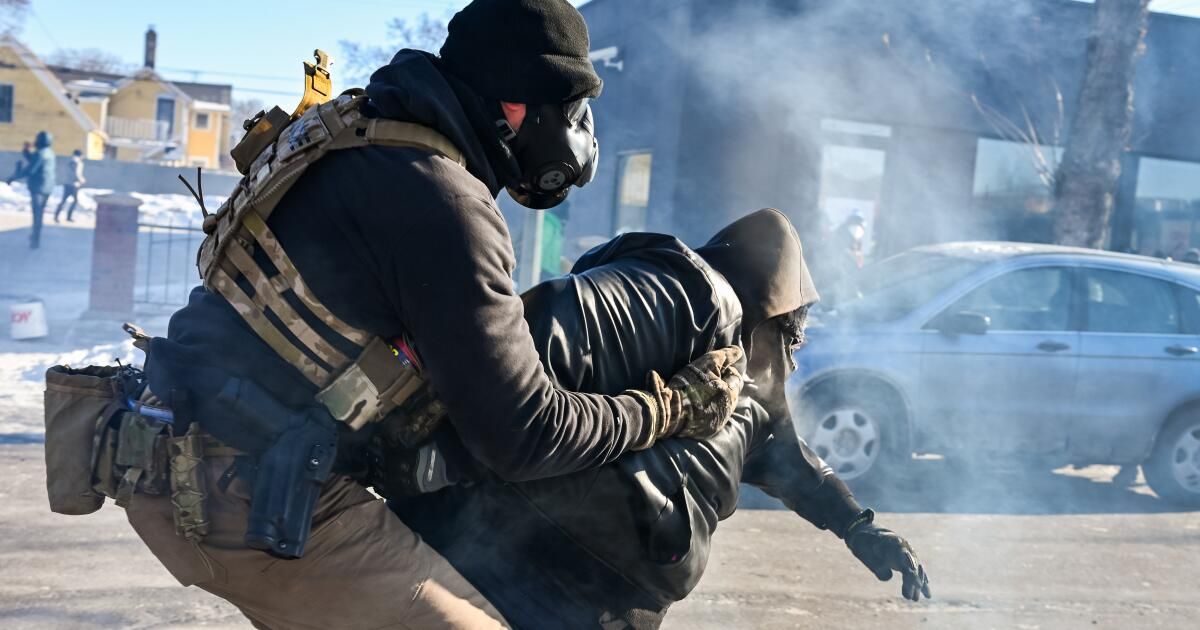
Yet in Minneapolis, ordinary people who do exactly that are now described as agitating and threatening. In public statements after the murder of alex prettia 37-year-old VA nurse, by federal agents, then-Border Patrol Commanding General Gregory Bovino framed the incident around the idea that Pretti “made the choice”to enter an active police scene, and imply that the mere fact that Pretti was there justified the response.
Treating presence near authorities as a provocation may seem reasonable. But in any tradition that takes service seriously, choosing to remain where harm is potentially occurring (visibly and without threat of violence) has never been unwise. He has been responsible.
The most common criticism leveled at people protesting violent immigration enforcement on the streets of Minneapolis, Los Angeles, or Portland is that they are reckless. Whatever your intentions, it is foolish to position yourself near armed officers during a volatile time. No one is quite saying that Pretti deserved to die, but the implication is clear: he shouldn't have been there. Decent people should stay out of the way of armed authority.
People on the streets of Minneapolis are not looking for confrontation. No evidence has been presented that they are attempting to block arrests or provoke force despite tens of thousands of citizens protesting. They refuse to look the other way while harm is done in their name, taking the risk personally rather than imposing it on others. They do not act impulsively or violently. They are filming, bearing witness, and remaining visibly and nonviolently in places where those who use force would prefer anonymity.
Calling such behavior reckless reverses the moral order. It suggests that the responsible reaction to an inexplicable force is withdrawal, that the best way to preserve safety is through silence and deference. When scrutiny of armed government power disappears, moderation rarely follows. History is full of people who were warned to stand down and stay safe, and who are remembered as brave because they refused.
When warnings about recklessness no longer convince, criticisms often change. If people are not stupid enough to take risks for nothing, logic says, they must be organized or manipulated.paid agitators.” In Minneapolis, some commentators have pointed to encrypted Signal chats showing people tracking federal agents and gathering near the scene as evidence of coordination.”far left network.” But the existence of shared alerts and group chats does not demonstrate payment, external control or malicious intent. It shows people communicating what they were witnessing, a distinction that has repeatedly collapsed in the rush to discredit their presence.
That assumption flies in the face of how Americans have historically understood service. Voluntary military service, civil rights organizing, and disaster response, among other acts of service, depend on ordinary people showing up without expectation of reward, often at significant personal cost. Your credibility comes not from compensation, but from presence.
The crowds in Minneapolis are neighbors, nurses, students, veterans and religious leaders. They appear in subzero temperatures. There is no anonymity, no protection, no reward: only visibility and risk. They are not there because it is profitable or safe. They are there because they believe that letting others face irresponsible power alone is worse.
Dismissing that choice as manipulation allows his accusers to avoid an uncomfortable truth: that ordinary people, given no incentive, continue to choose to act according to what they believe is right. Refusing to believe that choice is real is easier than dealing with what it says about obligation and who is willing to take risks for others.
When critics exhaust the language of recklessness and manipulation, they often fall back on familiar institutional refrains of “turning down the heat” and working through established channels rather than staying on the streets. Vice President JD Vance traveled to Minneapolis amid the protests and emphasized cooperation with authorities, urging protesters to “make that argument at the polls.”
Voting matters, of course. But voting assumes that power between elections remains responsible and limited by law. That is the condition that gives meaning to the vote in the first place. When scrutiny of the force is treated as a provocation and accountability is deferred indefinitely, telling people to “just vote” becomes a way to avoid responsibility in the present, not a serious defense of democratic norms.
If you don't understand why there are people on the streets of Minneapolis, you don't understand service or sacrifice; at least, not as lived commitments. People who rise up do not seek recognition or reward. They are neighbors who decided that silence was the biggest risk. Choosing visible, non-violent and responsible exposure is how service to one's community has always begun.
Americans say they admire courage, sacrifice and devotion to something bigger than oneself. We repeat those words often. But they lose their meaning when we recognize them only in institutions or stories that flatter us, and we refuse to see them in ordinary people who act without protection or promise of security.
Jon Duffy is a retired naval officer. Writes about leadership and democracy.