In one version of American history, California is a place where slavery was prohibited from the founding, in the state constitution of 1849and where that prohibition was reaffirmed by the state's ratification of the 13th Amendment in 1865. In another telling, it was a place that had ended the practice about 30 years earlier, when it was part of Mexico.
Despite being on the periphery of the Spanish empire and Mexico before becoming part of the United States, California had an important place in the broader struggle of enslaved peoples for their freedom. California connects the history of Mexico and the United States while serving as a reminder that there are few corners of the Western Hemisphere that have not been affected by the legacy of slavery.
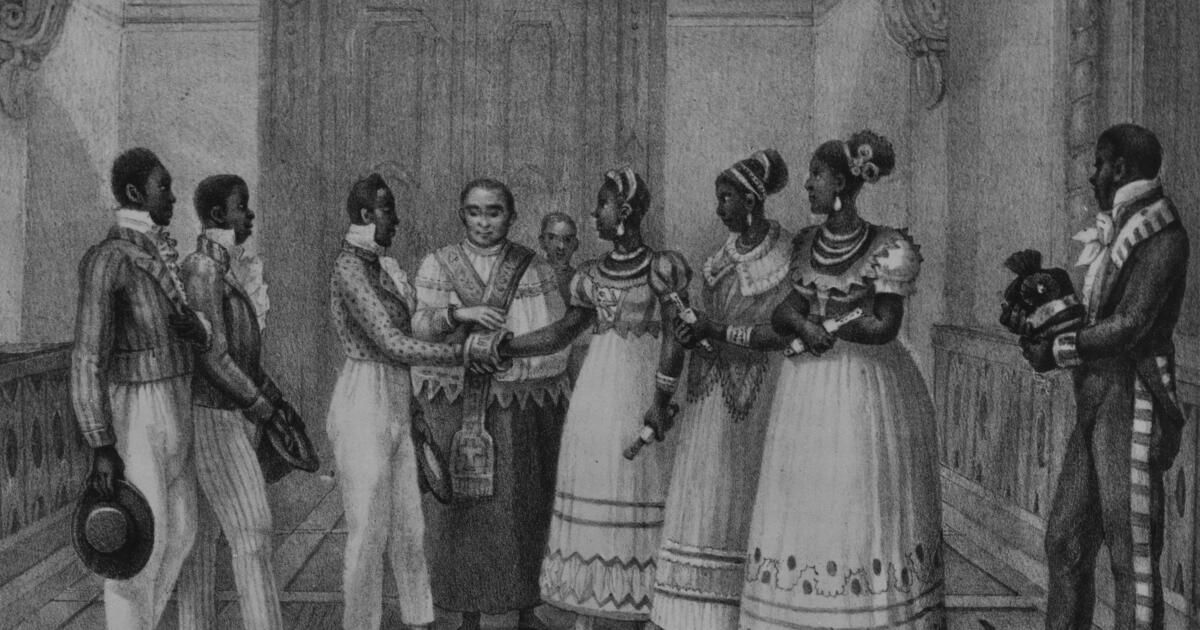
The story of the rise and fall of African slavery is often presented as a national (and largely Southern) American story rather than the hemispheric phenomenon it was. Enslaved Africans could be found as far south as Chile and Argentina to Canada. Likewise, the end of slavery was not only brought about by the Civil War in the United States, but also by centuries of resistance through rebellions, wars, sabotage, and self-emancipation throughout the American continent. This was also part of California history.
After the Spanish overthrew the Mexica empire in 1521, they wasted little time bringing captive Africans to the place they called New Spain, a vast territory that would later expand northward to include New Mexico and California. In the 1530s there were reports of plots to rebel, as well as the establishment of colonies by escapees from slavery. The leader of one of those communities, Gaspar Yanga, forced Spanish authorities to recognize his autonomy after troops failed to defeat him in 1608. This land outside of Veracruz became the first free black town in Mexico, known today as Yanga. It was a significant victory at a time when a It is estimated that 130,000 Africans were taken to New Spain.resulting in one of the highest African slave populations in the 17th century Americas.
However, by the 18th century the center of slavery had shifted further north to the sugar plantations of the Caribbean, and numbers declined in Mexico. Furthermore, there was still indigenous labor in Mexico, which was often exploited. This was also the case in the lands that would become California, as well as in New Mexico, where indentured and often “detribalized” indigenous peoples, known as genízaros, They were often forced into servitude that often bore more than a passing resemblance to slavery.
In 1829, the president of a now independent Mexico, Vicente Guerrero, who was partially of African descent, abolished slavery. This sparked an immediate outcry in the Texas panhandle, which was largely populated by slave-owning American immigrants. In 1836, Texas was independent, and slavery in Mexico officially ended the following year. Now Mexico became a land of possible refuge for people fleeing slavery in Texas or nearby places like Louisiana. It was much closer than the Underground Railroad that led to the northern states or Canada. Historian Alice Baumgartner has estimated that between 3,000 and 5,000 enslaved people He escaped to Mexico from the United States.
However, this possible zone of freedom was significantly reduced by the Mexican-American War of 1846-1848. After that conflict, 51% of Mexico was ceded to the United States. This included New Mexico, which had been part of the Spanish empire since the early 17th century, and California, which was colonized in 1769. The entire territory would ultimately form the states of California, New Mexico, Arizona, Utah, Nevada, and parts of Colorado and Wyoming.
The inhabitants of the lands ceded by Mexico were forced to confront the issue of slavery again when some of the gold miners from the United States rushed to California, and some were from the south, bringing slaves to work on their claims. According to one estimate, when the state was created in 1850, there were between 500 and 1,500 enslaved people brought to Californiaits status was obscured even after the state constitution was promulgated. Although the shadow of southern slavery haunted California, some people managed to find freedom in those early years. However, in 1852, California enacted a Fugitive Slave Law, which applied to people brought to statehood and led to many being sent back to Southern plantations. He Utah and New Mexico The territories, which would not become states until 1896 and 1912, passed slavery codes, which permitted slavery and were intended to regulate the treatment of people in servitude or slavery, both blacks and Native Americans.
Further south, however, most of the new republics of Spanish America had ended their involvement in the slave trade and implemented gradual emancipation measures as early as 1811, and final abolition was in effect by the mid-1850s. If California had remained part of Mexico, it would have been in this earlier and larger wave of abolition, instead of seeing the continuation or return of slavery.
Slavery shaped America for four centuries, ruining the entire hemisphere. The long struggle to dismantle it did not occur only in the United States or only in the South; in fact, in Cuba, Puerto Rico and Brazil it continued for decades after the American Civil War. Simple narratives like “California banned slavery at its founding” and “slavery ended in 1865” obscure much of their connection to this larger history. What happened in California illuminates the inequality of abolition and the many false promises of freedom. It also serves as a reminder of the need to take a broader perspective when thinking about slavery and freedom in the Americas today.
Carrie Gibson is the author of the upcoming book “The great resistance: The 400 years of struggle to end slavery in the Americas” and “The North: The epic and forgotten history of Hispanic North America.”