Television producers Jonathan Murray and Mary-Ellis Bunim didn't set out to change the media landscape when they approached MTV in 1991 with their idea for a soap opera centered on a hodgepodge of twenty-somethings based in Manhattan's East Village.
They just wanted to tell good human interest stories.
St. Mark's Place, a neighborhood known for its variety of street vendors and eclectic nightlife, was supposed to be not only the location of the show but also the title. However, while MTV executives loved the idea, the network was barely a decade old and avoided the scripted show's price tag. Undeterred, Murray and Bunim pitched an unscripted version that they could produce with less overhead. They changed the name of the show to “The Real World” and by the spring of 1992, it was on the air. The surprising success of the first season gave way to a second. For better or worse, the reality TV genie has been out of its bottle ever since.
When I asked Murray what it was like to see his sincere curiosity about the human condition stripped of authenticity and commodified for the masses, he smiled before saying that as a creative, you can only control what you can control.
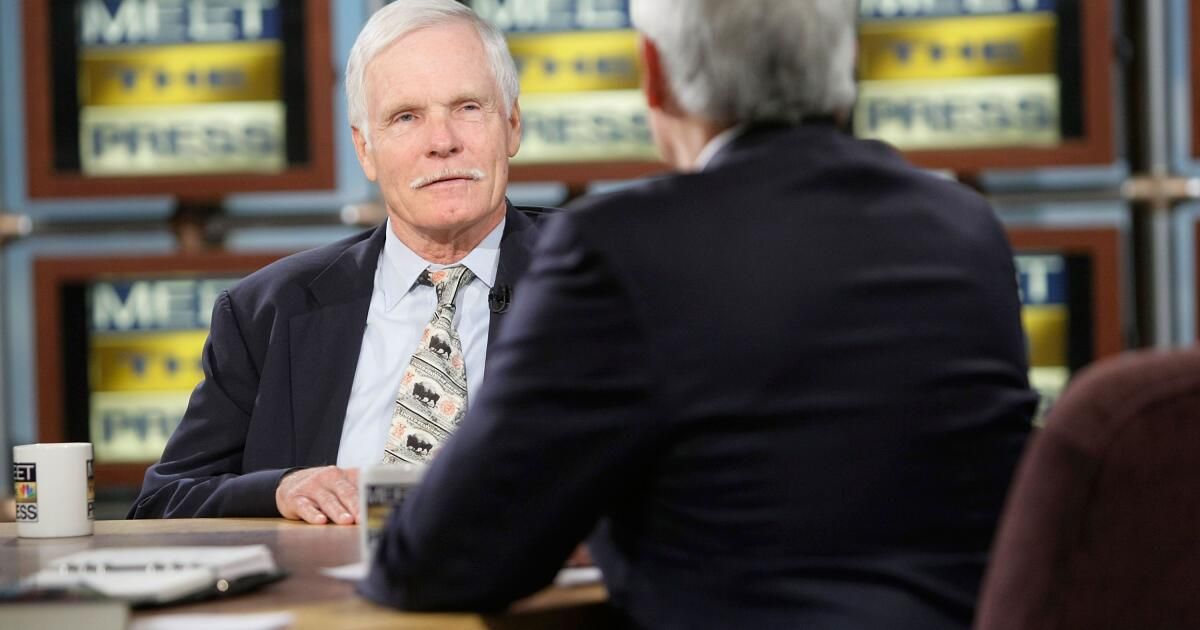
It's a bitter truism that would seem to cloud the legacy of Ted Turner, the media mogul who created the first cable superstation and revolutionized television journalism with the introduction of CNN in 1980. Turner died this week after a long battle with Lewy body dementia. He was 87 years old.
Known for his risk-taking, Turner built his media empire after taking over his father's billboard company, Turner Outdoor Advertising, when he was just 24 years old. He began acquiring radio stations before purchasing a fledgling television station in Atlanta in 1970. That eventually became the country's first superstation, broadcasting a signal well beyond the Atlanta area. However, it was the launch of CNN, the first 24-hour news station, that made Turner a household name.
Those who knew him best said he believed the network would unite people globally by offering nonstop coverage of world events. Known for reminding CNN reporters that the news is the star, Turner maintained control of his network until 1996, when he sold it to Time Warner for nearly $7.5 billion.
When the deal was made, Turner was supposed to stay on to guide CNN's news coverage, but it wasn't long before he found himself pushed out. And just as Murray saw what capitalism did to the modern reality TV genre he and Bunim co-created, Turner was forced to watch the 24-hour news industry transform from a tool for generating connection and understanding to a cash cow fueled by division.
Towards the end of her life, she often said that her second biggest regret was losing control of her baby (the biggest was her three failed marriages). When he worked at CNN, Turner was no longer in charge, but his images and words still adorned the walls of the Atlanta headquarters. Over the years, controversy with the White House and ratings fights have come to dominate headlines about the network, but its core mission never changed for in-house journalists.
However, it is the rules of capitalism, not human connection, that determine which 24-hour news channels choose to broadcast. It is the rules of capitalism, and not the defense of democracy, that determine personnel and coverage decisions.
With news as its star during the Turner years, CNN's potential was dictated by truth and facts, protected by the call of journalism. After Turner sold the station, he was forced to watch a new metric take over not only his company but the entire industry: getting the most eyeballs no matter what. This handcuff-free metric of journalistic integrity would generate more revenue, but it would no longer accomplish what Turner originally set out to do: bring us together.
When you talk to people about cable news today, many express frustration and seek to avoid it altogether. And when it comes to reality shows, few believe that what we are seeing is real. The real human experience is not so sensational; we know this. But we're drawn to the spectacle of it all anyway, just as we're drawn to the conflict that now dominates cable news. That's not good for society, of course, but as long as we're willing to tune in, we'll continue to watch programming that pursues profits over civility. Benefit on humanity. Benefit over almost anything else. This was true when the cotton industry was the backbone of the American economy, despite the immorality of slavery; This was true when the tobacco industry hid the harmful effects of smoking from the public to protect cigarette sales; This is true today, as the desire to monetize clicks and likes replaces the harm caused by fake anger baits. That's why the potential for goodwill arising from artificial intelligence is accompanied by a reasonable fear that capitalists will err on the side of profit, rather than caution.
Turner's entrepreneurial spirit transformed television and I believe society as a whole is better for it. But because the nature of capitalism requires constant growth, there's something fundamental that media pioneers like Turner and Murray couldn't change: In America, it's not the news, the voters, or a hodgepodge of twenty-somethings who are the stars of the show.
It's money.
YouTube: @LZGrandersonShow