One of the most important political stories in American history, particularly related to our current tumultuous times, unfolded in Los Angeles some 65 years ago.
Senator John F. Kennedy, a Catholic, had just received his party's presidential nomination and, in turn, rejected the wishes of his most liberal supporters by choosing a conservative from Texas as his running mate. He did so largely to address concerns that his faith would somehow usurp his oath to defend the Constitution. The last time Democrats nominated a Catholic (New York Governor Al Smith in 1928), he lost in a landslide, so people were more than a little nervous about Kennedy's chances.
“I am fully aware of the fact that the Democratic Party, by nominating someone of my faith, has taken what many consider a new and dangerous risk,” Kennedy told the crowd at Memorial Coliseum. “But I look at it this way: The Democratic Party has once again placed its trust in the American people and their ability to render a free and fair judgment.”
The most important part of the story is what happened before Kennedy gave that acceptance speech.
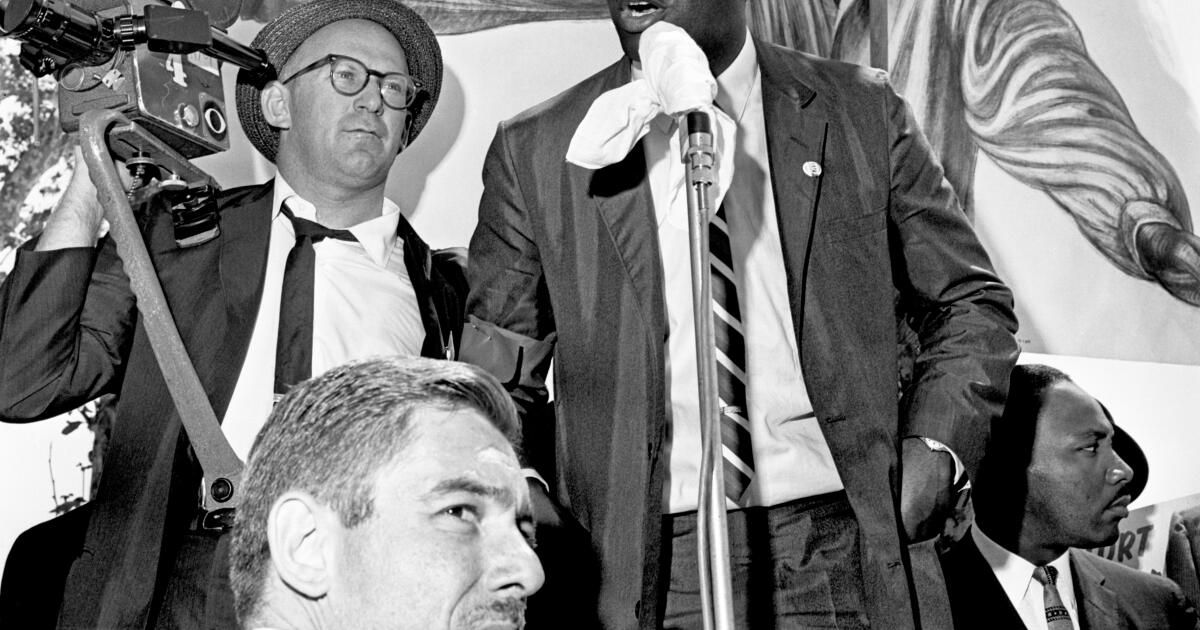
While his faith made party leaders nervous, they were downright scared about the impact a civil rights protest during the Democratic National Convention could have on the November election. This was 1960. The year began with black college students challenging segregation with lunch counter sit-ins across the Deep South, and by spring the Student Nonviolent Coordinating Committee had formed. The Rev. Martin Luther King Jr. was not the organizer of the protest at the convention, but he was scheduled to be there, ensuring media attention. To try to stop this whole scene, they sent the most powerful black man in Congress to stop him.
The Rev. Adam Clayton Powell Jr. was also a civil rights warrior, but the House representative preferred the legislative approach, where secret deals were made quietly and his power was more concentrated. He and King wanted the same things for black people. But Powell, who was first elected to Congress in 1944, the same year King enrolled at Morehouse College at the age of 15, was threatened by the young man's growing influence. He also worried that his inability to stop the protest at the convention would hurt his chances of becoming chairman of a House committee.
And then Powell, the son of a preacher and himself a Baptist preacher in Harlem, told King that if he didn't cancel, Powell would lie to reporters that King was having a homosexual affair with his mentor, Bayard Rustin. King stuck to his plan and led a protest – even though such a rumor would not only have hurt King, but would have also undermined the credibility of the entire civil rights movement. Remember, this was 1960. Before the March on Washington, before the passage of the Voting Rights Act, before the dismantling of the same Jim Crow laws that Powell had promised to dismantle when he first ran for office.
That threat, my friends, is the most important part of the story.
It's not that Powell didn't want what was best for the country. It's just that he wanted to be seen as doing it and was willing to derail the good that came from the civil rights movement to secure his own place in power. There have always been people willing to make such concessions. Sometimes they disguise their intentions with scriptures to make them more acceptable; other times they play with our darkest fears. They don't care how many people get hurt in the process, even if they are the same people they claim to care for.
That was true in Los Angeles in 1960.
That was true in Washington, DC, on January 6, 2021.
This is true today on the streets of America.
Whether we're talking about an older pastor who is threatened by the growing influence of a younger voice or a president who clings to his position after losing an election: to remain king, some men are willing to burn the entire kingdom.
YouTube: @LZGrandersonShow