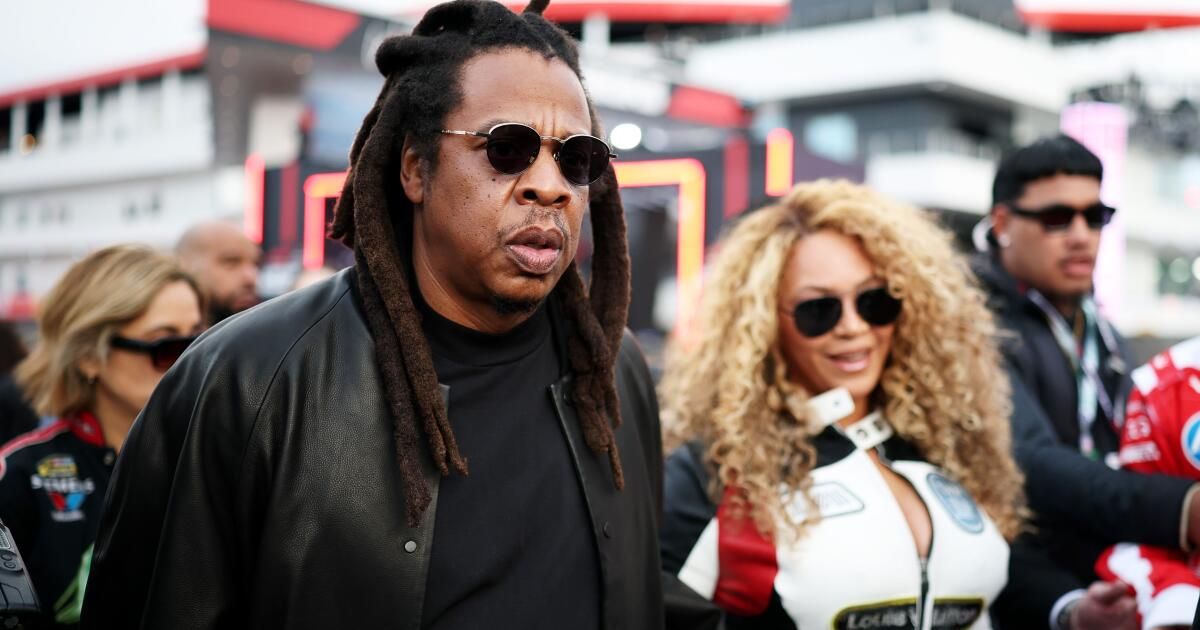
Before Beyoncé married Jay-Z and started growing her family, she sang about dating a worthless, insignificant brother who didn't know what it meant to be a man. He couldn't pay his bills. Not even your phone bill. Not even the car bill. This was in 1999, while she was a member of Destiny's Child. Perhaps the lyrics to the hit “Bills, Bills, Bills” rang true in many ears, because that song earned the group its first Billboard No. 1 and Grammy nominations. Twenty-five years later, the most decorated artist in Grammy history is now officially among the estimated 3,000 billionaires in the world.
If a phone bill still exists at that socioeconomic level, I'm pretty sure she can pay it. Even if cell service cost $100 a day, someone starting with $1 billion wouldn't be without service for almost 28,000 years. So you can imagine how Taylor Swift, who achieved billionaire status almost three years ago, was able give almost 200 million dollars in bonuses to the team for their Eras tour. Only the truckers received $100,000 each. Speaking of blue-collar workers, Bruce Springsteen, who built his career on being the voice of the blue-collar worker, is also part of the billionaire club.
So whatever negative thoughts progressives have about the ultra-rich, given that they currently the top 1% controls approximately $52 trillion – they also have to reconcile that with the fact that a handful of musicians we've been listening to for decades are now among them. This includes Rihanna and the aforementioned Jay-Z, whose singles “Hard Knock Life (Ghetto Anthem)” and “Money Ain't a Thang” were among their first Grammy nominations in 1999. The same year, “Bills, Bills, Bills” topped the charts. Today, one of the most beloved couples in music breathes rarefied air. Destiny fulfilled as far as I'm concerned.
And those songs about heartbreak and pain (joy, love) will always feel the same. But without a strong dose of cognitive dissonance, everything billionaires say about money now reaches ears differently. The way Madonna sings “Like a Virgin” sounds different now.
I'm not suggesting that their incredible success is undeserved or a problem; In fact, it is an opportunity.
When John D. Rockefeller became the world's first billionaire in 1916, it was a consequence of a Supreme Court decision that affected his holdings in Standard Oil. More importantly, he employed almost 60,000 people at the height of his power, so although he was the richest man on the planet, the social benefit was clear. And the Revenue Act of 1916 ensured that the wealthiest Americans were in the highest tax bracket. A century later, the picture is blurrier.
The proliferation of tax loopholes and the 2010 Supreme Court ruling that allowed corporations to spend infinite amounts on political ads has greatly changed the way Americans view billionaires, particularly those with progressive sensibilities. And especially for the type of fans likely to attend a Beyoncé, Springsteen or Swift concert.
During Trump's first presidency, so-called “tech experts” like Jeff Bezos and Mark Zuckerberg resisted some of the administration's ugly and unconstitutional tendencies. However, in the sequel that was not the case. There are stranger things than witnessing some of the world's richest capitulate to an erratic strongman for a year. Like watching members of Congress duck work to avoid talking about the Epstein files, for example. Still, the reluctance of the top 1% to use their vast resources to protect democracy has left many of us feeling helpless, even hopeless.
Historically, during disconcerting times, it has been artists who have stood in the gap and been the voice for the voiceless. Now that more and more of our most influential musicians are financially migrating toward the ultra-elite, one can't help but wonder if money will change their calculations. Maybe they won't go full Nicki Minaj: her political shift has cost her fans and her credibility. But perhaps instead of shouting for justice like the artists of yesteryear, many are tempted to remain silent and count the growing pile of bills.
YouTube: @LZGrandersonShow