Last update:
AI may seem like a safe listener, but does it really help you grow? Know where comfort ends and dependency begins, and what that means for your mental health.




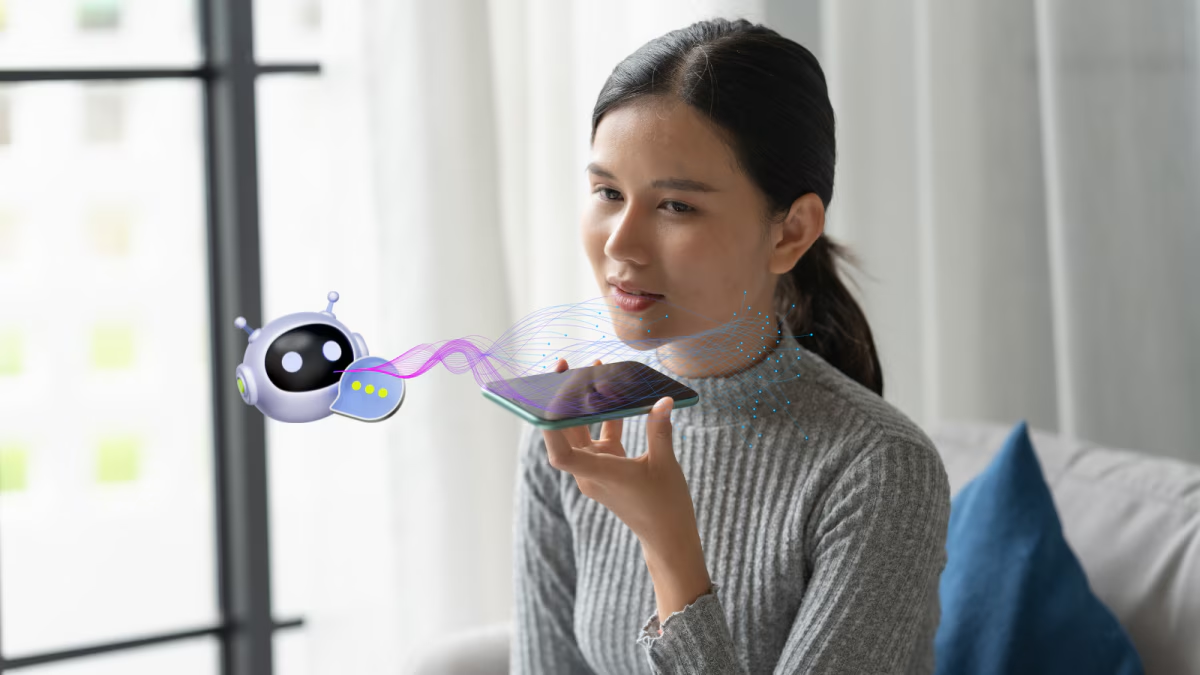
What begins as occasional use can become a cycle of returning to the chatbot in search of emotional stability. (Image: Canva)
Have you ever typed something into ChatGPT that you wouldn't feel comfortable saying out loud to someone else: a worry, a relationship doubt or moment of quiet anxiety, work problems you couldn't explain to anyone else? You are not alone in that instinct. For many, AI has become a space where thoughts feel safer, easier to express, and free of judgment.
What makes it interesting to resort to AI to solve personal problems is the speed with which it has happened. Recent research from Harvard Business Review shows a change in the way people use these tools and the main reason is no longer idea generation but something more personal: therapy and companionship.
In a world marked by financial pressure, isolation and uncertainty, many are turning to AI for emotional support. Tools like ChatGPT, Claude, and Gemini are no longer just about productivity, but are used for emotional support, reflection, and even something resembling therapy. For an increasing number of people, AI is the place they turn first when something doesn't work.
For someone who doesn't have access to therapy, that feeling of being heard can feel like a lifesaver. AI can offer grounding techniques, help label emotions, and provide basic coping strategies. In some cases, it can act as a temporary emotional stabilizer, especially during times of distress.
Psychotherapist Asha Mehra explains that AI is designed to be pleasant. “It reflects what a user is expressing, and often reinforces their current perspective. This can be supportive in the moment, but it can also prevent deeper reflection or a necessary emotional challenge,” he says.
But here's the question worth addressing. Just because something feels supportive in the moment, does that mean it's actually helping in the long run?
Can AI replace a human therapist?
This is where limitations start to matter. Psychotherapist Asha Mehra explains: “Therapy is not just about validation. It involves challenge, discomfort, and gradual emotional growth. Human therapists are trained to interpret non-verbal cues, recognize patterns, and guide clients through difficult conversations.”
AI, on the other hand, is designed to maintain engagement. Responds based on patterns in the data and tends to agree with the user. While this can be reassuring, it can also reinforce existing beliefs rather than challenge them. In Mehra's words, “Therapeutic progress often occurs when a client is gently challenged. AI does not operate with that intention.”
Mehra states this with an example: “If a user seeks reassurance about a relationship, they may receive advice that prioritizes avoiding conflict. While this may reduce anxiety in the short term, it may conflict with values such as open communication or honesty. This mismatch may leave the user feeling more insecure than before.”
Risks of relying too much on AI for mental health
Overreliance on AI can lead to repeated checks, reassurance seeking, and increased dependency. What begins as occasional use can become a cycle of returning to the chatbot in search of emotional stability.
As Mehra says, “AI reflects what a user expresses, often reinforcing their existing perspective. This can be supportive in the moment, but it can also prevent deeper reflection or a necessary emotional challenge.”
What this really means is that while AI may help you feel better temporarily, it may prevent you from fully processing emotions, making decisions aligned with your values, or developing resilience. Over time, this can lead to increased anxiety, dependence on external validation, and a reduced ability to cope with emotional complexity on your own.
There are also concerns about accuracy and safety. AI can generate answers that sound safe but are not always correct. More importantly, it cannot reliably assess risk or respond appropriately in crisis situations.
Unlike licensed professionals, AI systems are not subject to ethical guidelines. They cannot escalate attention, recognize subtle warning signs, or intervene in emergencies.
Studies suggest that long-term use of chatbots may correlate with an increase in depressive symptoms, while shorter, more intentional use may be more beneficial. When users rely heavily on AI for emotional validation, they may become more anxious over time rather than less.
Mehra advises using AI as a complementary tool rather than as a primary source of emotional support. It can help with general counseling, emotional labeling, and basic coping strategies, but should not replace therapy, especially for complex or serious mental health problems.
And he adds: “Pay attention to how you feel after using these tools. If you notice an increase in anxiety or dependency, it is important to take a step back.”
The most practical approach is to see AI as a tool, not a therapist. It can support your journey, but it shouldn't define you.
April 2, 2026, 20:55 IST