“I didn't want to put a Contramar here,” said Gabriela Cámara, sitting in the dining room of her new restaurant at the Fontainebleau Las Vegas. “I didn't believe that a restaurant like Contramar could have a replica.”
Then he proved her wrong.
The black beef aguachile from Cantina Contramar in Fontainebleau Las Vegas.
(Ana Lorenzana)
Cantina Contramar, a spinoff of Contramar, the seafood-focused restaurant in Mexico City that she founded nearly three decades ago, opened its doors in late March. Located at the north end of the Strip, it has the essence of the original Roma Norte, just reinvented for the Las Vegas public.
The restaurant is located above the casino on the second floor, next to a food hall offering lobster rolls, burgers, pizza, sushi and, yes, tacos. Las Vegas is a mecca for cuisines from around the world, including Mexican, but Cantina Contramar is arguably the biggest opening by a Mexican chef in the city. Cámara's innovative tostadas, grilled fish and tacos helped define Mexican cuisine in Mexico City and beyond, and many Contramar creations are now part of the country's seafood lexicon.
In the months leading up to opening, the Las Vegas environment for his restaurant began to click. Cámara has highlighted the ways food and politics are intertwined throughout her career, having implemented staff health insurance and equitable tip sharing at her restaurants years before it was part of a broader conversation happening in the industry. And Las Vegas' long history as an established hospitality hub meant creating opportunities for the city's vast Latino workforce, which makes up more than 50% of hotel and restaurant workers represented by the city's Culinary Workers Union.
“Las Vegas started to make sense because of the hiring possibilities and because many people with Mexican and other Latino backgrounds were very excited about working in a restaurant of this level and with Mexican food,” he said.
And it is not lost on Cámara that in the midst of ICE raids targeting undocumented workers and Latino communities across the country, he is opening a restaurant that celebrates Mexican cuisine and culture in one of our country's most popular international tourist destinations.
“It seems like a total honor to be able to do a Mexican restaurant here and now,” he said. “An honor, but a great responsibility to do it well.”

Prominent Mexican architect Frida Escobedo designed the Las Vegas-derived version of Gabriela Cámara's Contramar restaurant in Mexico City.
(Maureen Martínez Evans)
At the age of 22, he opened Contramar in a Rome warehouse with no formal restaurant or culinary training, serving variations on the beach food he enjoyed during weekend trips to Zihuatanejo. It was elegant but comfortable, and quickly became a local and international destination, with bow-tie-clad waiters delivering plates of tostadas and tacos that, over the past 28 years, have become synonymous with Mexico City cuisine.
“Contramar is a kind of cantina, an informal place where people meet to have a good time, very accessible,” he said. “I thought cantina was a better term for what this could be, but a little more chic, because Las Vegas is not a beach shack, right?”
In Las Vegas, he has introduced more meat-centric dishes, with Wagyu roast beef, black-rubbed ribs and a dry-aged tomahawk steak. The black beef aguachile may be the most iconic on the Las Vegas menu, uniting Cámara's signature seafood preparations and the boldest, most theatrical red meat dishes one could expect from a Las Vegas restaurant. Chunks of domestic Wagyu tenderloin sit in a deep black sauce fortified with soy sauce. On top of each piece, a small mound of diced cucumber and avocado, dressed with leche de tigre with serrano chile.

A seafood platter at the new Contramar Cantina at Fontainebleau Las Vegas.
(Marcus Nilson)
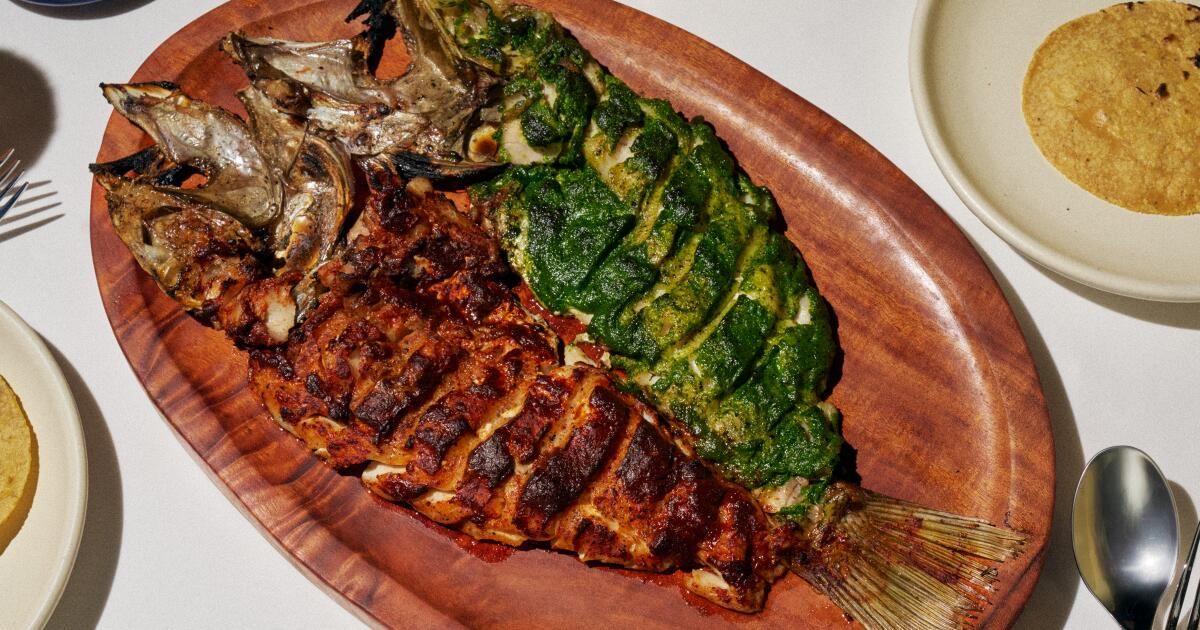
Their most famous dish, tuna tostada, appears at Cantina Contramar, with smoked chipotle mayonnaise spread on crispy toast, the entire surface nearly covered with panels of fresh tuna, fried leeks, and a thick slice of avocado. In addition to their most recognizable fish, a whole white fish, beautifully charred on the grill and painted with red marinade and a garlic and parsley dressing.
The goal is for the cooked fish to taste the same as what is presented in their Mexico City dining room, but supply for Cantina Contramar has posed challenges in the weeks leading up to the opening. Two weeks ago, Cámara was in the midst of what he described as a “lime crisis,” in which he was introduced to lime juice instead of fresh citrus.
“I thought, 'Oh, no, no, no, no, we're not going to use that,'” he said. “These are tough times for limes even in Mexico, so we just needed to get good limes from California. I've been very stubborn about getting what we needed.”
While you use snapper in Contramar, Cantina Contramar offers rock cod for the carving fish, or any white fish you can get from as local a source as possible, working with suppliers in California, Baja California, and the Gulf of Mexico. The mushrooms featured in their mushroom adobo tacos are from Desert Moon Farms in Las Vegas.
The restaurant nixtamalizes its own corn. The chorizo crumbles on the melted cheese are made in-house.
“I hope diners are pleasantly surprised by how varied Mexican food can be,” he said. “It's very sophisticated without being impossible to understand.”

Architect Frida Escobedo, left, chef Gabriela Cámara and Bertha González Nieves at the grand opening of Cantina Contramar.
(Denise Truscello/Getty Images for Fontainebleau Las Vegas)
Behind the bar at Cantina Contramar is a wide selection of agave liqueurs and an emphasis on Casa Dragones bottles. Bertha González Nieves, co-founder of the small-batch tequila producer, was the one who put Cámara in contact with the hotel and serves as an advisor to the restaurant. Their tequilas appear in many of the restaurant's signature cocktails, including a version of Paloma y Dragones Rosa, with Casa Dragones Blanco tequila, Bianco vermouth, tomato, guava and lime.
Prominent Mexican architect Frida Escobedo designed the space. Diners enter through a hallway lined with tiles that span a spectrum from indigo to ocean blue. The main dining room is a spacious room with high ceilings, pale wood and fresh tiles reminiscent of the original Contramar.
“I've never been a Vegas person, simply because it's never been in my universe,” he said. “I'm very curious to see how this plays out. Most of the staff speaks Spanish, and it's very important that this is a Mexican restaurant where we make tortillas, cut the fish from scratch, and do things the way we've always done them.”