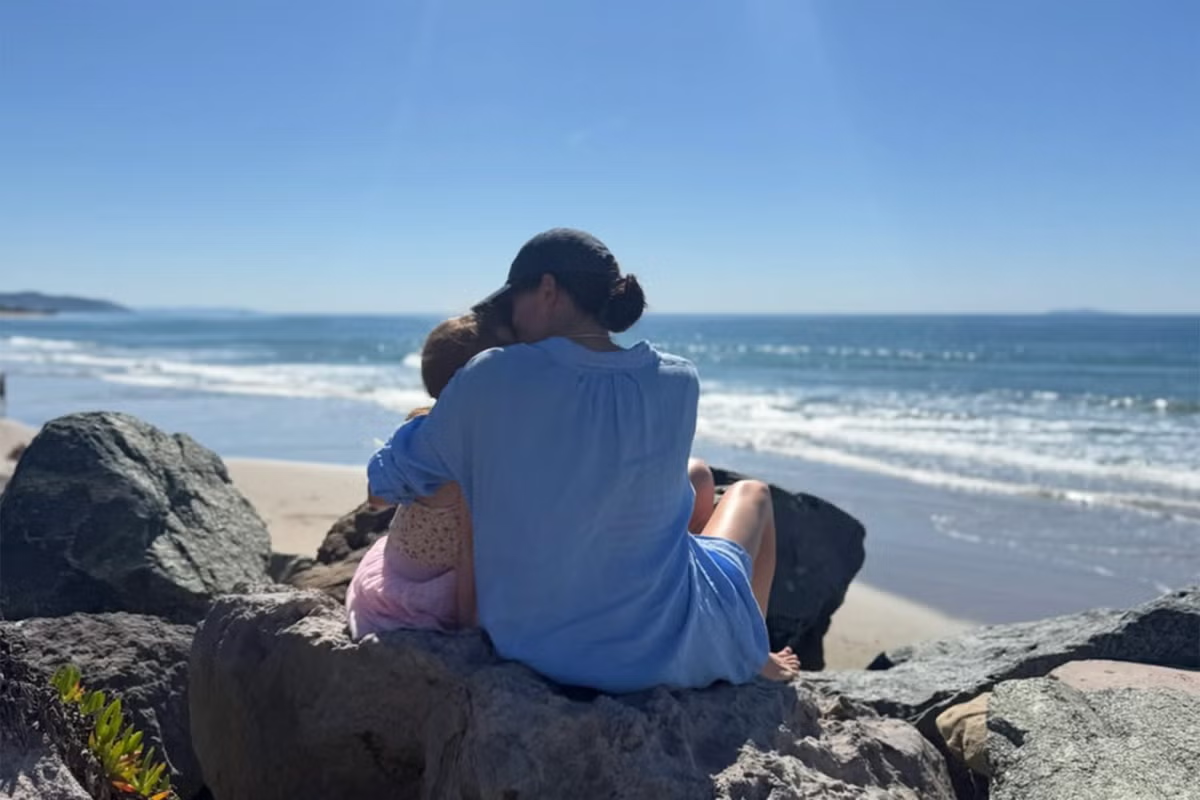
tThe Duchess of Sussex's new Instagram post shows her hugging her daughter, Princess Lilibet, four, as they sit together in loving harmony on a seaside rock in honor of International Women's Day.
“To the women, she will one day be… Happy International Women's Day,” the caption reads, while saying “Daddy Sussex.” [Prince Harry] image credits.
The sky is a perfect blue. It's a powerful and tender photo, and it's Lilibet's favorite pose: the back or side of Lilibet's head. We have seen it many times before. There's the back of Lilibet's head wearing a backwards baseball cap while helping at a Thanksgiving soup kitchen in November, a “Happy Holidays” post in December with her hair covering her face, and there she is enjoying picking pumpkins in October, pulled in a cart by Meghan, while six-year-old Prince Archie runs around, only visible from behind too.
It's known as “safe sharing” and aims to protect a child's privacy from identity theft, online exploitation, deepfakes, and other security risks.
I understand. I really do. Only now are parents realizing the effect that putting their children online has on their children, never mind the real danger of having their image stolen as well. The only problem is that just a few weeks ago, Meghan shared the first photo of Lilibet's face in years in a Valentine's Day post. In the photo, Harry is carrying his daughter, who is wearing a pink ballet costume and holding red balloons, with her face clearly visible.
This sent the internet into overdrive as fans finally got a real idea of what redhead Lilibet looks like now, and the general consensus is that she's just like Harry. Meghan captioned the photo: “These two + Archie = my forever Valentine.”
Meghan also showed off Archie and Lilibet's faces in a relaxed family photo taken in 2021 when Lilibet was just a baby and Archie was two years old. Then, for her fourth birthday, Lilibet's eyes and the top half of her face could be seen, with the rest of her face covered by Meghan's arms as she hugged the princess. So why so many cuts and changes?
Last year, Meghan shared photos from a trip to Disneyland, obscuring Archie and Lilibet's faces with an orange and pink heart, respectively. It just doesn't make sense. It's a game of hide-and-seek on social media; Must? Isn't it? Should we hide his face with emojis? Or darken it with her hair… or my arm?
Never one to starve for publicity, Meghan is clearly eager to show the world her royal children and get her “public life” underway, despite all of Prince Harry's pleas for privacy. But in reality, it all seems like performative privacy: annoying and increasingly adopted by countless other celebrities as well.
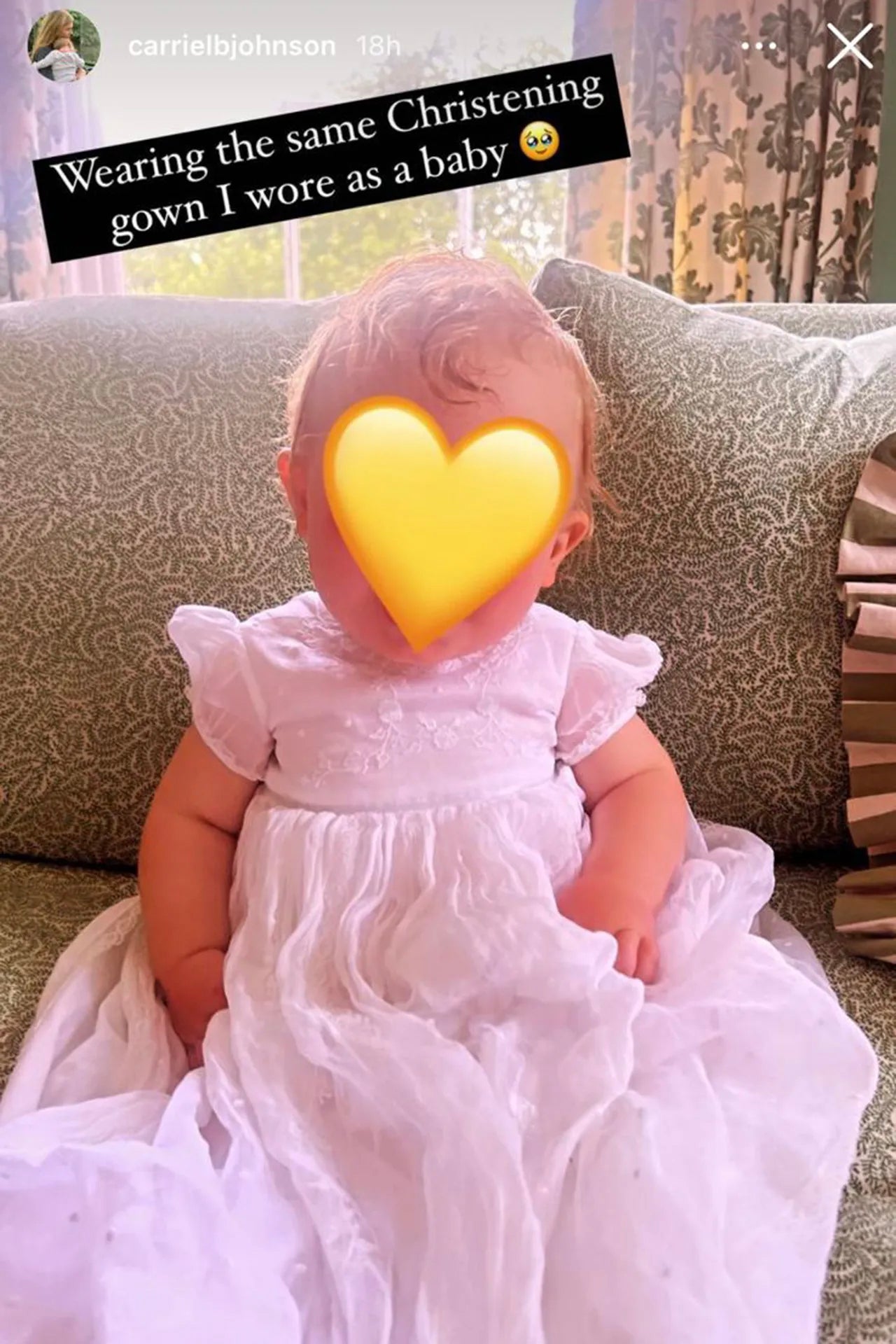
Carrie Johnson continually shares her perfect “mom life” with beautiful photos of Wilfred, five, Romy, four, Frank, two, and Poppy, almost one, on Instagram. It's a mix of idyllic romps through the British countryside feeding various animals and glorious shots of honey-limbed Carrie and her mop-haired children on gleaming exotic shores.
Her fairytale life of zoos, beaches in West Wittering and the Cayman Islands, as well as muddy walks in the UK and the inside of her cozy house in Oxfordshire, is a useful distraction from the fact that Carrie is married to a stodgy, messy man more than 20 years her senior. But while we know the intimate details of the color of their children's pajamas, we've never seen their faces, which are endlessly hidden with clever angles and, yes, cartoon emojis.
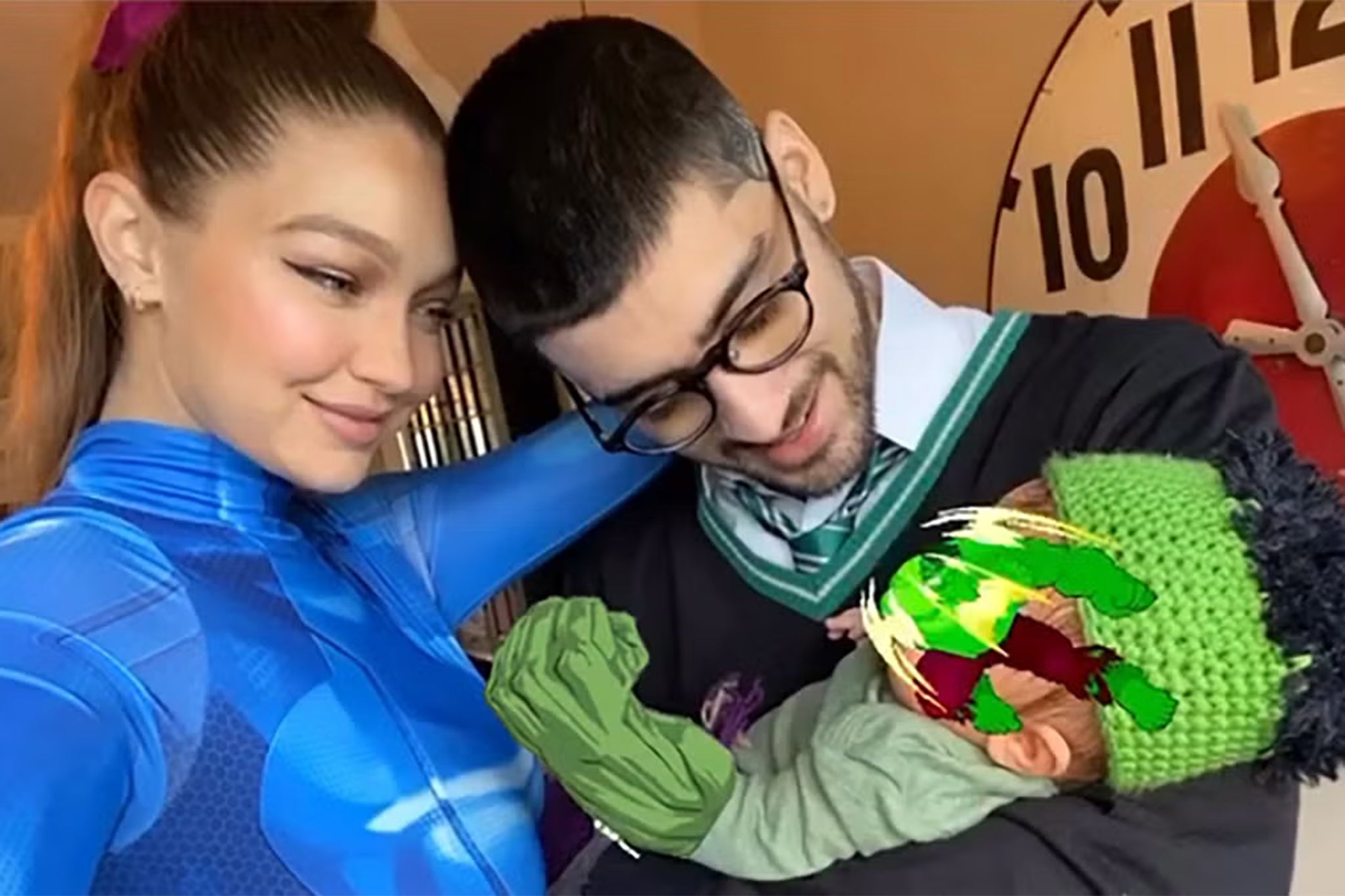
Similarly, Priyanka Chopra and Blake Lively have the annoying habit of sticking an emoji on their children's faces, usually a heart or cartoon masks. Gigi Hadid and Zayn Malik used a Hulk emoji to hide their daughter Khai's face in a family photo shared on Instagram during Halloween 2020.
But if you're so concerned about a child's privacy, why share their updates? With their faces hidden, these parents continue to share massive amounts of identifiable data. The images give clues to locations, ages and hair color, as well as daily routines, which surely raises a privacy issue.
It's announcing to the world, “Hey, I'm worried about privacy, but I'm going to go ahead and share anyway, so you know we're living a perfect family life. Thanks for stopping by.”
And I'd say there's also something dishonest about using your kids as breadcrumbs for content. It's almost as if they're saying they're better than the rest of us, who happily post photos of our kids on our social media posts, because we want to share our moments of joy. Now, we have another thing celebrities make us feel bad about.
However, putting an emoji over a child's face on social media does not provide 100 percent privacy protection, and it's time for self-righteous parents to stop pretending that it does.
Posting photos, even with faces covered in flashing hearts, helps train facial recognition algorithms and creates a digital profile of the child. There is a lot of scaremongering online about whether AI tools can remove or prevent an emoji or sticker that has been placed over a child's face in a photo. Frankly, any photograph of a child online is a risk.
It's too late to do anything about my kids' online privacy after 10 years of outright posting, and I'm sorry. I admit that I have been too arrogant about it, although so far I found it a wonderful document of his life. But do it or don't, and stop making the rest of us feel bad who post pictures of our kids' faces online.
Ultimately, I know Meghan and company are right to try to protect their children against facial recognition technology and deepfakes. The #NoKidPolicy trend on social media focuses on the growing movement of users and celebrities advocating against children's faces, lives or personal data online, a position I admire.
But Carrie and the like are trying to have their social media cake and eat it too by occupying this confusing middle ground. Last week, Johnson even posted a photo of baby Poppy's face while enjoying a cocktail at a restaurant. If you are someone with genuine privacy concerns, then don't participate at all. Or at least switch to a private group instead of a public platform?
“Putting an emoji over a child’s face on social media doesn’t provide 100 percent privacy protection, and it’s time to stop condescendingly pretending that it does.”
At least famous parents like Eva Mendes and Ryan Gosling, Cameron Diaz and Benji Madden, and Amal and George Clooney are standing firm: Their children never perform online.
The best protection is to not post photos of children at all. But please show full image or none at all. It's much easier to pretend to yourself (and the world) that you can post about your kids “half-safely.”
Appear responsible and minimize risks. But, for the rest of us, it seems like you're trying to have the best of both worlds. And when it comes to celebrities and their privacy, hasn't it always been that way?