On Christmas morning, the man I thought I needed dropped me off at another man's cabin.
Hours earlier, Thom and I were lying on the floor of a Santa Rosa utility closet where we lived, passing around a meth pipe. I was 34 years old at that time. The mattress barely fit and was folded like a block next to the lubricant and the unlit lighters. Thom, in his 50s, had become my companion in the chaos.
“Christmas. Anything you want to do?” he asked with a tenderness he didn't trust.
I scrolled through Grindr. I traded seeing my family for meth and the relief that no one expected anything of me.
After crashing my mom's car and spending time in jail, I couldn't face her disappointment. A decade in New York had promised stardom; By Christmas 2016, the promise had come to fruition. The only thing I had left were men who only wanted my body. That was all I had left to give.
I showed Thom a photo of the torso on Grindr. “This guy invites people.”
He narrowed his eyes. “That's Ed.”
Thom's Prius rolled into Guerneville, a gay mountain retreat with a meth undertone. That's where Ed, who was once a costume designer, held his meetings. Playing porn, GHB Gatorade, lighters that actually worked… everything we had failed at. Billy, who was in his twenties, answered the door naked.
The cabin smelled of rot and wood smoke. We get naked. It was part ritual, part performance. That's how I've kept myself high and housed for the past few months. Then I knew what would come next. I knew my role. I wore a jockstrap two sizes too small.
Ed, who was about 60 years old, smiled. “You have that 'West Side Story' face, like you're about to start dancing in the gym,” he said.
“Well, I played Tony,” I replied. “For me there is no dance.”
He laughed and we set off, exchanging stage jokes, stories about wardrobe malfunctions, and references Thom couldn't follow. Thom's jaw clenched as our connection excluded him.
He looked at me, his contempt overflowing, calculating whether I was worth competing for.
His face said exactly what I was: too much, replaceable. We were all using each other: Ed and Thom locked in an old rivalry, me the bait that kept the older men supplied with children. Billy was about to be replaced by me, I didn't care. That was the cycle.
Thom put on his jeans, gave me one last sharp look, and slammed the door. I waited for his car to return, even if it was to scold me, but he never did. So I stayed with Ed.
The months blurred together without Thom. His absence weighed more than his presence. With Ed, there was more than meth and sex. It spoke to the part of me that still loved literature, pop culture, and acting; the part I assumed had died. It wasn't love like people imagine, but it was the closest thing he'd felt in years.
We settled into a routine of smoking, no sleep, drawn curtains, and dirty dishes until one morning I made peace with dying in a chemical haze.
“You really loved Thom,” Ed whispered over the eggs neither of them wanted, then added, “I'm glad I won.”
The words were mean, but I knew what he meant. He wasn't just another Billy. In his own way, Ed cared enough to know that I didn't belong there, not forever.
I stared at him, trying to read his next move. Was he kicking me out?
“If I let you stay here, I would never forgive myself.” His voice was low, firmer than usual.
Ed was a dark character, fueled by his own pain; He didn't need to consider my future, he could have continued using me like everyone else had.
“Would you take me to Los Angeles?” I asked.
Ed nodded. “I have an uncle in Venice.”
So we packed up his orange Honda Element. We tried going out several times, with the car loaded and the engine running, but we were either too high or too terrified of life on its terms. So we finally made it. Even collapse seemed easier on the move than rotting in that cabin.
The Central Valley stretched endlessly with dead grass and lawyer billboards. As palm trees began to appear, the air felt different: warmer, full of promise I hadn't earned. But I told myself I would, if I could get clean.
The garage at Ed's uncle's apartment reeked of must and jug wine. It was a few blocks from Venice Beach, but it was still a prison. I didn't know how to free myself from the drug or the cycle that had trapped me. “Isn't there a Ferris wheel on the beach?”
This was me trying to sound like I was willing to challenge the outside world. But Ed knew better.
“That's Santa Monica, the pier.”
The next day I contacted Diana, an old friend from college in North Hollywood. I told myself to just get to Los Angeles; my old connections would save me. But the look on his face when he saw me, my emaciated body, the chemical burn below my collarbone, the sour smell I couldn't mask, told me otherwise. She hugged me tightly and then pulled away.
“Jesus, Nick,” he said.
Ed said he was leaving and going back to Guerneville, but I begged him for one more night. At a cheap motel I accused him of hiding drugs.
“They're my drugs,” Ed snapped. He grabbed his keys and left.
The abandonment had a sound: the sound of the engine fading into the traffic of Ventura Boulevard. In the morning he still hadn't slept. Outside, the sky burned neon pink and orange, the kind of Los Angeles sunrise that's beautiful even if it's born from smog. I just lay there, listening. Every car that slowed could be Diana or no one.
At 10 in the morning he knocked on the door, was shocked to see me and helped me into his car. Along the way, he filled the silence with small talk, as if nothing had changed. I pressed my forehead against the glass and counted palm trees to calm my heart.
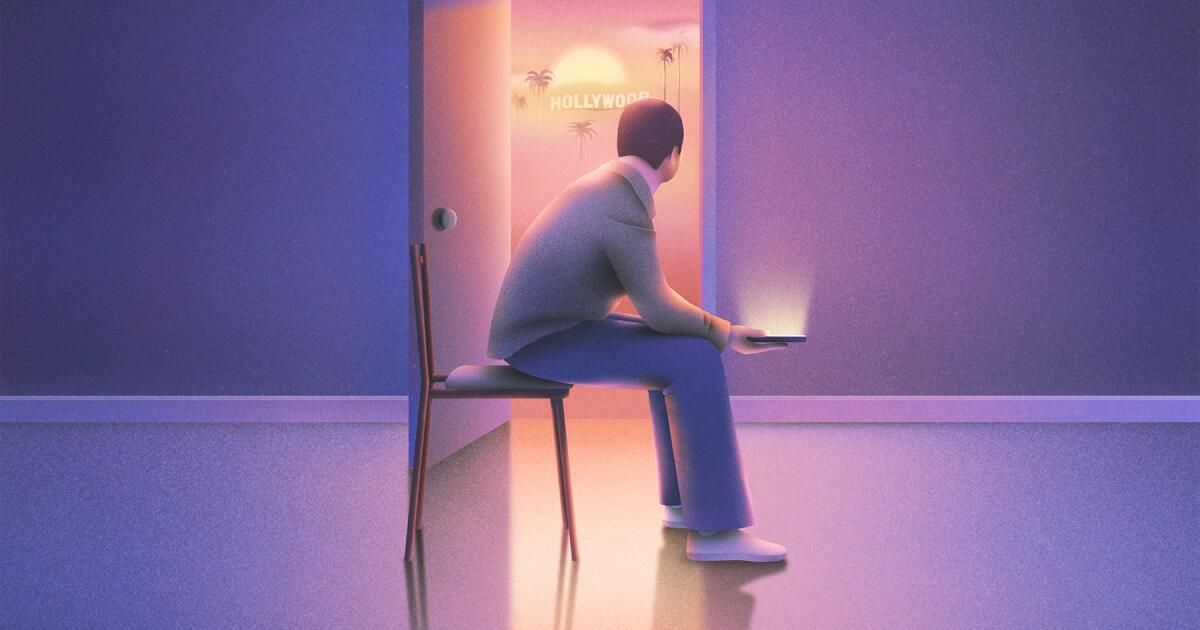
Three months later, I landed at Van Ness Recovery House, an old Victorian house in Beachwood Canyon under the Hollywood sign: 20 beds, three group sessions a day, and nowhere to rest.
The program director, Kathy, handed me a piece of paper. It had a phone number with an area code that I recognized.
“Ed?” I asked, although it wasn't really a question. I knew what would come next. I told the whole story as a group. She knew everything.
“No contact. Ever,” Kathy said. I nodded.
“Tell him it's over and then hang up.”
Kathy handed me the phone. My hands shook as I dialed.
“Nick! How are you, honey?” Ed responded, his voice warm and familiar.
The tears came before the words. “Ed, I can't… They say I can't talk to you anymore.”
The silence stretched on as Kathy watched and waited.
“But you helped me. You brought me here. You…”
“Hang up, Nick,” he said firmly. “He's a back door to her recovery.”
“I have to go,” I whispered.
“Wait, Nick…” he started, but I hung up, Kathy's eyes still on me. I handed the receiver back to him.
“You're lucky to be alive,” he said. “This is your last chance. You can't afford an escape route.”
Outside, the Hollywood sign reflected the afternoon light. For the first time in months, no meth psychosis obstructed my view. It seemed different, not a destiny, but a witness.
Ten years later, I am married to someone I met at an AA meeting; a calm and constant love, the opposite of the chaos I once confused with devotion. We bought a house in the Valley, we have two rescue bulldogs. Today, as I pass by Van Ness, that old Victorian halfway house where I learned to tell the truth, I remember the Nick who thought surviving was the same as loving.
It wasn't. But that led me to Los Angeles, where I finally learned the difference.
The author is a Los Angeles-based writer who has recently been signed to Cut, HuffPost, and the Washington Post.
Los Angeles Affairs chronicles the search for romantic love in all its glorious expressions in the Los Angeles area, and we want to hear your true story. We paid $400 for a published essay. Email [email protected]. You can find shipping guidelines. here. You can find previous columns. here.