Last update:
From pollution to overuse of active ingredients, dermatologists explain why sensitive skin is on the rise worldwide and how to protect the skin barrier.




Urban pollution plays an important role in the deterioration of the skin barrier.
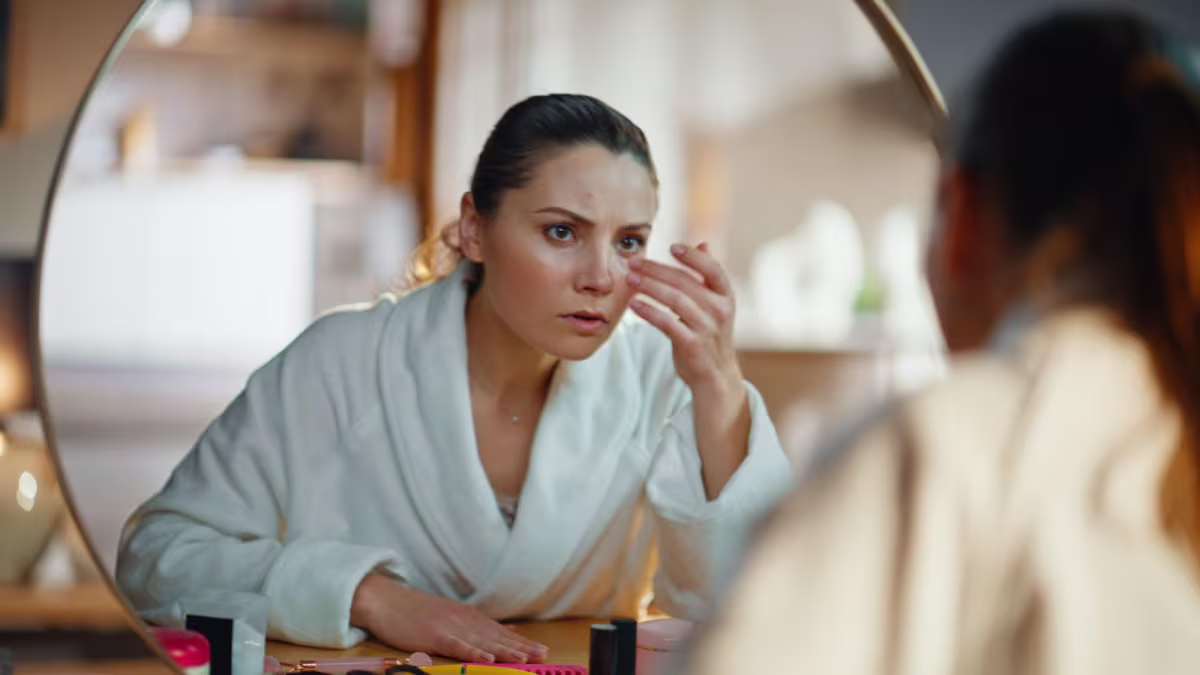
Redness after a new serum, irritation from a once-trusted moisturizer, or sudden dryness despite a carefully curated skincare routine—these are experiences more people are reporting today. Dermatologists say skin sensitivity, once considered a relatively specific concern, now appears across all age groups and skin types with surprising frequency.
Modern lifestyles, environmental stressors, and the explosion of skincare trends are collectively reshaping the behavior of our skin. Instead of rare breakouts, dermatologists are seeing persistent reactivity, making sensitive skin less of an exception and more of a widespread reality.
Dermatologists are seeing a clear change
“I have noticed a significant increase in the number of patients presenting with sensitive skin, and it is increasingly becoming the 'new normal' rather than an exception,” says Dr Gitika Sanodia, consultant dermatologist at Dr LH Hiranandani Hospital, Powai, Mumbai.
She explains that the change is driven by a combination of environmental exposure, lifestyle habits, and skincare misuse. Urban pollution in large cities, he points out, can significantly damage the skin barrier, leaving it more reactive and prone to irritation.
Adding to this, Dr. Rashmi Aderao, Consultant Dermatology, Ruby Hall Clinic, Pune, points out that today sensitive skin affects people of all genders and age groups. “Sensitive skin is commonly characterized by burning, stinging, redness, dryness, itching, or irritation in response to triggers that would not normally cause reactions,” she explains.
Pollution and modern life are key triggers
Environmental stress is a major factor behind this increase. Constant exposure to pollution, fluctuating temperatures and excessive sun exposure can weaken the skin's natural protective barrier.
Dr. Aderao points out that climate change and sudden weather changes also play a role. She explains: “Increased pollution levels, prolonged air conditioning and heat exposure can lead to inflammation and increased transepidermal water loss, making the skin more vulnerable to irritation.”
At the same time, lifestyle factors such as lack of sleep, chronic stress, and erratic routines quietly contribute to compromising skin health.
The problem of skincare overload
While skin care awareness has increased significantly in recent years, experts say it has also led to over-experimentation. Social media trends often encourage combining multiple products without understanding how the ingredients interact.
Dr. Sanodia highlights that actives like retinoids, exfoliating acids, and vitamin C are often overused. She says, “When these ingredients are combined incorrectly or used too aggressively, they can damage the skin barrier and cause redness, dryness, and burning sensations.”
Dr. Aderao echoes the concern, noting that when the skin barrier weakens, it loses its ability to retain moisture and protect against external irritants, making it much more reactive.
How to protect the skin barrier
Both dermatologists emphasize that a simplified routine is often the best approach. Gentle cleansing, proper hydration, and daily sunscreen form the foundation of healthy skin.
Dr. Sanodia recommends barrier-boosting ingredients such as ceramides, hyaluronic acid, and niacinamide to help restore skin's resilience. At the same time, active ingredients should be introduced slowly rather than aggressively layered.
Lifestyle adjustments also play an important role. According to Dr. Aderao, proper hydration, balanced nutrition, stress management, and adequate sleep can significantly influence skin health.
As sensitive skin becomes increasingly common, dermatology is shifting its focus from aggressive treatments to rebuilding and protecting the skin barrier. In a world saturated with products and trends, the most effective skin care philosophy may be the simplest: fewer products, stronger skin.
Delhi, India, India
March 10, 2026, 09:53 IST