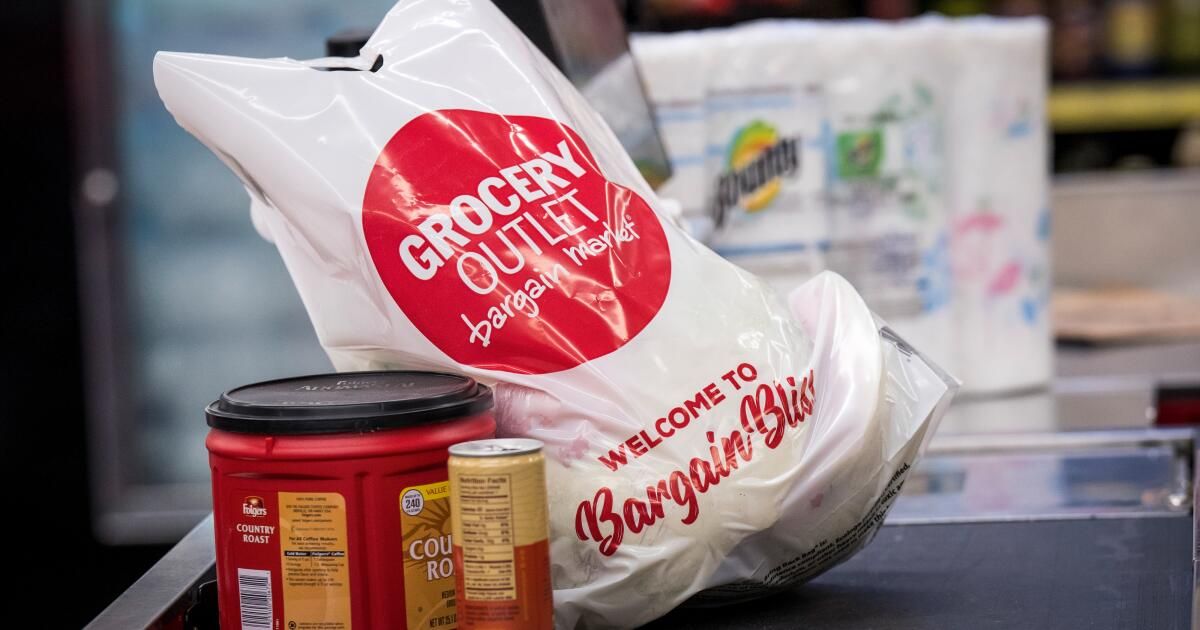
Grocery Outlet, a Bay Area-based grocery store, is closing 36 stores after expanding too quickly.
The closures are part of an optimization plan that will focus on locations with poor financial performance, as well as a distribution center that is no longer in use. The closures will take effect later this year, the company's chief executive said in an earnings call on Wednesday.
Supermarket giants Kroger and Albertsons also closed several stores last year and laid off hundreds of employees as inflationary pressures hit consumers and rising labor costs squeezed margins.
Kroger, the parent company of California staples Ralphs and Food 4 Less, has been restructuring since a failed merger with Albertsons in 2024.
Grocery Outlet CEO Jason Potter did not say there would be layoffs associated with the store closures.
“Following a rigorous fleet analysis, we identified 36 stores in the network that we concluded did not have a viable path to sustained profitability,” Potter said on the company's latest earnings conference call. “It is now clear that we expanded too quickly and these closures are a direct correction.”
The company still plans to open between 30 and 33 new stores this year. It reported a net loss of $225 million for fiscal 2025, compared to a net income of $39 million in 2024. Net sales increased 7.3% from 2024 to 2025.
In the fourth quarter of 2025, the company reported a net loss of $218 million. Shares have fallen more than 43% over the past year.
“We made progress on our strategic priorities in 2025, however, our fourth quarter results made it clear that we have more work to do,” Potter said.
Headquartered in Emeryville, Grocery Outlet and its subsidiaries have more than 560 stores in 16 states, including California and Washington. Among the 36 stores scheduled to close, 24 are in the eastern region of the United States.
Grocery Outlet locations are independently operated and geared toward affordability, targeting a value-seeking customer base. The chain has more than 100 locations in California, including several in the Los Angeles area.
The company's new optimization plan aims to “strengthen long-term profitability and cash flow generation, improve operational execution, optimize our existing store footprint, and align with our disciplined new store growth strategy,” according to the company's earnings release.
The company estimated that its fiscal 2026 gross profit could be negatively affected by between $4 million and $6 million due to product markdowns at stores marked for closure.