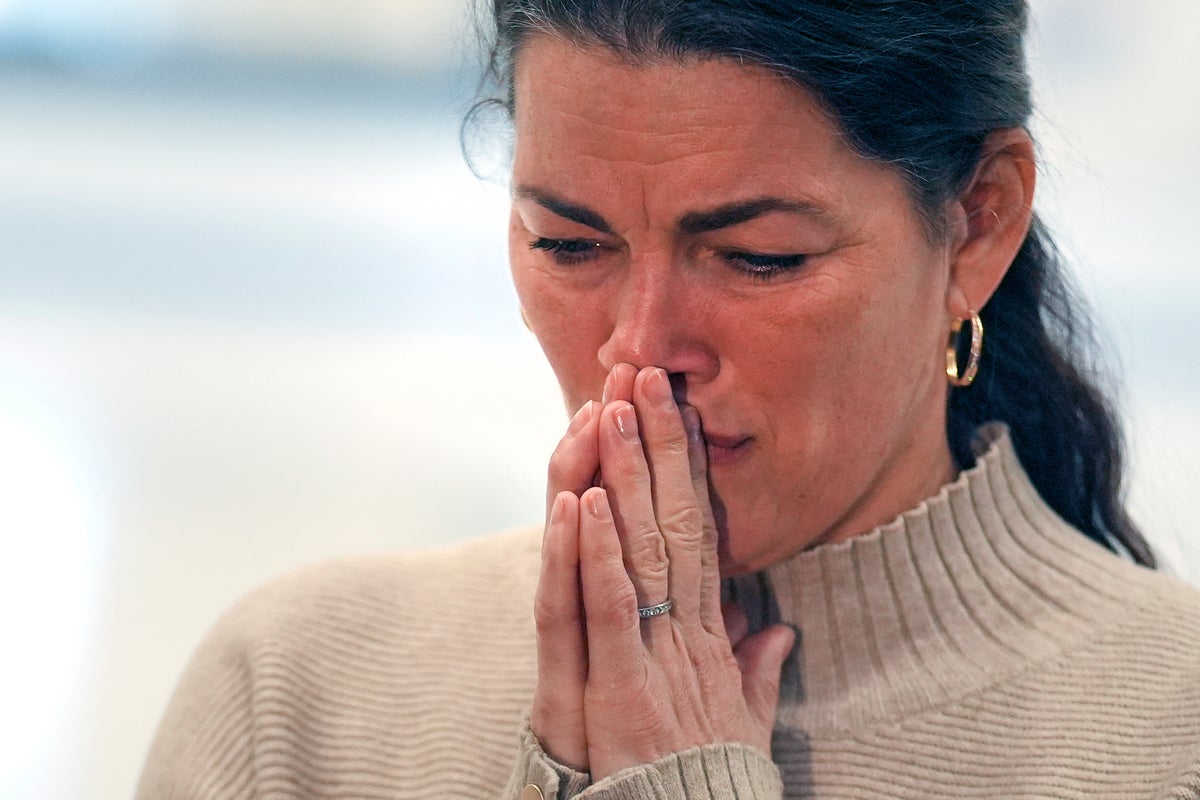
Candace Hansen, a doctoral candidate in musicology at UCLA, remembers being harassed and forced out of a women's bathroom at her hometown's 24-Hour Fitness a few months ago.
At the gym, located in Garden Grove, Hansen says they were greeted with malicious and unwelcoming looks before entering the facility. The gender-differentiated bathroom presented a thorny dilemma: What would be the least offensive option to other patrons and the least threatening to Hansen? Once inside the women's bathroom, Hansen says an older woman began yelling, “You're a man! You're a man!” More women joined in, shouting and advancing until Hansen was chased away.
Hansen explained the situation to the 24-Hour Fitness staff, who were understanding. They escorted Hansen back to the locker room to gather his belongings and offered him a private place to change. “It was next to old pool parts and supplies for a kids' swimming class,” Hansen recalls. “It was quite dehumanizing and sad.”
Everybody Gym's gender-neutral locker room includes private showers and changing tables.
(Ronaldo Bolaños/Los Angeles Times)

Candace Hansen, 39, hits a punching bag at Everybody Gym.
(Ronaldo Bolaños/Los Angeles Times)
The experience deepened Hansen's gratitude for the gym they frequent in Los Angeles, Everybody Gym. Everybody Gym, which has been operating in Los Angeles for over 10 years, as the name implies, is inclusive for everyone.
Sam Rypinski founded Everybody Gym in January 2017, a few months after Donald Trump was first elected president. As a trans man, Rypinski says he experienced discrimination and discomfort at other gyms and longed to connect with the trans community. “I remember a time when there was no access to healthcare. There was no access to support. There was no internet where you could find a community.”
Recognizing the need for solidarity, Rypinski created Everybody Gym, a space where queer people and their allies could coexist. “I have always been passionate about fitness and working out has been essential to my well-being and feeling safe, confident and good in my body. I wanted to bring that to Los Angeles,” says Rypinski.
The key to their resilience, Rypinski explains, is creating a welcoming environment. “Even the biggest cis rats at the gym come up to me all the time and thank me for creating a space where they feel safe to exercise,” Rypinski says.

Everybody Gym founder Sam Rypinski inside the facility's gender-neutral locker room.
(Ronaldo Bolaños/Los Angeles Times)
It is worth noting that in 2025, hundreds of bills have been introduced at the federal level aimed at restricting the rights of trans people. These bills have focused on gender-affirming attention, bathroom access, and trans participation in sports. A executive order issued by Trump has required that passports be issued only to the genders assigned at birth, which discriminates against trans people. In December 2025, the House approved a bill that would prohibit providing gender-affirming care to minors.
“As people believe they are losing some control over their political lives because the world has stopped catering to hate, they look to the smallest place they can control,” says Hansen, who has been following anti-trans legislation as part of his Ph.D. “This year is the most anti-trans legislation in American history.”
Sonny Koch is a trans trainer who has been working at the gym for eight years. “It makes it seem so much more important that we have this space, especially right now where trans people are under attack,” Koch says, “It's scary out there. It's dangerous. Not only is it working, it feels like a movement where we're doing something bigger than that.”
As a former trans gym trainer, Koch recounts some awkward moments involving pronoun use. “Being able to train in a space that welcomes trans people has been the biggest life-changing experience for me,” Koch says.

Trainer Sonny Koch, 36, smiles after leading an exercise class.
(Ronaldo Bolaños/Los Angeles Times)
One of the gym's signature features is its gender-neutral locker room, which Rypinski said is the first of its kind in the country. There are private changing rooms and showers, but the common area is open to people of all gender expressions. “We didn't want there to be uncomfortable choices for people who typically feel like they have to make a decision that's not really aligned with their identity,” Rypinski says.
During the COVID-19 pandemic, Everybody Gym transitioned to a digital video-on-demand service called “Homebody.” As of 2020, the gym began hosting a digital catalog of its classes. Since then, they have expanded their digital presence, performing tutorials on stage. “It's a way to be a member anywhere,” explains Rypinski. It is intended to be especially beneficial for transgender people, both nationally and internationally, who cannot always access a welcoming community where they live. “We have donated memberships to people in the south and in affected areas where they have no health care or resources. We have partnered with organizations and offered them as free memberships to people all over the country,” he adds.
The gym's holistic approach to wellness also extends to the staff. Paulo Díaz, one of Everybody's trainers, was working as a pizza maker when he discovered Everybody Gym at a trans job fair. After conversations with Rypinski, Diaz earned his gym-sponsored coaching certification. “I've never heard of a gym doing that: paying a person to become a trainer.”
In his new career as a coach, Díaz found the courage to explore his other interest: wrestling. “Wrestling is one of the most controversial sports for trans people. If it hadn't been for Sam and Everybody sponsoring me to become a coach, I would never have the knowledge or confidence to wrestle,” adds Díaz.

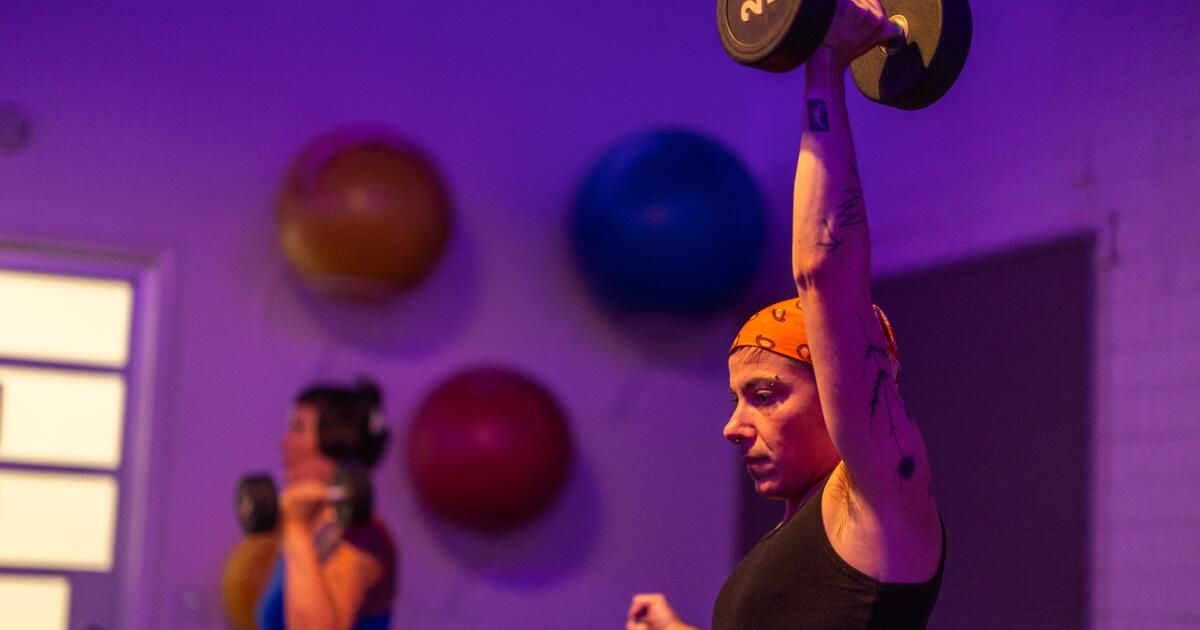
Coach Koch, left, leads a class at Everybody Gym.
(Ronaldo Bolaños/Los Angeles Times)
Everyone's commitment to strengthening the community goes beyond the queer community. As Glassell Park is home to many Latino immigrants, Everybody Gym prioritizes Spanish-speaking staff at the front desk. “We're trying to make it clear that this is a safe space for immigrants as well,” Rypinski says. “We take into consideration all the ways gyms fail, not just in terms of gender and type of binary spaces, but also size, age, ability, ethnicity and economic situations. We try to make this affordable.”
In the years since Hansen discovered the gym, it has become a home of sorts for them, witnessing their disappointments, triumphs, and even sorrows. “It became an incredible landing pad for me in terms of giving me the space to feel stable in who I was: emotionally, spiritually and physically.”
Beyond the elliptical machines, sweat-inducing yoga classes, or weights, it's the community that makes Everybody Gym strong. “You hear people gossiping in the locker room, or you hear about interesting art shows going on or dance parties,” Hansen says. “I always end up making friends.”