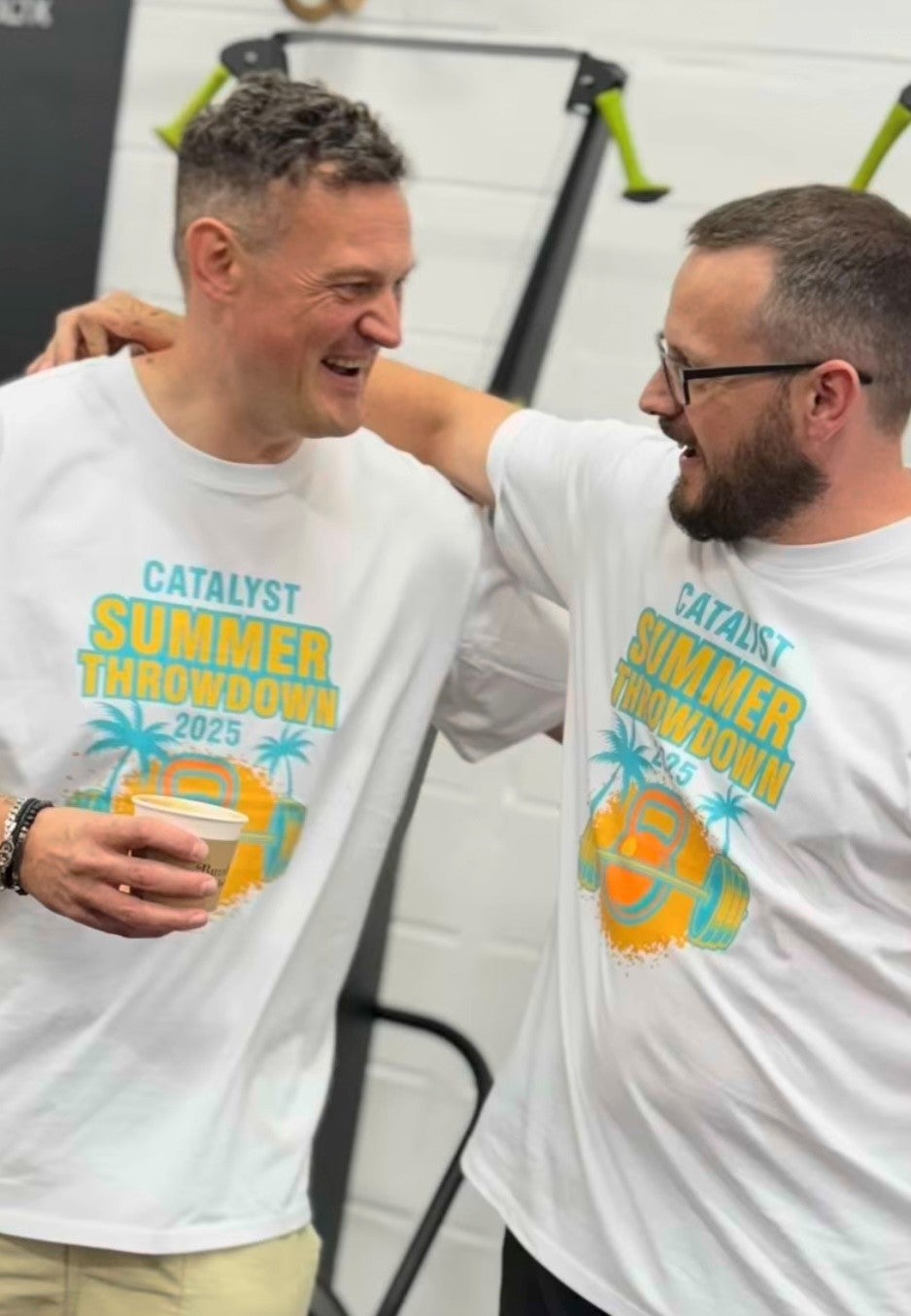
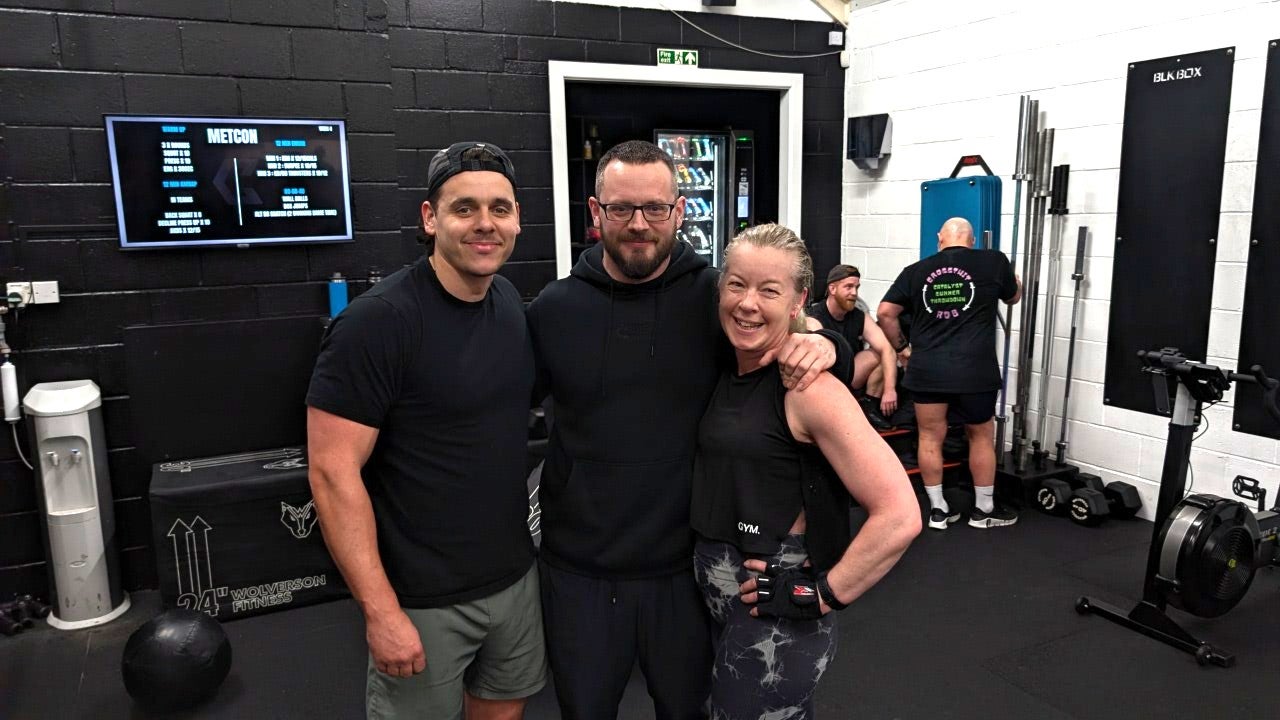
A father-to-be, 41, described himself as “lucky and blessed” after his life was saved by the quick actions of a gym owner following a cardiac arrest during a workout. Chris Wall collapsed mid-class at Catalyst Training in Cirencester, Gloucestershire, in June 2025, but speedy owner Robin Oakley, 39, performed CPR and used a defibrillator, which proved crucial to his survival.
Weeks after the life-threatening incident, Wall is not only back in the gym but is also preparing for the British Heart Foundation's London to Brighton bike ride and is eagerly awaiting the arrival of her “miracle baby” as the anniversary of her cardiac arrest approaches.
“I wouldn't be here today if I wasn't in that gym class,” Chris told PA Real Life. “I'm very grateful that I was there and that the guys knew what they were doing.”
On the morning of Saturday, June 14, 2025, Wall was feeling tired after a busy week working in sales for a technology reseller. Dismissing that feeling, he continued with his usual routine of walking his dogs before heading to Robin Oakley's Saturday morning metabolic conditioning class at Catalyst.
While Chris didn't have “any major signs that would make him think something was seriously wrong,” he said he “didn't feel 100%” and was a little out of breath, but he didn't feel anything that would make him feel unable to participate in his regular training.
However, about 45 minutes into the hour-long class, Robin said Chris simply “fell,” even though there were “no initial indications that that was going to happen.”
Fortunately, Robin recognized the signs of cardiac arrest (he had dealt with two previous cases, one at his gym and another in a pub) and knew he needed to “act as soon as we could, as quickly as we could” to save Chris's life.
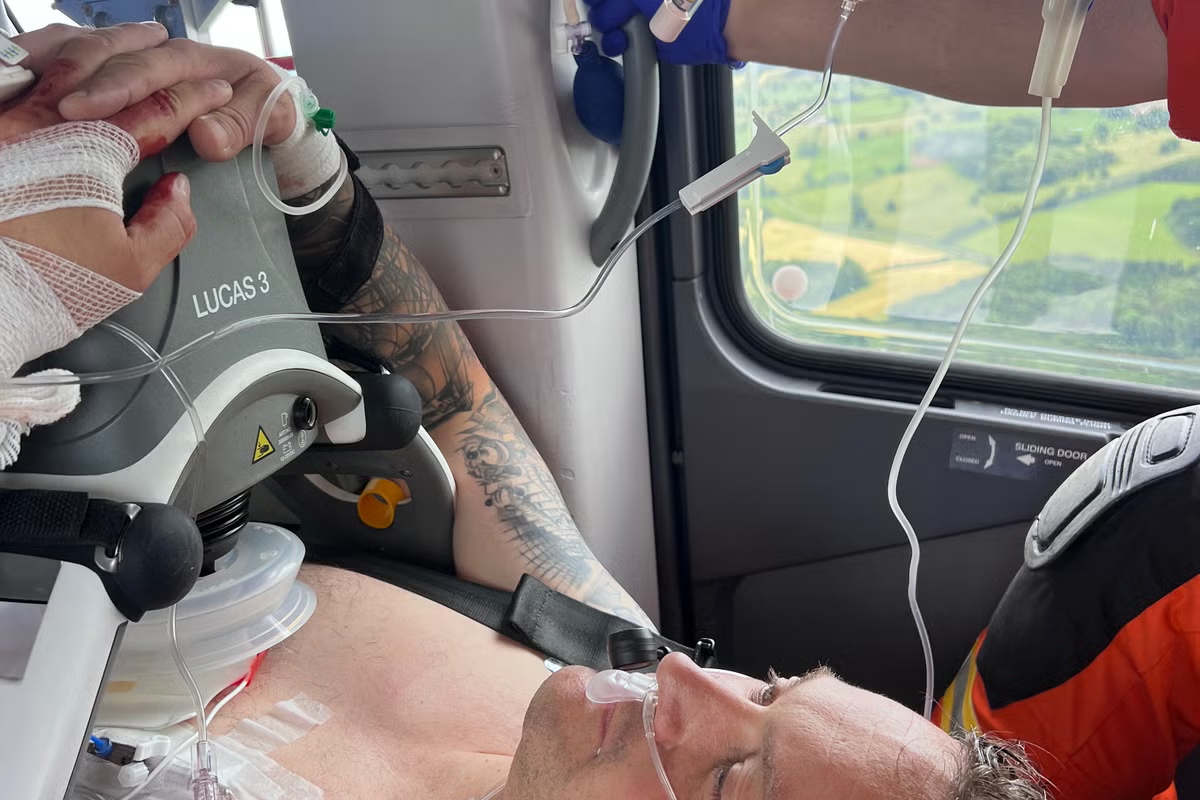
Along with his gym classmates, Jack and Alice, Robin checked Chris's vital signs and began CPR, sending others to fetch the defibrillator, which was set up just outside the gym, and to call 999. Robin continued CPR until the paramedics arrived and, although Chris appeared to recover at times, he remained unconscious.
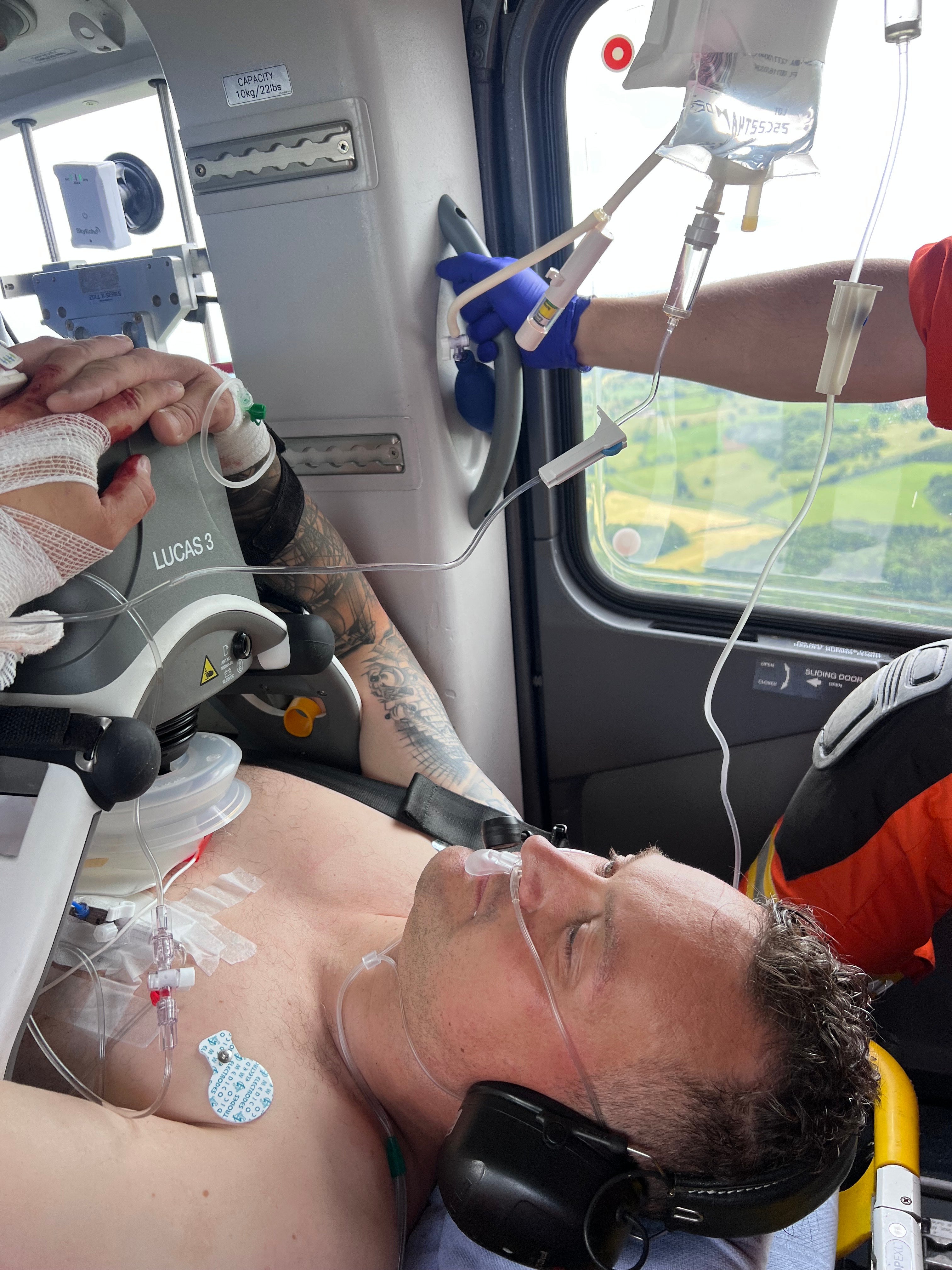
Paramedics quickly arrived at the scene. In total, Chris received five rounds of defibrillator shocks (one administered by Robin and four by paramedics) and received CPR for around 30 minutes before being flown to Bristol Royal Infirmary for further treatment.
There is no doubt that Robin's quick action saved Chris's life. According to the British Heart Foundation, more than 40,000 out-of-hospital cardiac arrests (OHCAs) occur in the UK each year, and the estimated survival rate for OHCAs in the UK is less than one in 10.
Early CPR and a defibrillator together can more than double your chances of survival, and every minute without treatment reduces your chances of survival by up to 10%.
Anyone can use a defibrillator as it will give step-by-step voice instructions and usually have diagrams, making the process clear and easy to follow in an emergency, and BHF's free digital CPR tool, RevivR, teaches CPR in just 15 minutes.
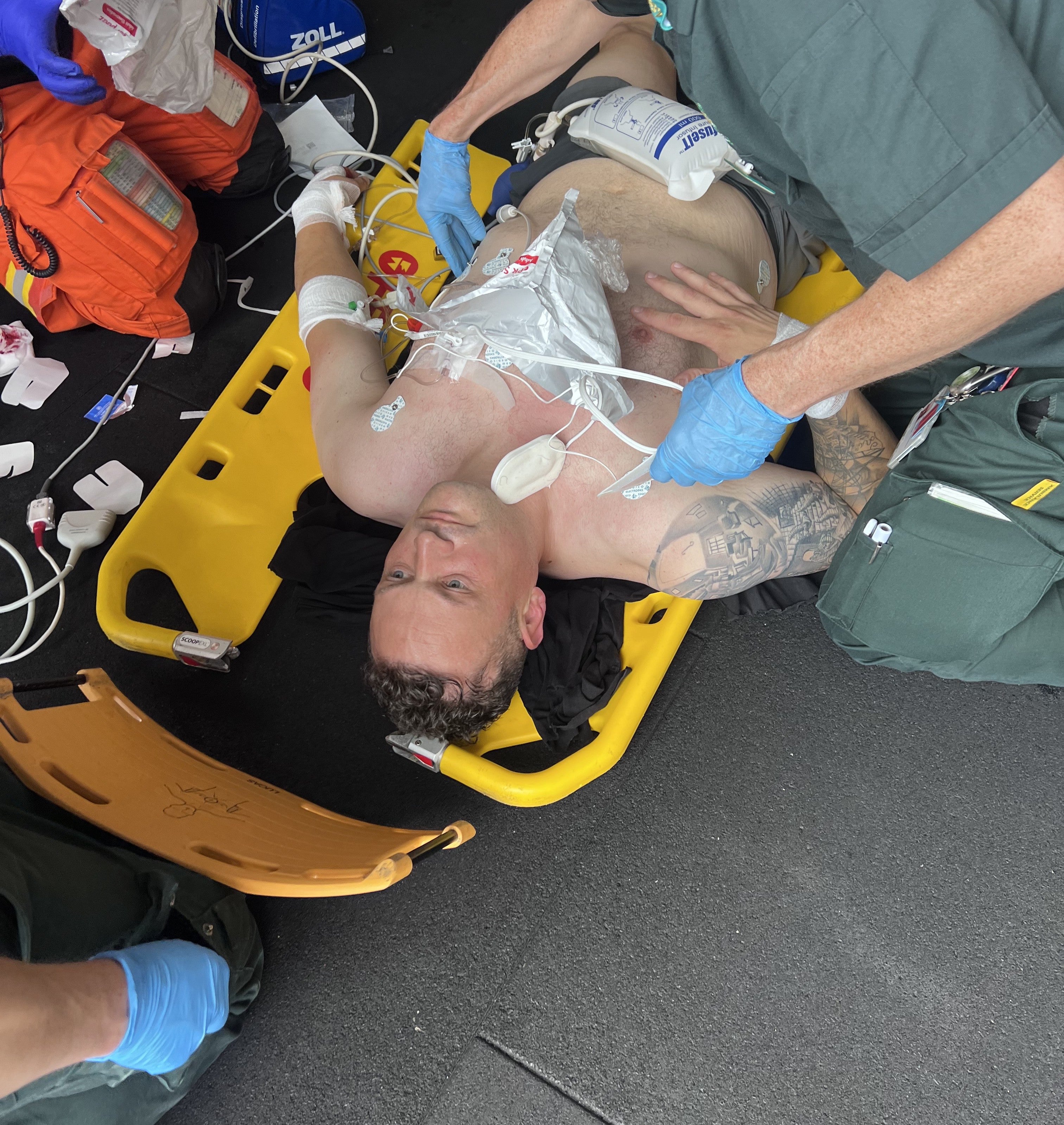
“I wouldn't be here today if I wasn't in that gym class,” Chris said. “If I had decided not to go in that morning because I was feeling tired and it had happened anyway, there was no chance my girlfriend could do CPR for that long, there wouldn't be a defibrillator within 100 meters… I feel really lucky and blessed to have been there. I'm very grateful that I was there and that the guys knew what they were doing.”
Chris remained in Bristol Royal Infirmary for three days, where he learned that the cause of his cardiac arrest was “a plaque rupture in my artery, and that caused a huge clot, which completely stopped blood flow to the heart muscle.”
While recovery took time (he had suffered some bruising to his ribs from CPR, felt weak and dizzy, and found that “mentally it was quite difficult to get up and keep going”), his partner Nikki encouraged him to take short walks outside, increasing his activity day by day.
Chris also made some lifestyle changes, the most important of which was quitting smoking. He was not a regular smoker and would occasionally smoke a cigarette, but now he has quit completely, drinks less alcohol and pays more attention to his diet.
Just over a month later, he was back in the gym, slowly increasing his activity while wearing a heart rate monitor.
He still feels anxious about going to the gym, especially during Saturday morning class, but thanks to the support of Robin and others at the gym he has regained his confidence and is now training for a big challenge to raise money for the British Heart Foundation.
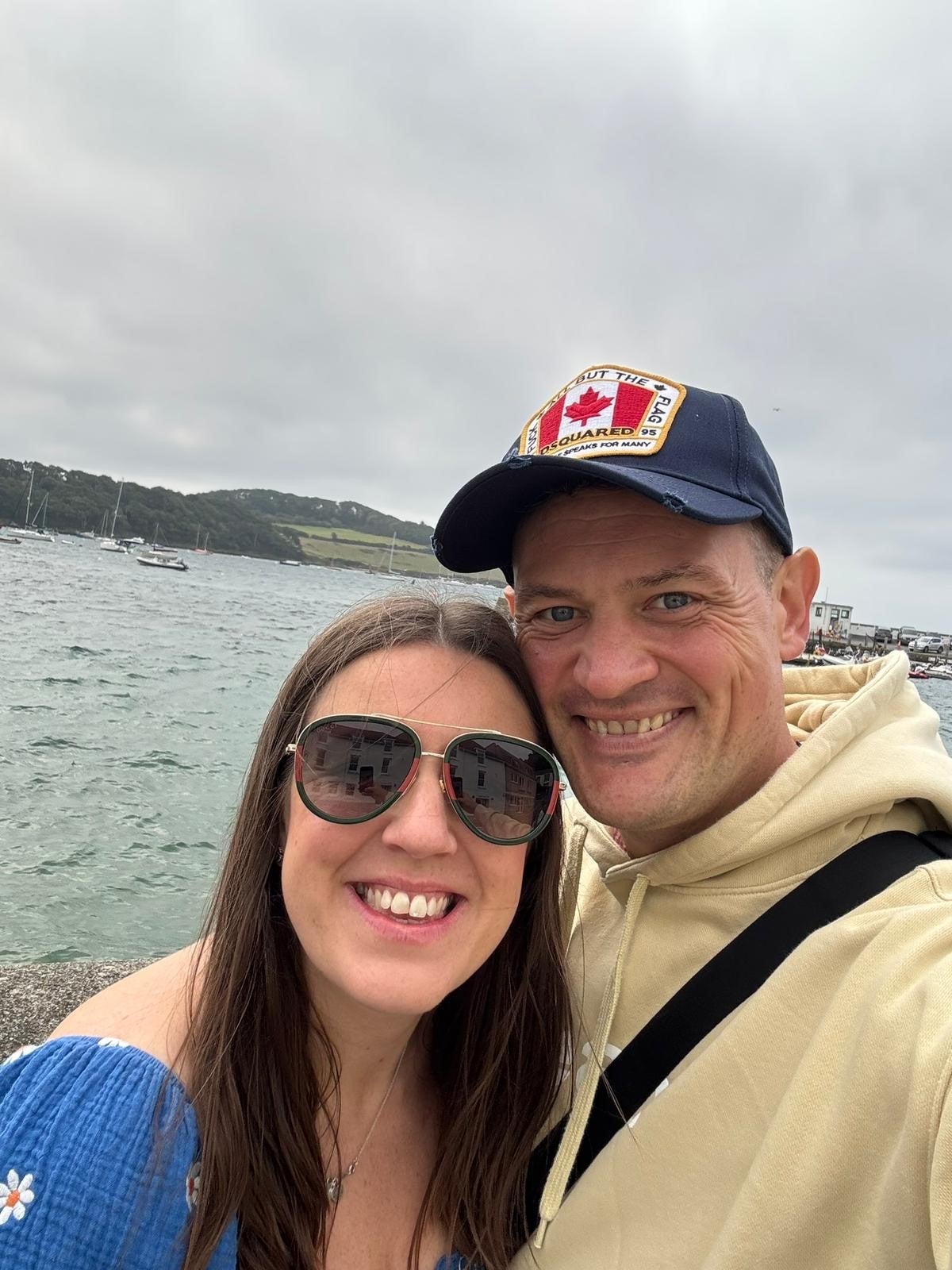
On Sunday 21 June this year, Chris will be taking part in the British Heart Foundation's London to Brighton cycle ride, which follows a 54 mile route from Clapham Common to Brighton Seafront and coincidentally falls just after the anniversary of Chris' cardiac arrest.
As Chris begins his training, there's only one thing that can stand in his way: the arrival of his “miracle baby,” who is expected to arrive at the end of June.
Visit www.bhf.org.uk/l2b to register for the London to Brighton cycle tour.