UN agencies warn that nearly three years of sustained violence, restricted humanitarian access and dwindling funding have pushed Sudan into what they describe as the world's largest humanitarian emergency.
An estimated 33.7 million people (around two-thirds of the population) will need humanitarian assistance in 2026. More than 20 million people now need healthcare, while 21 million face acute food insecurity.
Devastating impact
The conflict erupted in April 2023 following a power struggle between the Sudanese Armed Forces (SAF) and the paramilitary Rapid Support Forces (RSF), plunging the country into a civil war that has spread from the capital, Khartoum, to Darfur, Kordofan and other regions.
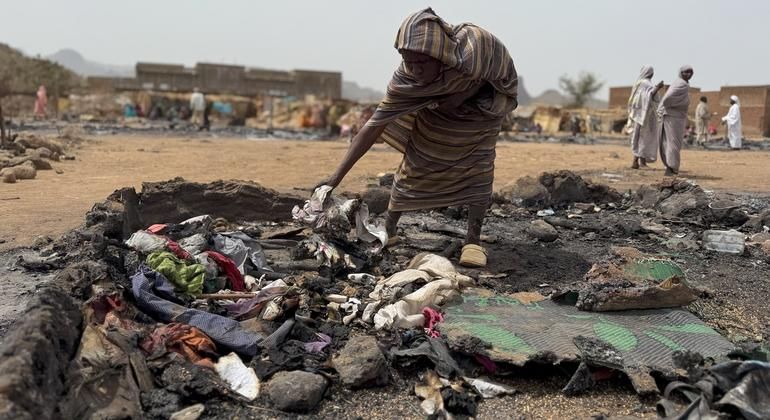
The fighting has devastated infrastructure, fractured state institutions and left civilians exposed to widespread violence, displacement and deprivation.
Repeated ceasefire efforts have failed and large areas of the country remain inaccessible to humanitarian actors due to insecurity, bureaucratic constraints and ongoing hostilities.
Patients receive treatment in a tent outside a hospital in Khartoum, as Sudan's health system comes under severe pressure from attacks, shortages, disease outbreaks and natural disasters.
A health system on the brink of the abyss
According to the World Health Organization (WHO), Sudan's health system has been on the brink of collapse due to continued fighting, mass displacement and repeated attacks on medical facilities. More than a third of health facilities across the country are not working, preventing millions of people from accessing essential and life-saving care.
Since the conflict began, the WHO has verified 201 attacks on healthcare, resulting in 1,858 deaths and 490 injuries. These attacks violate international humanitarian law and put patients, caregivers and health workers at serious risk.
“A thousand days of conflict in Sudan have brought the health system to the brink of collapse,“said Shible Sahbani, WHO representative in Sudan. “Under the pressure of disease, hunger and lack of access to basic services, people are facing a devastating situation.”
Despite insecurity and access limitations, WHO continues to support life-saving services, having delivered more than 3,300 metric tons of medicines and medical supplies worth approximately $40 million. It also supported cholera vaccination campaigns and helped millions of people access care through hospitals, primary health centers and mobile clinics.
Mass displacement
Sudan is also the world's largest displacement crisis, with an estimated 13.6 million people uprooted by fighting: around 9.3 million internally displaced and another 4.3 million seeking refuge in neighboring countries.
Overcrowded living conditions, poor sanitation and disrupted services have led to outbreaks of cholera, malaria, dengue and measles in much of the country.
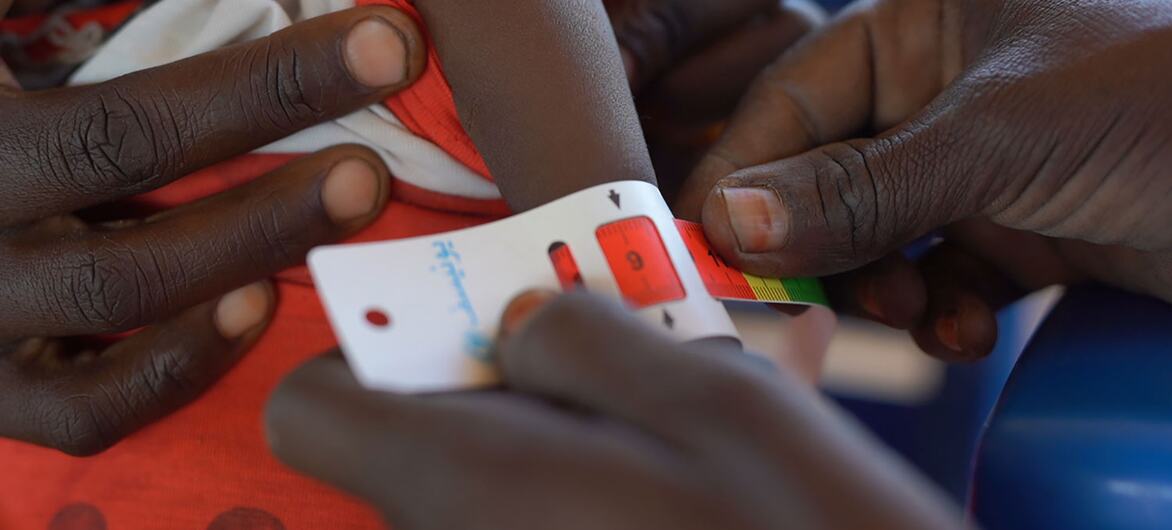
A child is screened for malnutrition at a UNICEF-supported nutrition center in North Darfur, Sudan, in December 2025. The color red means severe acute malnutrition (SAM).
Children bear the heaviest burden
Children represent about half of the people expected to need humanitarian assistance in 2026, according to the United Nations Children's Fund (UNICEF).
“Children continue to die and be injured,“said UNICEF Regional Director for the Middle East and North Africa, Edouard Beigbeder, noting that eight children were reportedly killed in a single attack in North Kordofan this week alone.
In North Darfur alone, almost 85,000 children suffering from severe acute malnutrition were treated between January and November 2025 (approximately one child every six minutes), highlighting the scale of the crisis.
Calls for peace and access
Both WHO and UNICEF emphasize that humanitarian action, while saving lives, cannot replace peace.
“To meet growing needs and prevent the crisis from spiraling out of control, WHO and humanitarian partners need safe and unimpeded access to all areas of Sudan and increased financial resources,”said Dr. Sahbani.
For children, UNICEF warns, only an end to the fighting will stop the erosion of security, health and hope.
“All parties must fulfill their obligations under international humanitarian law: protect civilians“Stop attacks on infrastructure and enable safe, sustained and unhindered humanitarian access,” Mr. Beigbeder said.