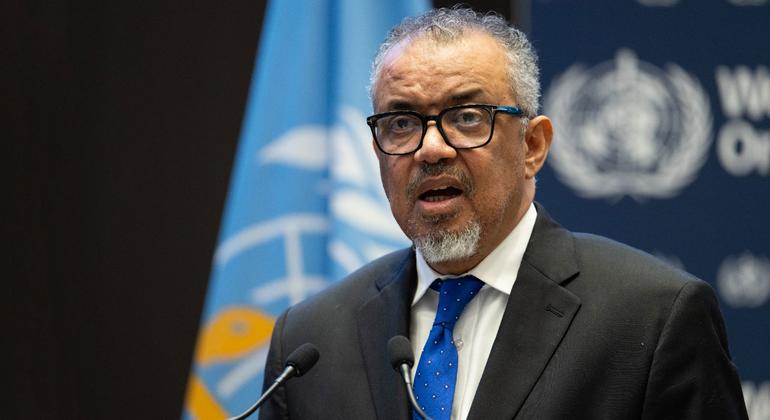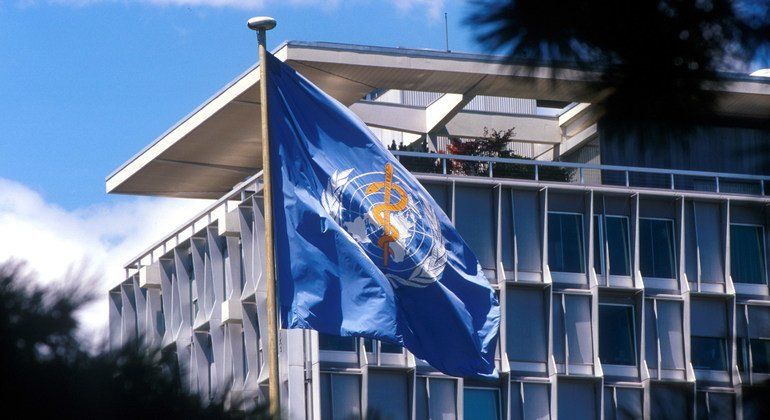
The statement, released on Saturday, also includes a rebuttal of the US administration's reasoning for the measures. In response to government claims that the WHO has “trashed and tarnished” and insulted it, and compromised its independence, the agency notes that “the opposite is true” and that The WHO has always sought to “engage with the United States in good faith, with full respect for its sovereignty.”
The US administration's accusation that the WHO has “pursued a bureaucratic and politicized agenda driven by nations hostile to US interests” is refuted and described as false. The agency, the statement said, “has always been and remains impartial and exists to serve all countries, with respect for their sovereignty and without fear or favor.”
Defense of the response to COVID-19
A significant portion of the statement is dedicated to defending the WHO against US accusations of “failures” during the COVID-19 pandemic: according to the administration, the WHO obstructed the “timely and accurate sharing of critical information” and “hid those failures.”
The agency counters this by pointing out that, during the pandemic, it acted quickly, shared all the information it had quickly and transparently with the world, and advised Member States based on the best available evidence.
The WHO recommended the use of masks, vaccines and physical distancing, but at no time did it recommend mask mandates, vaccines or closures.
Immediately after receiving the first reports of a cluster of “pneumonia of unknown cause” cases in Wuhan, China, on December 31, 2019, the WHO asked China for more information and activated its emergency incident management system.
When the first death was reported in China on January 11, 2020, WHO had already alerted the world through formal channels, public statements and social media, convened global experts and published comprehensive guidance for countries on how to protect their populations and health systems.
When the WHO Director-General declared COVID-19 a public health emergency of international concern under the International Health Regulations on January 30, 2020 (the highest level of alarm under international health law), fewer than 100 cases and no deaths were reported outside China.
In the early weeks and months of the pandemic, the Director-General repeatedly urged all countries to take immediate action to protect their populations, warning that “the window of opportunity is closing,” “this is not a drill,” and describing COVID-19 as “public enemy number one.”
In response to multiple reviews of the COVID-19 pandemic, including WHO's performance, WHO has taken steps to strengthen its own work and help countries strengthen their own pandemic preparedness and response capacities. The systems that WHO developed and managed before, during and after the emergency phase of the pandemic have helped keep all countries, including the United States, safe.
Door open for return to the United States
Despite the withdrawal notice, the WHO remains committed to global cooperation and expresses the hope that the United States will reengage in the future. The agency highlights recent milestones, including the adoption of the WHO Pandemic Agreement, described as “a historic instrument of international law” aimed at preventing and responding to future pandemics.
As a founding member of the WHO, the United States of America has contributed significantly to many of the agency's greatest achievements, including the eradication of smallpox, and progress against many other public health threats, including polio, HIV, Ebola, influenza, tuberculosis, malaria, neglected tropical diseases, antimicrobial resistance, food security and more.
“WHO remains firmly committed to working with all countries in achieving its core mission,” the statement concludes, reaffirming its mandate to promote “the highest attainable standard of health as a fundamental right for all people.”