The Trump administration on Thursday imposed new tariffs on brand-name drugs from pharmaceutical companies that have not reached agreements with the president to lower their drug prices in the United States, a long-awaited move that will likely only affect a small portion of drugmakers.
“We need to make sure our drug supply is protected, safe and domestic,” a senior administration official, who asked not to be identified, told reporters Thursday. “That's what we're doing.”
Also on Thursday, the Trump administration changed the way tariffs are calculated on imported raw materials made of steel, aluminum and copper, and on imported products containing those metals.
Patented drugs and their active ingredients face a 100% tariff under the pharmaceutical plan, but there are avenues for drug makers to reduce or avoid the taxes, the official said.
The administration will impose a 20% tariff on companies planning to do onshore production, which would increase to 100% within four years. Drug makers that have fully executed drug pricing agreements or are currently negotiating with the Department of Health and Human Services and building manufacturing in the country would be exempt from the tariffs. New domestic plants must be completed by January 2029 to qualify, the official said.
Larger drugmakers have 120 days before the 100% tariff rate takes effect, the official said, but the administration expects more companies to announce reshoring plans before then. Smaller drugmakers, which rely on contract manufacturers, have 180 days before that rate hits.

Meanwhile, some countries that have signed larger trade deals with the United States will face different pharmaceutical taxes, with a rate of 15% in the European Union, Japan, Korea and Switzerland. The United Kingdom will face a 10% tariff, partly because its government has raised the price of what it will pay for pharmaceuticals, the official said.
“Those countries, production can remain in them because they have made a more important trade agreement with the United States,” the official said.
Genetic products, biosimilars and related ingredients are not subject to tariffs at this time, but that will be reevaluated within a year, the White House said in a fact sheet.
Certain specialty pharmaceutical products, including those intended for animal health and treatments for rare diseases, will be exempt from taxes if they come from countries with trade agreements or “meet an urgent public health need,” according to the fact sheet.
The plan represents another shift in Trump's aggressive trade strategy, more than a month after the Supreme Court struck down global taxes he imposed in 2025, which excluded the pharmaceutical industry. The sector-specific tariffs follow a Commerce Department investigation that determined certain pharmaceutical imports pose a risk to U.S. national security.
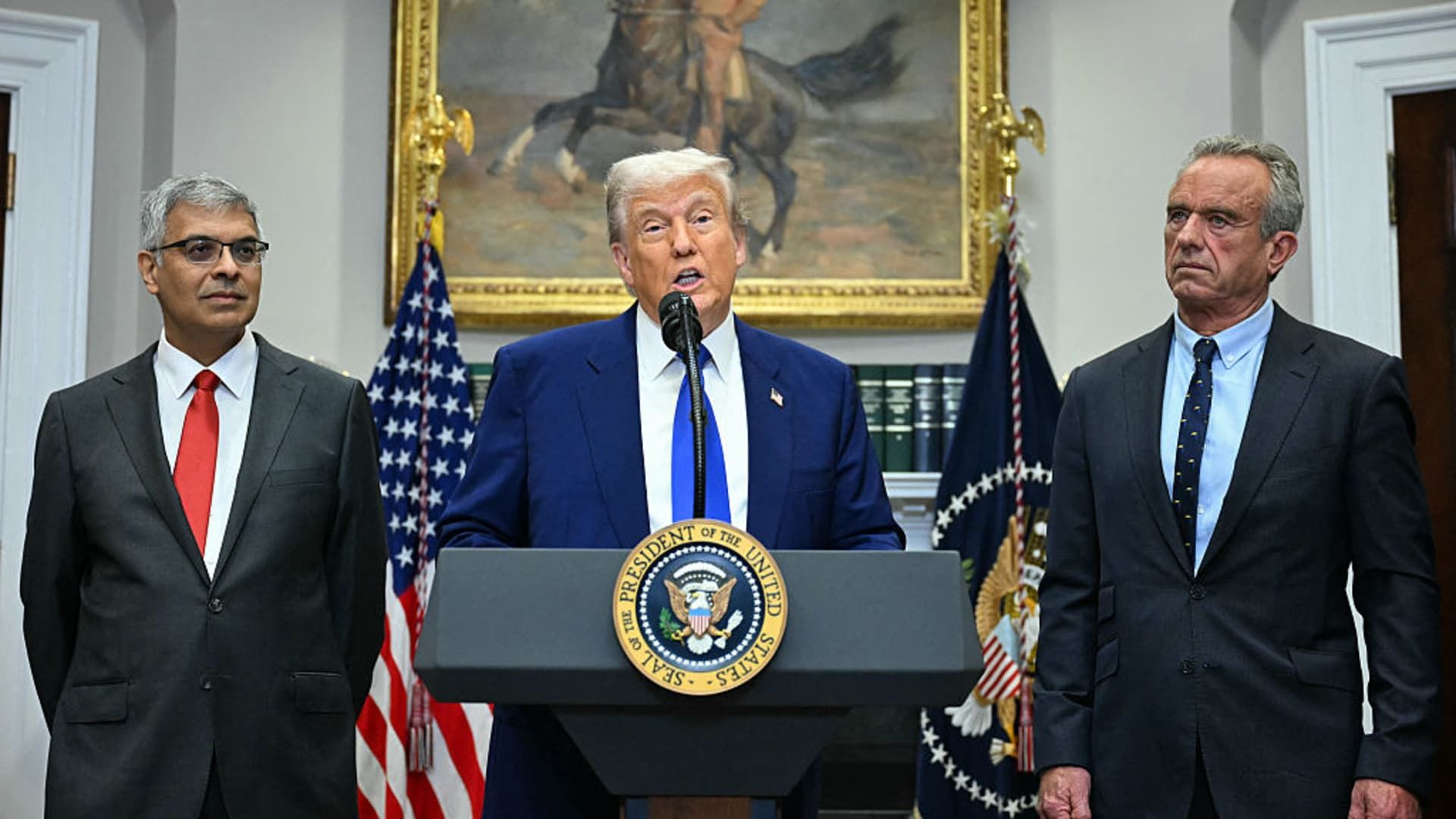
U.S. President Donald Trump (center), along with Health and Human Services Secretary Robert F. Kennedy Jr. (R) and National Institutes of Health (NIH) Director Jayanta Bhattacharya (L), speaks during a press conference on prescription drug prices in the Roosevelt Room of the White House on May 12, 2025, in Washington, DC.
Jim Watson | afp | fake images
Since November, more than a dozen major drugmakers, including Eli Lilly, Pfizer and Nordiskhave signed deals with Trump to lower prices on new and existing drugs. Those agreements are part of the president's “most favored nation” policy, which ties American drug prices to cheaper ones abroad and exempts companies from tariffs for three years.
The Trump administration official said 13 companies have already signed a drug pricing agreement, while negotiations with four other drugmakers are moving forward. There are already $400 billion in commitments to relocate manufacturing in the sector during Trump's term, the official added.
Before the landmark drug pricing agreements, Trump repeatedly threatened to impose tariffs on pharmaceutical imports. Those threats – and efforts to curry favor with the president – fueled a new wave of American manufacturing investment by the pharmaceutical industry. Those commitments come at a time when domestic drug manufacturing had slowed significantly.
In the separate tariff action related to metals, the tariff remains at 50% on raw materials made of steel, aluminum and copper – such as aluminum sheets or steel coils – but will be applied to the total price paid by US importers.
The senior administration official, during a call with reporters Thursday, said the adjustment is being made to prevent foreign sellers from undervaluing their products to pay fewer tariffs.
Imported finished products containing more than 15% of those metals will now be subject to a 25% tariff on the total value of the item. The previous duty was 50 percent only on the metal value of the product.
Finished products containing less than 15% of those metals will not be subject to tariffs.
A senior administration official said the changes to metals tariffs should not affect the cost of goods, but non-government estimates suggest they will modestly increase the effective tax rate.
The Committee for a Responsible Federal Budget estimates the change will raise an additional $70 billion in federal revenue over the next 10 years.
—CNBC Megan Cassella contributed to this article.