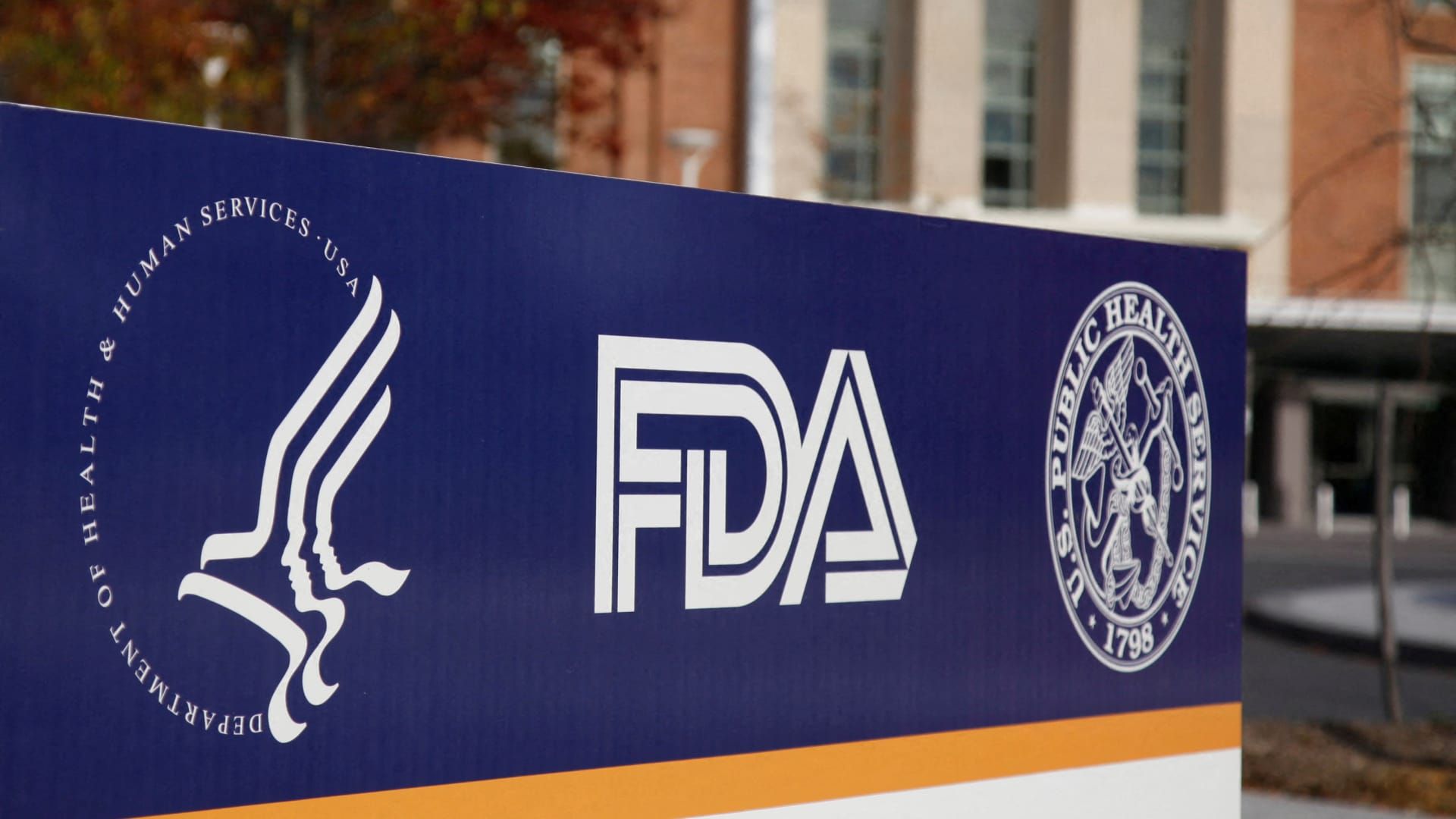
The headquarters of the US Food and Drug Administration in Silver Spring, Maryland, November 4, 2009.
Jason Reed | Reuters
The Food and Drug Administration said in recent weeks that it would refuse to clarify laws prohibiting the foreign importation of prescription drugs, despite growing evidence of overseas schemes.
A class of businesses called alternative financing programs, or AFPs, connect patients whose health plans don't cover expensive medications for critical illnesses with more affordable versions of the drugs. The programs source the drugs from foreign markets in what U.S. regulators say is a violation of import laws.
Last month, the FDA responded to a March 2024 citizen petition from Aimed Alliance, a nonprofit health policy organization, that asked the agency to issue a definitive position on AFPs and the use of international importation to save on drug costs.
Specifically, the Alliance wanted the FDA to issue a “guidance document” directed at AFPs that import drugs from abroad, which would have further clarified the agency's policy and potentially eliminated some gray areas in interpreting the laws.
In the letter, dated March 27, the FDA said it shared the Alliance's concerns and recognized that drugs that have “evaded regulatory safeguards may be contaminated, counterfeit, or contain varying amounts of active ingredients.”
But he rejected the group's request for a clear position statement and specific guidance on the AFPs, saying it is “not warranted at this time.” The agency said it “would not be an efficient use of FDA's limited resources” to issue such guidance.
“We take complaints seriously and appreciate the information you have provided us. However, to the extent you ask the FDA to initiate enforcement action, such actions are not within the scope of the FDA's citizen petition procedures,” the letter said.
The letter was signed by Michael Davis, deputy director of the FDA's Center for Drug Evaluation and Research.
Aimed Alliance is one of several patient advocacy groups that have called on the FDA to crack down on AFPs that use foreign sources to import drugs. The Alliance did not immediately respond to a request for comment from CNBC.
A CNBC investigation in November revealed the proliferation of AFPs across the country. As part of that investigation, a Homeland Security Investigations official said the AFP's practices were illegal, while the program's operators maintain they are not breaking the law and are helping patients obtain critical medications for little or no cost.