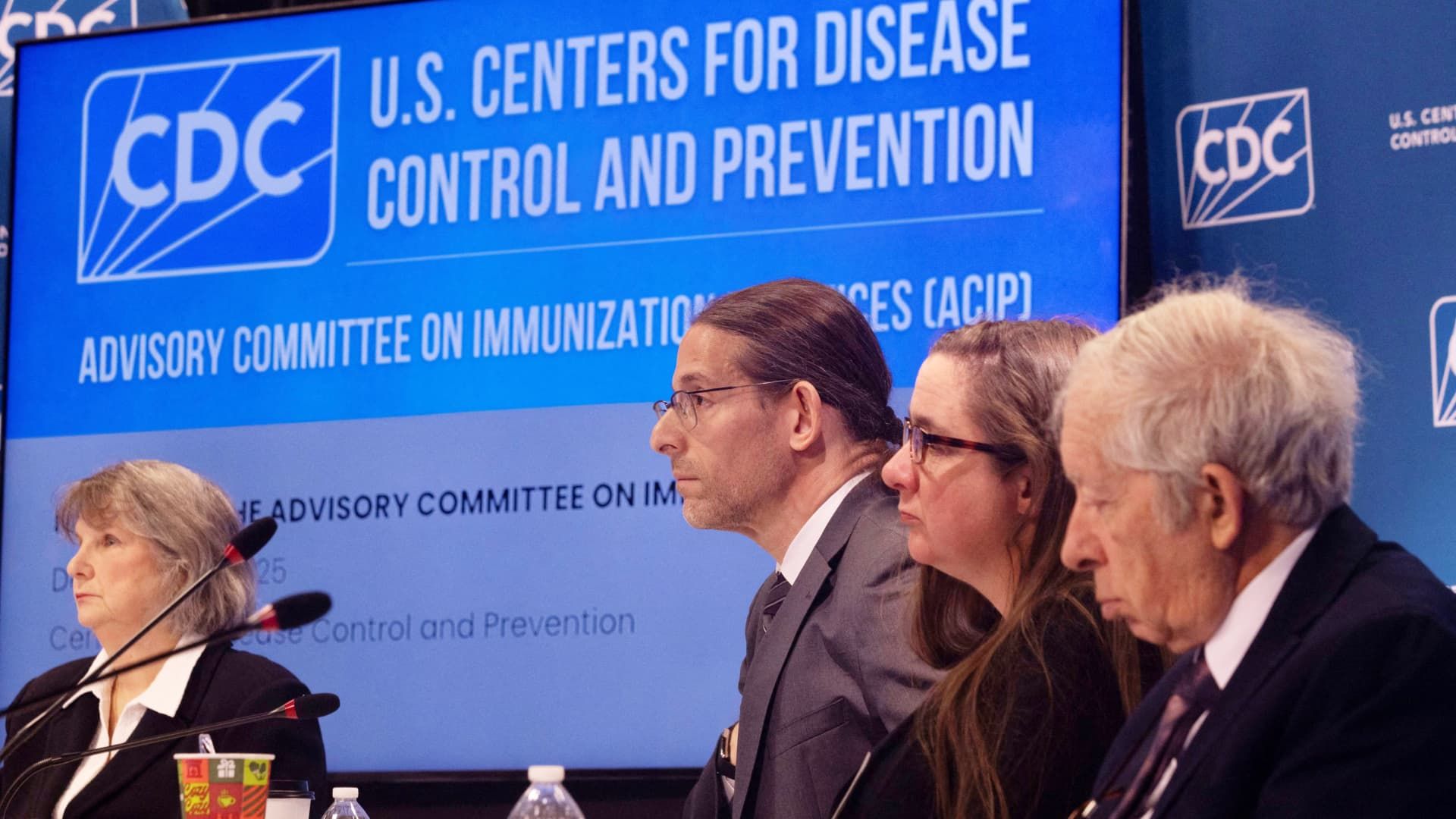
Health and Human Services Secretary Robert F. Kennedy Jr.'s hand-picked vaccine committee voted Friday to eliminate the long-standing universal recommendation that all babies receive a hepatitis B vaccine at birth, issuing weaker guidance for certain babies.
The group, called the Advisory Committee on Immunization Practices, or ACIP, recommended that parents use individual decision-making in consultation with a health care provider to determine when or whether to give the birth dose of hepatitis B to a baby whose mother tested negative for the virus. For babies who do not receive the dose at birth, the committee recommended that they wait to receive the first vaccine until they are at least 2 months old.
The acting director of the Centers for Disease Control and Prevention has yet to approve that new recommendation. Currently, the CDC recommends that all babies be vaccinated against hepatitis B within 24 hours of birth, regardless of their mother's testing status.
The measure overturns that guidance, which is credited with reducing infections in children by 99% since it was first introduced three decades ago and is widely considered a public health success story. Some committee members and public health experts warn that the change could have far-reaching consequences, such as an increase in infections among children.
The vote only affects the timing of the first dose of the hepatitis B vaccine series. The second dose would still be given one or two months after birth, with a third dose between 6 and 18 months of age.
All pregnant women are supposed to get tested for hepatitis B during pregnancy. During previous meetings, some advisers questioned the need for babies to receive a vaccine if their mothers test negative.
But test results can produce false negatives, some people become infected later in pregnancy after being tested, and babies can become infected through other members of their household.
The panel's closely watched two-day meeting in Atlanta comes after Kennedy gutted the committee and named 12 new members, including some well-known vaccine critics. The ACIP establishes recommendations for who should receive certain vaccines and which vaccines insurers should cover at no cost.
Eight members voted in favor, while three voted against. Some advisers strongly rejected the new guidelines before the vote.
“This has great potential to cause harm, and I hope the committee accepts responsibility when this harm is caused,” said Dr. Joseph Hibbeln, a psychiatrist and voting member.
Dr. Cody Meissner, a voting member and professor of pediatrics at Dartmouth Geisel School of Medicine, said he hopes pediatricians will continue to administer the birth dose within the first 24 hours after delivery and before discharge from the hospital.
“Following any other path is not in the interests of children,” he said.
Meissner added that more children will be injured and contract hepatitis B infections. Hepatitis B, which can be passed from mother to baby during childbirth, can cause liver disease and premature death. Babies are more vulnerable to developing chronic hepatitis B infections, which have no cure.
“We will see hepatitis B return,” he said. “The vaccine is so effective that, in my opinion, it makes no sense to change the vaccination schedule.”
In a statement Friday, the American Medical Association said the vote is “reckless and undermines decades of public confidence in a proven life-saving vaccine.” The group added that the decision was not based on scientific evidence and “creates confusion among parents about how best to protect their newborns.”
Meanwhile, Retsef Levi, a voting member and professor at the Massachusetts Institute of Technology, falsely claimed during meetings that experts had “never tested” the hepatitis B vaccine “properly.”
Some committee members expressed concern about vaccination during the so-called neonatal period, which is a critical window of development for the brain and immune system. But decades of evidence show that the hepatitis B vaccine has been safely given to newborns.
Other advisers said there is no evidence to support delaying the birth dose by two months.
“We have to make decisions with the data we have, and we must use only credible data to make decisions, and not speculation or hypotheses,” Hibbeln said.
A 2024 CDC study showed that the current vaccination schedule has helped prevent more than 6 million hepatitis B infections and nearly 1 million hepatitis B-related hospitalizations.
Merck and GSK make hepatitis B vaccines that are used from birth. Neither vaccine generates significant revenue for the companies, so the new recommendations should not have a material impact on their businesses.
Still, Merck said in a statement Friday that it is “deeply concerned” about the vote, which it said risks “reversing this progress and putting babies at unnecessary risk of chronic infection, liver cancer and even death.” The company added that “there is no evidence to suggest that it provides any benefit to children.”
In a statement, GSK said: “We look forward to additional information and official adoption of today's recommendations by the CDC to fully understand the potential impact.”
The panel's vote will not affect insurance coverage for vaccines, including under Medicaid and the Children's Health Insurance Program, Andrew Johnson, senior policy analyst at the Centers for Medicare and Medicaid, told members during the meeting.