The aid coordination office, OCHA, reported that casualty figures “cannot yet be independently verified” due to limited access.
Schools and markets in several border districts remain closed amid continued instability, while mortar fire has forced families to flee villages in northwest Pakistan.
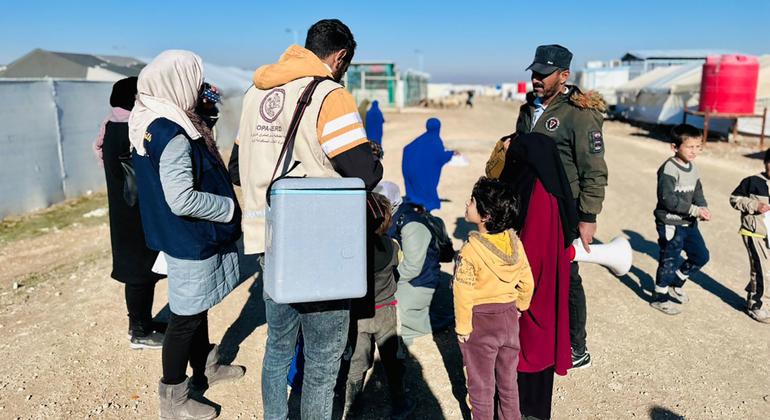
Aid operations in parts of Khyber Pakhtunkhwa have been temporarily suspended, although assistance continues in the south of the province.
The UN Assistance Mission in Afghanistan, UNAMA, on Tuesday reiterated its call to stop cross-border clashes.
UNAMA also calls on all parties to comply with their obligations under international law, including international humanitarian law, and ensure the protection of civilians.
Bombings and air attacks
In Afghanistan, cross-border bombings and airstrikes reportedly caused civilian casualties and damage to homes. In Nangarhar province, five civilians, including children, were injured near the Torkham crossing, while two others were injured in Nazyan district.
“Civilians, as well as civilian infrastructure, must be protected at all times,” stressed UN spokesman Stéphane Dujarric.
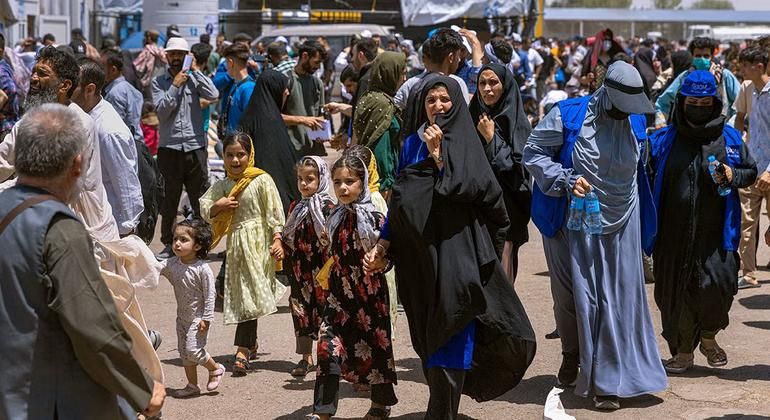
The International Organization for Migration (IOM) warned that further escalation could worsen one of the world's largest returnee crises, with more than five million Afghans returning in the past two years, putting serious pressure on already overburdened communities.
UN deplores murder of Iraqi women's rights activist Yanar Mohammed
The UN has condemned the murder in Baghdad earlier this week of internationally renowned women's rights activist Yanar Mohammed as a “heinous murder”.
“This is tragic news for women human rights defenders in Iraq, in the region and beyond,” UN spokesman Stéphane Dujarric said during Wednesday's briefing at UN headquarters in New York.
The UN human rights office, OHCHR, tweeted that they had worked closely with her and her organization, and human rights chief Volker Türk called for a swift and transparent investigation by Iraqi authorities, along with full accountability.
Dedicated and tireless activist
According to media reports, Ms. Mohammed was shot by unidentified gunmen who opened fire from a motorcycle in front of her home in the capital. The Organization for Women's Freedom in Iraq, a group she founded, said she succumbed to her injuries at the hospital.
The Iraqi Prime Minister has reportedly opened an investigation into the apparent murder.
“She was tirelessly and dedicatedly committed to providing protection to many women victims of domestic and social violence,” said Dujarric, who sent her condolences to her family and her “brave colleagues.”
Chile becomes the first country in South America to eliminate leprosy
Chile becomes the second country in the world to officially eliminate the disease leprosy, the World Health Organization (WHO) said on Wednesday.
Leprosy, also known as Hansen's disease, is a chronic infectious disease that mainly affects the skin, peripheral nerves, the mucosa of the upper respiratory tract and the eyes. It is curable and is largely found in the most vulnerable communities in less developed countries.
In Chile, at the end of the 19th century, a major outbreak occurred on Easter Island. The spread to mainland Chile was contained, and in the late 1990s the last secondary cases were controlled.
Although 47 cases were reported nationwide between 2012 and 2023, none were locally acquired and WHO took steps to assess whether elimination had been achieved by 2025.
“Historic achievement in public health”
“The elimination of leprosy in Chile sends a clear message to the world: with sustained commitment, inclusive health services, integrated public health strategies, early detection and universal access to care, we can relegate ancient diseases to history,” said WHO chief Tedros Adhanom Ghebreyesus.
Chile's achievement paves the way for other nations, illustrating the impact of political will, cross-sector collaboration, and adaptive planning in low-incidence environments.
“This historic achievement in public health is a powerful testimony of what leadership, science and solidarity can achieve,” said the head of the WHO.
As a neglected tropical disease, leprosy persists in more than 120 countries, with more than 200,000 new cases annually worldwide.