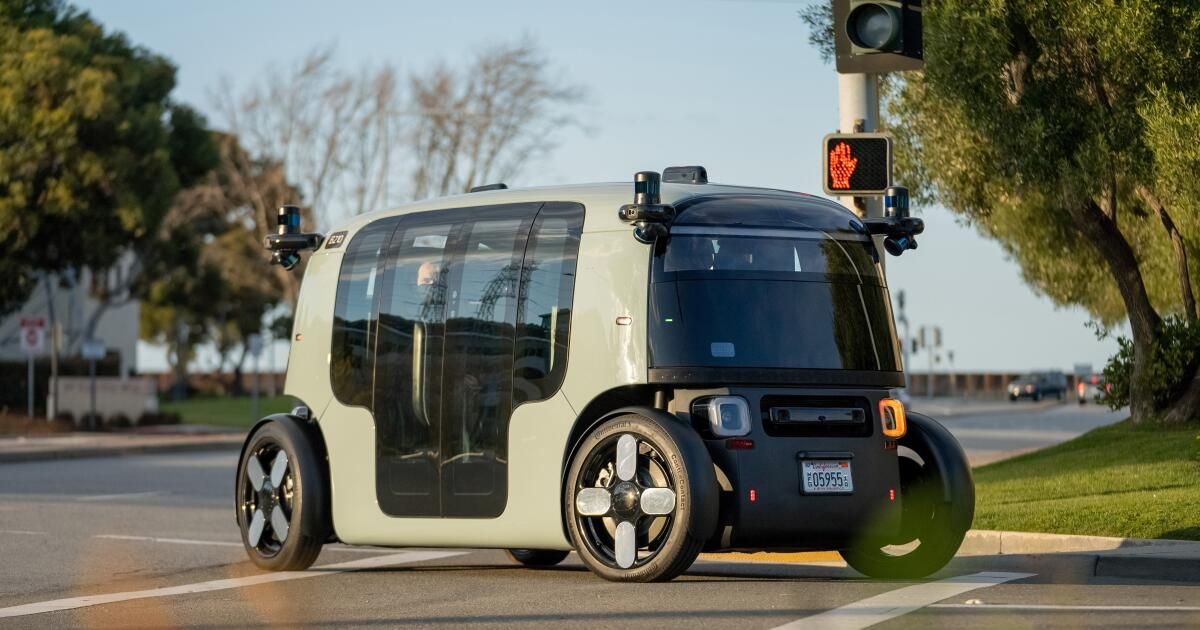
Zoox, the Bay Area-based robotaxi company, is trying to get ahead of the competition with a significant expansion in San Francisco and Las Vegas and plans to launch in Austin, Texas, and Miami.
Zoox will quadruple its service area in San Francisco starting this spring, expanding rides to the eastern half of the city, including the Marina District, North Beach, Chinatown and Pacific Heights neighborhoods. The Amazon-backed company has been offering free rides to the public in San Francisco since November.
Zoox's radius was previously limited to the SoMa, Mission and Design District neighborhoods.
In Las Vegas, passengers will soon be able to take a Zoox vehicle to the Sphere, the Las Vegas Convention Center and the T-Mobile Arena. Zoox launched in Las Vegas last year and offers free rides to limited destinations along the Strip.
The company announced a partnership with Uber this month that will make Zoox vehicles available through the Uber app in Las Vegas this summer and in Los Angeles starting in mid-2027. It is also preparing to launch services to and from Harry Reid International Airport in Las Vegas.
“This expansion marks an important step forward for Zoox,” the company's CEO Aicha Evans said in a statement. “We are actively implementing what we have learned to confidently and safely scale our robotaxi service across the country.”
In less than a year, Zoox has traveled nearly 2 million miles autonomously and carried more than 350,000 passengers, the company said. Its sights are set on Austin and Miami, where it has been testing since 2024. The company said a waiting list for rides on Zoox will open in both cities later this year.
Its major expansion in San Francisco will allow Zoox to serve more passengers and more easily compete with Waymo, the Alphabet-owned robotaxi company with a fleet of modernized Jaguars that swarm the Bay Area.
Zoox has a fleet of about 100, a company spokesperson said, but did not disclose how many are in California. Waymo has more than 1,500 vehicles nationwide.
Waymo has been expanding its service area in San Francisco over the past few years and has established a presence in nine other major cities, including Los Angeles and Austin. In the heated robotaxi race, Waymo currently has the lead.
Tesla launched robotaxi services in Austin last year, and Uber has several partnerships to bring new robotaxis to the roads, including with Volkswagen and electric vehicle maker Lucid.
Zoox started in 2014 and was acquired by Amazon for $1.3 billion in 2020. Its specially designed robotaxis differ from other autonomous vehicles on the road, which are adapted passenger cars. Zoox robotaxis have no accelerator pedal, steering wheel or other driver controls, and passengers sit facing each other inside the cabin.