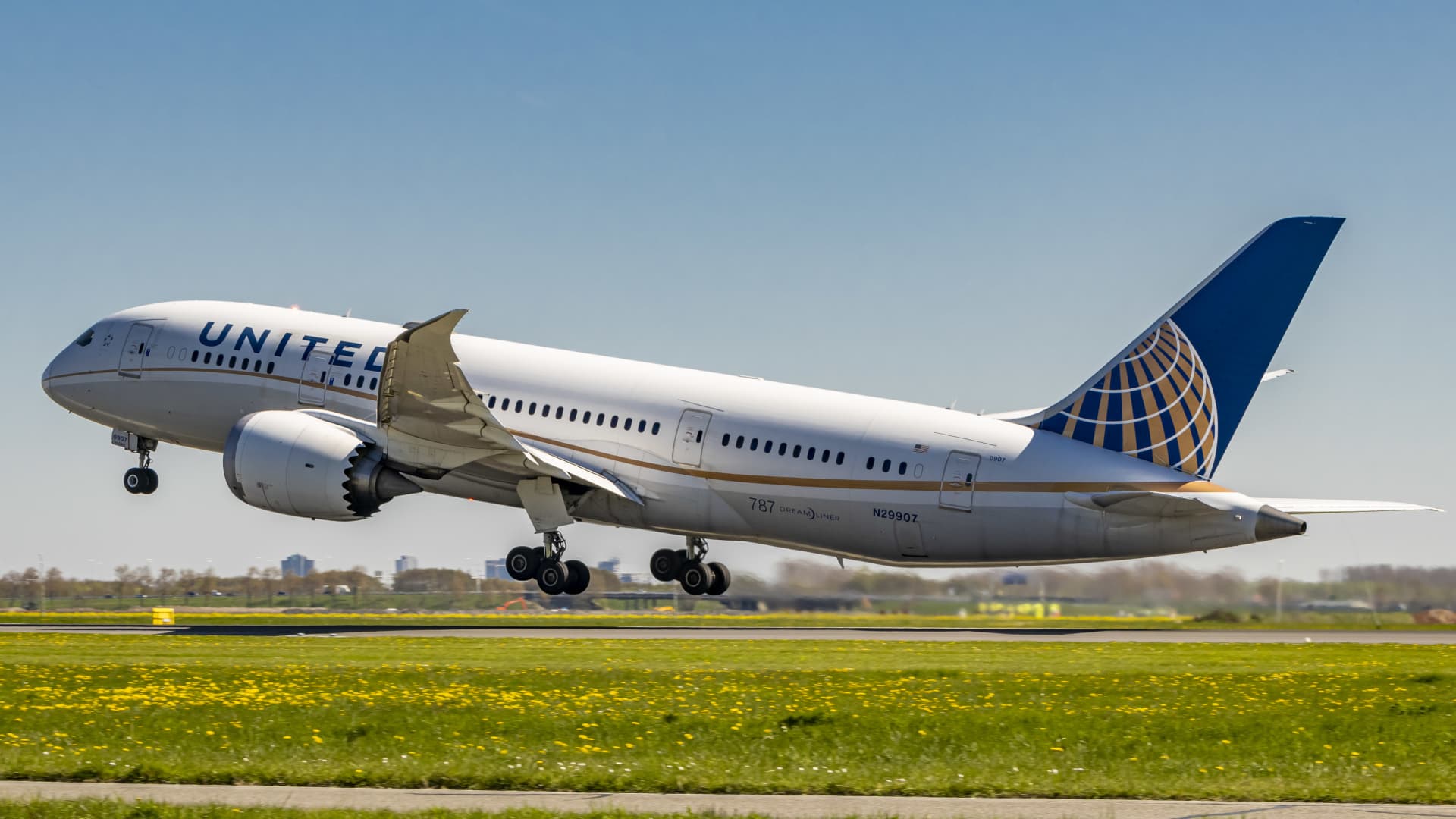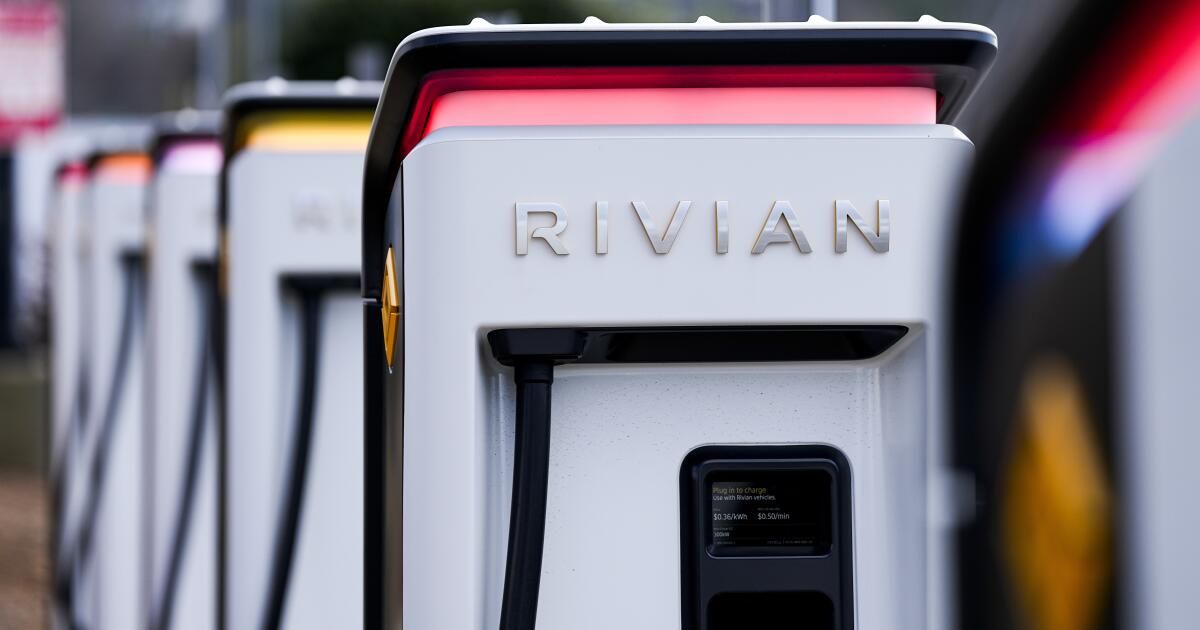
Uber is expanding its role in the robotaxi industry through a new partnership with Rivian, the Irvine-based electric vehicle maker.
Uber and Rivian announced Thursday a partnership that could bring up to 50,000 autonomous R2 vehicles to cities in the United States, Canada and Europe by 2031.
Rivian robotaxis would be available exclusively through the Uber transportation application.
The partnership will begin with Uber purchasing 10,000 fully autonomous R2s, with the option to purchase 40,000 more in 2030. Uber's investment is subject to achieving autonomous performance milestones, the companies said in a press release.
Uber could invest up to $1.25 billion in Rivian through 2031. It has already committed to spending $300 million on the effort.
The first robotaxi deployments are planned for San Francisco and Miami in 2028, followed by 23 more cities, according to the release.
“We couldn't be more excited about this partnership with Uber,” Rivian CEO RJ Scaringe said in a statement. “It will help accelerate our path to Level 4 autonomy to create one of the safest and most convenient autonomous platforms in the world.”
The R2 is Rivian's highly anticipated lower-priced SUV, starting at $48,490 for consumers in 2027. Investors hope the more affordable model will boost sales amid declining federal support for electric vehicles.
The company impressed investors with better-than-expected annual profits last month but laid off hundreds of employees over the past year.
Rivian is just the latest robotaxi partnership from Uber, which has established itself as a key player in the burgeoning autonomous vehicle market.
Last month, Uber announced a suite of services known as Uber Autonomous Solutions to offer robotaxi companies access to their customers, data and software.
Uber partners with Volkswagen to offer autonomous identification. Buzz minivans to Los Angeles this year. It also partnered with Silicon Valley-based electric vehicle maker Lucid to launch robotaxis later this year and partnered with robotaxi leader Waymo in Austin and Atlanta.
Rivian announced its third-generation autonomy platform in December, which will launch on the R2 in late 2026. It includes 11 cameras, five radars and one lidar, a laser-based radar.
Rivian's robotaxis will compete against Waymo, which operates in 10 major cities, and Elon Musk's Tesla.
Amazon-backed Zoox also serves the public in San Francisco and Las Vegas in specially designed, pill-shaped autonomous vehicles without a steering wheel or accelerator.
Uber shares, which have fallen about 8% this year, gave up about 2% on Thursday, closing at $75.34. Rivian shares, which have fallen 18% this year, rose nearly 4% to $16.12.