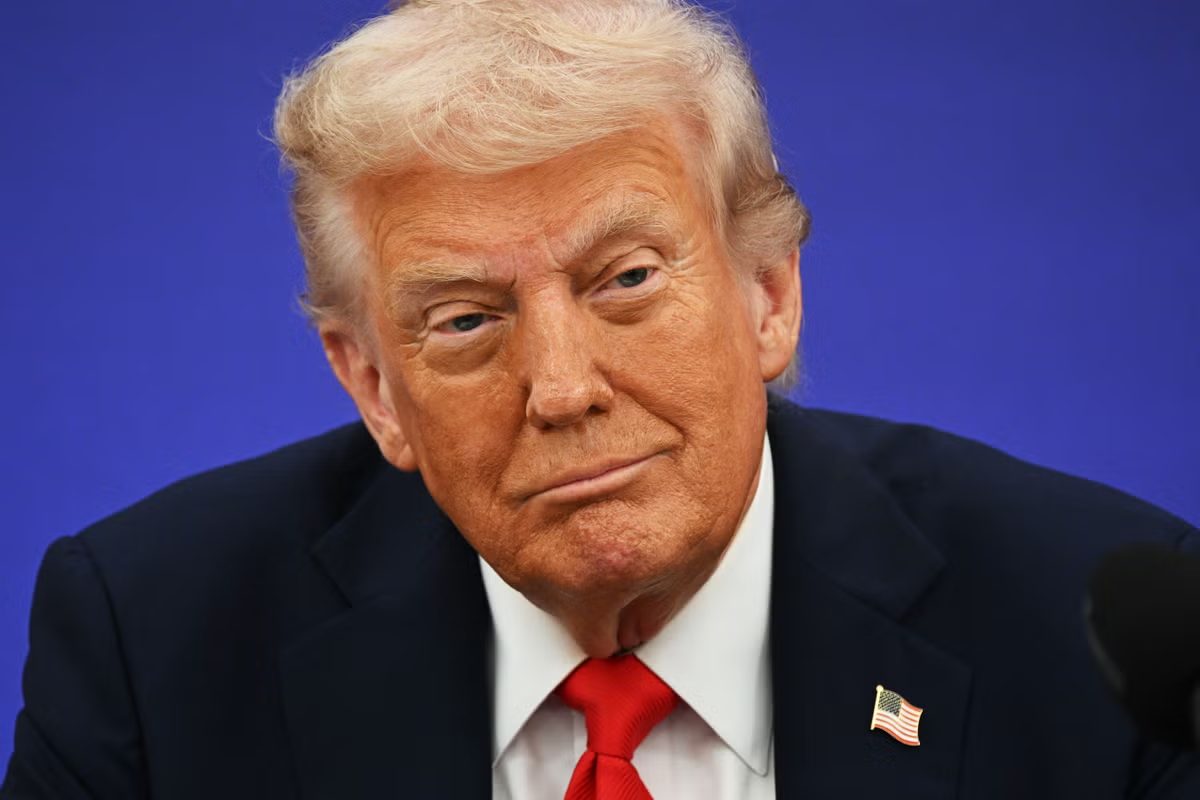
Donald Trump's new trade tariffs have come into force at a rate of 10%, down from the 15% rate he threatened over the weekend, offering some relief to UK businesses but also “new uncertainty”, according to a business group.
The US president signed an executive order to impose new taxes starting February 24 after the US Supreme Court struck down his previous import tax policy in a ruling on Friday.
But the new rate is lower than feared, after Trump declared on Saturday that he would increase global tariffs to 15%, compared to the 10% he initially announced in the hours immediately following the ruling.
The 10% tax that has gone into effect was imposed for 150 days, until July 24, under Section 122 of the Trade Act of 1974, which does not require congressional approval.
It will apply in addition to the United States' most favored nation duties.
The British Chamber of Commerce (BCC) said that while businesses will be relieved, there are fears the higher tariff rate of 15% could be imposed at any time.
William Bain, head of trade policy at the BCC, said: “While a new tariff rate of 10%, rather than the threatened 15%, will provide some relief, it shows how difficult it is for businesses to plan for the future.
“It is not at all clear what will happen next and whether a higher tariff rate is still on the way.
“Despite the immediate respite, there is new uncertainty for UK businesses exporting goods to the US.
“This makes it very difficult for companies to understand the prices and margins they will be able to obtain for their products, currently in production, for export several months from now. Inevitably, this will have an impact on their sales and affect the economy.”
Bain added: “The risk of further tariff problems remains real and the Government must do everything it can to prepare for the worst.”
Trump signed an executive order on Friday night that allowed him to bypass Congress and impose a 10% tax on imports from around the world, after the US Supreme Court struck down his “reciprocal tariffs”, introduced under an emergency powers law in April.
In a post on Truth Social on Saturday, he said he would increase this rate to 15%.
Downing Street said on Monday that “nothing is off the table” in the UK's response to tariff threats, leaving open the possibility that Britain could impose reciprocal trade levies on US goods and services.
But No 10 insisted it was focused on “constructive engagement” with the Trump administration as a trade war would hurt businesses.
At the highest level, it would mean a further 5% increase in tariffs on a significant number of exports to the United States, except those covered by a transatlantic trade deal signed between Sir Keir Starmer and Trump.
Stock markets around the world experienced increased volatility on Monday and the US dollar weakened, causing investors to once again flock to safe-haven assets such as gold.
In London, the FTSE 100 index closed on Monday down just 2.15 points to 10,684.74, although the FTSE 250 was hit harder with a drop of close to 1%.
The FTSE 100 was down 0.2% in early trading on Tuesday after sharp overnight falls in the US stock market, with the Dow Jones falling 1.7%, although much of this was due to concerns over the impact of artificial intelligence (AI) on the data and IT consulting sectors.
Derren Nathan, head of equity research at Hargreaves Lansdown, said investors were “nervous as AI fears and tariff uncertainty hang in the air”.