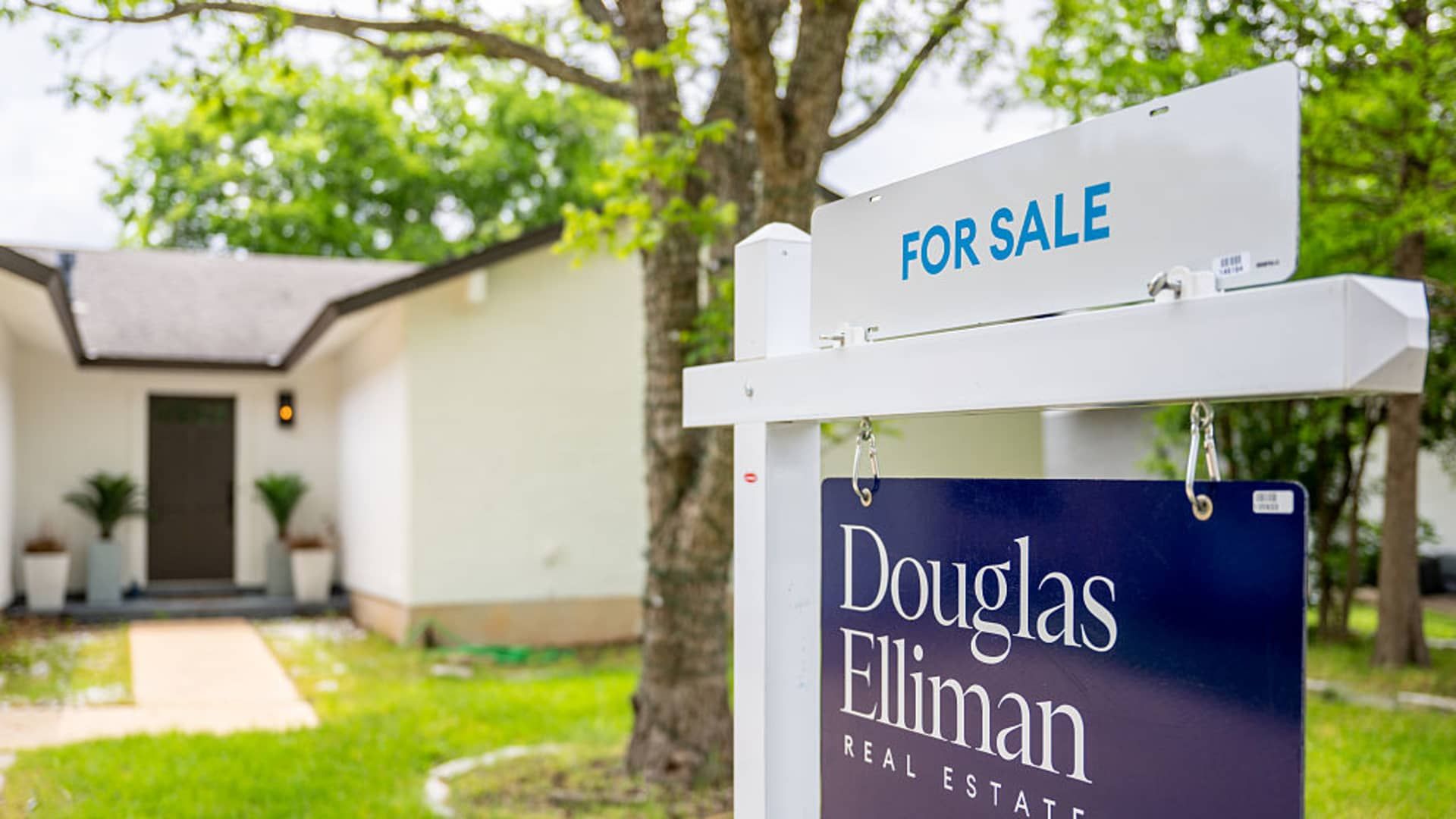
Mortgage rates are lower, home prices are falling and there is more supply on the market for sale. That all adds up to greater affordability for today's homebuyers. However, saving for a down payment remains the biggest obstacle for first-time buyers.
Prices nationwide are basically stable compared to a year ago, according to Parcl Labs, which conducts daily studies of U.S. home prices. They fell into negative territory earlier this month and are now up just 0.3% year over year.
The latest S&P Cotality Case-Shiller Home Price Index, which reflects October prices, showed wide disparities between metropolitan markets. Of the top 20 markets, Chicago stands out; New York; and Cleveland had the biggest gains. Meanwhile, eight cities showed prices in negative territory, with Tampa, Florida; Phoenix; and Dallas suffered the biggest losses.
“National home prices also continue to lag consumer inflation, with the October CPI estimated at around 3.1% (based on a provisional index the U.S. Treasury announced due to the shutdown of federal data), about 1.8 percentage points higher than the last housing appreciation. In real terms, that gap implies a slight decline in inflation-adjusted home values over the past year,” explained Nicholas Godec, head of tradables and fixed income commodities from S&P Dow Jones Indices, in a statement.
Mortgage rates are also falling.
The average for 30-year fixed mortgages currently stands at 6.19%, according to Mortgage News Daily. It started this year well above 7%. That decrease means significant savings for homebuyers.
For example, for a buyer making a 20% down payment on a $410,000 home (about the national average), the monthly payment today is $200 less on average than it would have been a year ago. Weaker prices and lower rates are changing the calculations about what first-time buyers can afford.
According to Realtor.com, the typical home buyer now needs seven years to save for a down payment. In 2022, that's down from the recent 12-year high, but still about double pre-pandemic levels, in part because the personal savings rate is much lower than in 2020.
Down payments remain the biggest obstacle to homeownership, which in the second half of this year fell to 65%, according to the U.S. Census, the lowest level since 2019.
But a greater supply of homes for sale is adding momentum to the market. Active listings are now about 12% higher than a year ago, according to Realtor.com, but still 6% lower than before the pandemic.
And buyers seem to be responding. Pending home sales, which include signed contracts on existing homes, rose more than expected in November. They were 3.3% more than in October, 2.6% more than in November 2024 and reached the highest level in almost three years, according to the National Association of Realtors.
“Improving housing affordability, driven by lower mortgage rates and wage growth that is rising faster than home prices, is helping buyers test the market. More inventory options compared to last year are also bringing more buyers to the market,” Lawrence Yun, chief economist at Realtors, said in a statement.