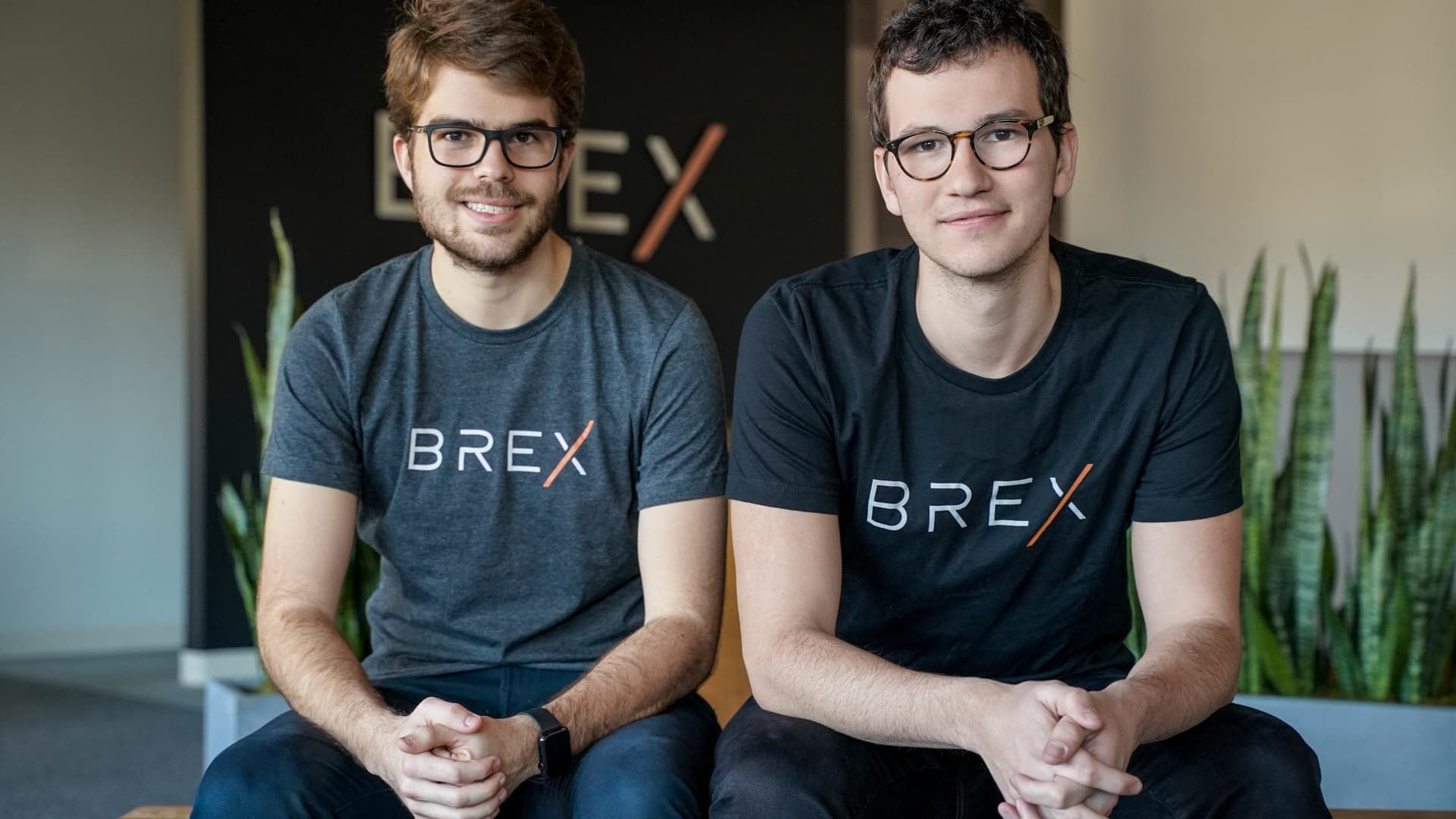
Brex co-founders Pedro Franceschi and Henrique Dubugras.
Brex
capital one said on Thursday it was acquiring payments startup Brex for $5.15 billion, the latest splashy deal made by the bank's chief executive, Richard Fairbank.
The company, which disclosed the acquisition in its fourth-quarter earnings statement, said the purchase is made up of 50% cash and 50% stock. Brex was previously valued at $12.3 billion.
The bank's shares fell about 3%.
Under Fairbank, a rare founder and CEO of a major U.S. bank, Capital One acquired rival card firm Discover Financial last year for about $35 billion. That deal was Fairbank's biggest achievement, giving the credit card lender access to one of the only payment networks of any scale.
“Since our founding, we set out to build a payments company on the frontier of the technological revolution,” Fairbank said in a statement. “The acquisition of Brex accelerates this journey, especially in the enterprise payments market.”
Fairbank said Brex pioneered the merger of corporate cards, banking and expense management software: “They have taken the rarest journey for a fintech, building a vertically integrated platform from the bottom of the technology stack to the top.”
Still, the more than 50% drop in Brex valuation from its 2023 level shows the obstacles even successful fintech companies have faced.
Brex belongs to a class of financial technology companies that rose to prominence during a period of low interest rates; It was initially known as a startup that provided loans to other startups through its cards.
But the company expanded beyond technology into other sectors and now serves both larger established companies and startups, including Robinhood, Zoom and Anthropic.
Capital One, which has offered business credit cards for decades, was increasingly convinced that it would be the Brex model that would be the winning bid, according to a person with knowledge of the lender's strategy.
“We didn't have to make this acquisition, our growth was incredibly strong,” Brex CEO Pedro Franceschi told CNBC in an interview.
Combining Brex's technology with Capital One's reach and resources would grow the startup's scale faster than if it were a standalone company, he said.